

Introduction
Many nurses depend on overtime to survive financially despite working in a profession that is often viewed as stable and financially secure. From the outside, nursing appears to provide reliable income and career stability. However, behind the scenes, many nurses find themselves relying on extra shifts simply to keep up with rising expenses and financial responsibilities.
For some nurses, overtime begins as a way to pay off debt, build savings, or handle temporary financial challenges. Over time, however, those extra shifts can become a necessary part of monthly survival. Housing costs continue rising. Inflation https://www.bls.gov/cpi/?utm_source=chatgpt.com increases everyday expenses. Childcare, transportation, insurance, and family responsibilities place additional pressure on already stretched budgets.
As a result, many nurses quietly develop a financial dependence on overtime. Missing a few extra shifts can suddenly create anxiety about paying bills, covering expenses, or maintaining financial stability.
What starts as a temporary solution often becomes a long-term lifestyle.
This dependence can create a difficult cycle. Overtime provides additional income, but it can also contribute to emotional exhaustion, burnout, chronic stress, and reduced work-life balance. Many nurses eventually find themselves trapped between needing rest and needing another paycheck.
Some quietly ask themselves:
“Why does it feel like I can never get ahead unless I keep working more?”
The answer often involves more than income alone. Rising expenses, debt, lifestyle inflation, financial stress, and a lack of financial breathing room all play a role.
In this article, you’ll learn why so many nurses depend on overtime to survive financially, how overtime dependency affects emotional and financial well-being, and practical strategies for building greater financial stability over time.

Overtime Slowly Stops Feeling Optional
For many nurses, overtime begins as a temporary solution.
At first, picking up extra shifts may feel manageable.
One extra shift helps catch up on bills.
Another helps pay down debt.
Another covers groceries, utilities, or an unexpected expense.
In the beginning, overtime often feels like a useful financial tool rather than a necessity.
However, over time, something quietly changes.
The additional income becomes part of the monthly budget.
Expenses adjust to the higher earnings.
Financial obligations continue growing.
And eventually, overtime slowly shifts from extra income into survival income.
Many nurses reach a point where missing a few overtime shifts immediately affects their finances. What was once optional now feels required just to maintain financial stability.
This transition can happen much faster than many nurses realize.
Especially during periods of:
- Inflation
- Burnout
- Childcare stress
- Rising rent or housing costs
- Student loan debt
- Financial emergencies
- Medical expenses
- Family financial responsibilities
- Increasing insurance premiums
- Higher everyday living expenses
As costs continue rising, many nurses find themselves working more hours simply to maintain the same standard of living.
The emotional challenge is that overtime often creates short-term relief without solving long-term financial pressure. Each additional shift provides another paycheck, but it can also create a growing dependence on income that requires sacrificing more time, energy, and recovery.
Over time, many nurses begin feeling trapped.
They may want more rest.
They may want more time with family.
They may want to reduce stress and burnout.
Yet financially, they feel unable to slow down.
The result is an exhausting cycle where working extra becomes normal, even when the body and mind are asking for recovery.
Many nurses do not realize how dependent they have become on overtime until they are forced to miss shifts because of illness, family responsibilities, vacation time, or burnout. Suddenly, the financial gap becomes obvious.
This is one of the hidden reasons overtime dependency can be so stressful. It creates a situation where financial stability feels directly connected to constantly working more.
Understanding how overtime slowly becomes a financial necessity is the first step toward creating healthier financial systems, reducing financial pressure, and building greater long-term financial stability.
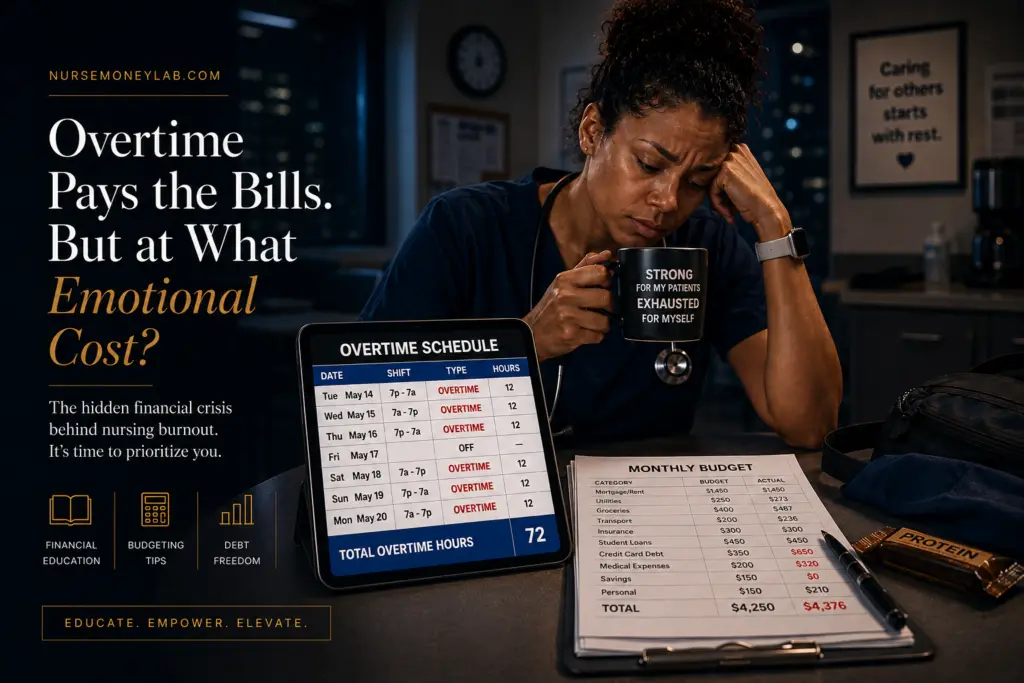
Rest Starts Feeling Financially Irresponsible
One of the hardest parts about overtime dependency is how it changes the way nurses think about rest.
For most people, a day off is supposed to provide recovery, relaxation, and an opportunity to recharge. However, for nurses who have become financially dependent on overtime, rest often feels very different.
Many nurses begin feeling guilty when they are not working.
Even when exhausted.
Even when emotionally drained.
Even when physically burned out.
Even when their body is clearly asking for recovery.
Because financially, resting can start feeling “unproductive.”
Instead of viewing a day off as an investment in their health and well-being, many nurses begin seeing it as lost income.
A missed opportunity.
A paycheck they did not earn.
An overtime shift they could have picked up.
Over time, this mindset can create a difficult emotional conflict.
The body needs rest.
The mind worries about money.
The nurse wants recovery.
The financial pressure demands more work.
As a result, many nurses spend their days off mentally calculating:
- Missed shift income
- Overtime opportunities
- Upcoming bills
- Credit card balances
- Expenses waiting at home
- Debt payments
- Financial obligations
- Family responsibilities
- Upcoming emergencies
Even while resting, they are often still working mentally.
The financial pressure never fully turns off.
Many nurses describe feeling unable to truly enjoy time away from work because part of their mind remains focused on money. Instead of feeling refreshed after a day off, they may feel anxious about what they are not earning.
Over time, this pattern can become emotionally exhausting.
The nervous system rarely gets an opportunity to recover fully because financial stress remains active in the background. Even when a nurse is physically away from work, the emotional burden of financial responsibility continues consuming energy.
This is one reason overtime dependency can contribute so heavily to burnout.
Burnout is not always caused by the number of hours worked alone. It is often caused by the feeling that slowing down is not financially safe.
When nurses believe they cannot afford to rest, recovery becomes difficult.
When recovery becomes difficult, stress accumulates.
When stress accumulates, emotional exhaustion grows.
And eventually, many nurses find themselves trapped in a cycle where they are simultaneously exhausted and afraid to stop working.
The reality is that rest is not a luxury.
Rest is a necessity.
Physical recovery, emotional healing, mental clarity, and long-term career sustainability all depend on periods of meaningful rest.
Unfortunately, overtime dependency often makes nurses feel as though they must choose between financial stability and personal well-being.
The goal is not to avoid hard work.
The goal is to create a financial life where taking a day off does not immediately trigger anxiety, guilt, or fear about money.
Financial stability should support recovery, not prevent it.
When nurses begin building stronger financial systems, reducing debt, increasing savings, and creating more financial breathing room, rest gradually becomes less stressful and more restorative. Over time, this creates something many nurses have not experienced in years: the ability to recover without feeling financially irresponsible..
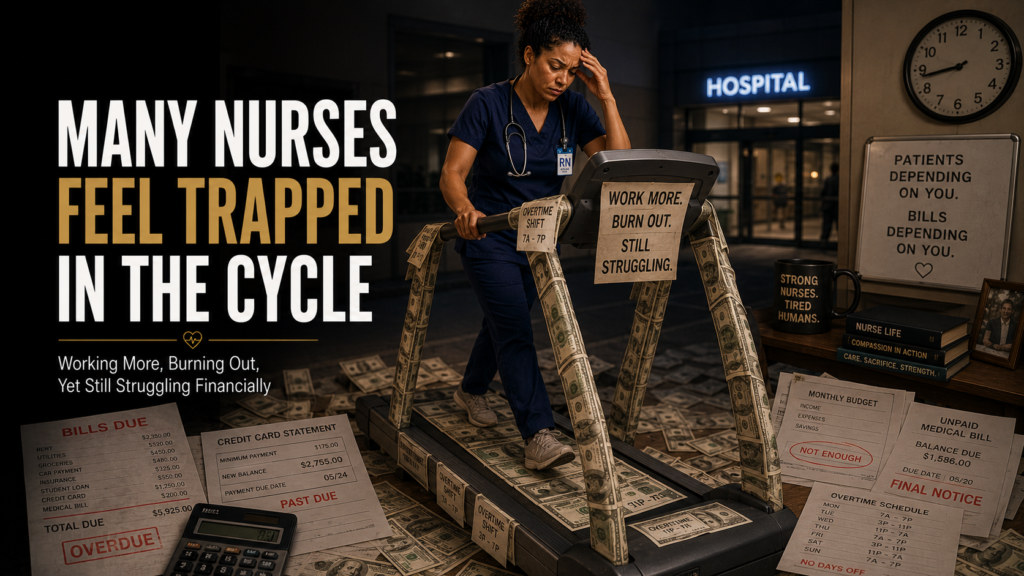
Many Nurses Feel Trapped in the Cycle
One painful reality many nurses experience is feeling trapped between exhaustion and financial survival.
They are working hard.
They are picking up overtime.
They are sacrificing personal time.
They are doing everything they can to stay ahead financially.
Yet despite all their effort, many still feel like they are barely keeping up.
This is where overtime dependency often becomes emotionally overwhelming.
Financial stress pushes nurses to work more.
More work provides temporary financial relief.
But working more often increases burnout, emotional exhaustion, physical fatigue, and mental strain.
As burnout grows, recovery becomes more difficult.
As recovery becomes more difficult, energy levels decline.
And because energy becomes limited, many nurses struggle to focus on long-term financial improvements that could help reduce their dependence on overtime.
Instead of building financial freedom, they remain focused on financial survival.
This creates a cycle that can feel incredibly frustrating.
Many nurses want to:
- Build savings
- Pay off debt
- Learn about investing
- Improve financial literacy
- Start a side income
- Reduce financial stress
- Spend more time with family
- Improve work-life balance
But after working multiple shifts and managing everyday responsibilities, there is often very little energy left to focus on those goals.
As a result, overtime becomes both the solution and the problem.
It helps pay the bills.
But it also consumes the time and energy needed to create long-term financial change.
Over time, the cycle can begin feeling endless.
Many nurses quietly wonder:
“How am I working this much and still struggling financially?”
The answer is often more complex than income alone.
For many healthcare professionals, the issue is not a lack of effort.
The issue is a combination of rising living expenses, debt, inflation, financial obligations, overtime dependency, and chronic stress.
When financial pressure continues for years, many nurses begin operating in survival mode. Their focus shifts from long-term goals to immediate needs.
Instead of asking:
“How can I build wealth?”
They begin asking:
“How can I make it through this month?”
That shift can be emotionally exhausting because it creates the feeling that progress is constantly out of reach.
The encouraging news is that recognizing the cycle is often the first step toward breaking it.
Once nurses understand how overtime dependency affects both their finances and emotional well-being, they can begin identifying healthier financial strategies that create more stability, more flexibility, and greater long-term freedom.
The goal is not simply earning more money.
The goal is creating a life where financial stability does not depend on constant exhaustion.
Many nurses deserve more than survival.
They deserve financial systems that support recovery, peace of mind, and the ability to enjoy the life they work so hard to build.

Overworking Does Not Mean You Failed
Many nurses blame themselves for needing overtime to survive financially.
They often look at their schedules, their finances, and their stress levels and quietly wonder if they have done something wrong.
Some feel embarrassed about relying on extra shifts.
Others feel frustrated that they are working so hard yet still struggling to get ahead.
Over time, many nurses begin believing that needing overtime is a personal failure rather than a reflection of the challenges they face every day.
But the reality is far more complicated.
Financial pressure is rarely caused by one single decision or one single mistake.
Many factors contribute to why nurses depend on overtime to survive financially, including:
- Rising living costs
- Inflation
- Student loan debt
- Childcare expenses
- Housing costs
- Medical expenses
- Family financial responsibilities
- Understaffing
- Burnout
- Emotional exhaustion
- Economic uncertainty
Even nurses with strong work ethics, responsible financial habits, and stable careers can find themselves struggling under the weight of these combined pressures.
One of the most damaging effects of chronic financial stress is that it often turns frustration inward.
Instead of recognizing the larger challenges affecting their situation, many nurses begin criticizing themselves.
They tell themselves they should be doing better.
They should be saving more.
They should not need overtime.
They should have figured things out by now.
Unfortunately, this type of self-blame often increases emotional exhaustion rather than solving financial problems.
The truth is that many nurses are simply trying to survive inside systems that constantly demand more from them physically, emotionally, and financially.
Healthcare staffing shortages place additional burdens on nurses.
Burnout continues affecting the profession.
The cost of living continues increasing.
Financial responsibilities continue growing.
Yet nurses are often expected to carry these pressures without complaint while continuing to provide exceptional patient care.
Working overtime does not mean you are weak.
It does not mean you are irresponsible.
And it certainly does not mean you failed financially.
For many nurses, overtime represents determination, sacrifice, and a commitment to caring for both their patients and their families.
The problem is not the willingness to work hard.
The problem is when financial stability becomes completely dependent on constant overworking.
Long-term financial wellness should not require permanent exhaustion.
It should not require sacrificing every day off.
And it should not require ignoring your own physical and emotional needs in order to survive.
Recognizing this distinction is important because it allows nurses to approach their situation with greater compassion and realism.
Instead of asking:
“What’s wrong with me?”
A healthier question may be:
“What financial systems, habits, or supports can help reduce this pressure over time?”
That shift in perspective creates space for solutions rather than self-criticism.
Many nurses are carrying far more responsibility than most people realize. They deserve grace, understanding, and practical financial strategies—not guilt for doing what they need to do to support themselves and their families.
Working overtime may be part of your current reality, but it does not define your worth, your intelligence, or your future. Financial stability is a journey, and needing help along the way does not mean you have failed.

You Deserve Reset Too
Overtime can temporarily solve financial pressure.
An extra shift can help cover a bill.
Another shift can help pay down debt.
Another can help manage an unexpected expense or financial emergency.
In the short term, overtime often provides relief.
The problem is that when overtime becomes the primary strategy for financial survival, the long-term emotional and physical cost can become significant.
Many nurses are already carrying enormous responsibilities every day. They care for patients, support families, manage complex clinical situations, and navigate demanding work environments. When financial pressure is added on top of those responsibilities, the burden can become overwhelming.
Many nurses are operating in a state of chronic exhaustion while trying to hold together:
- Bills
- Debt
- Family responsibilities
- Emotional stress
- Patient care
- Household obligations
- Financial uncertainty
- Basic survival
At first, the body may adapt.
The extra shifts feel manageable.
The fatigue feels temporary.
The stress feels worth it.
But over time, constant overtime can begin affecting nearly every area of life.
Sleep becomes less restorative.
Burnout becomes more common.
Emotional resilience decreases.
Relationships become strained.
Recovery time becomes limited.
The nervous system rarely has an opportunity to fully reset.
Eventually, both the body and mind begin paying the price.
This is one of the hidden dangers of overtime dependency. The financial benefits are visible immediately, but the emotional and physical consequences often develop gradually over months and years.
Many nurses become so accustomed to operating under pressure that exhaustion begins feeling normal.
They stop asking whether their workload is sustainable.
They stop prioritizing recovery.
They stop believing rest is possible.
Instead, survival becomes the primary focus.
The goal, however, is not simply to work harder.
The goal is to build a financial life that does not require constant exhaustion to maintain.
That may include:
- Reducing financial chaos
- Lowering dependency on overtime
- Paying down high-interest debt
- Creating additional income streams
- Improving financial education
- Building emergency savings gradually
- Learning healthier recovery habits after shifts
- Creating realistic financial goals
- Developing long-term wealth-building strategies
- Increasing financial flexibility over time
None of these changes happen overnight.
Financial stability is often built slowly through small, consistent actions rather than dramatic transformations.
What matters most is moving in the right direction.
One small improvement today can create meaningful progress over time.
One financial habit can become a stronger financial foundation.
One decision can reduce future stress.
Many nurses spend their careers helping others recover from illness, injury, and crisis. They deserve the same opportunity to recover from chronic financial stress and emotional exhaustion.
Constantly surviving in exhaustion should not become the permanent plan.
Working harder may solve today’s problem, but building financial stability creates the possibility of a healthier future.
Nurses deserve financial security that supports rest, recovery, and peace of mind.
They deserve lives that feel larger than work schedules and overtime opportunities.
Most importantly, they deserve financial stability that does not require sacrificing their mental health, physical health, and overall well-being indefinitely.destroying their mental and physical health to maintain it.

Conclusion
Many nurses never intended to become dependent on overtime.
For most, overtime began as a temporary solution to a temporary problem. An extra shift helped cover bills, pay down debt, handle an emergency, or create a little financial breathing room.
But over time, many nurses discover that overtime has quietly become part of their financial survival strategy.
The challenge is that overtime can create a difficult tradeoff. While extra shifts provide additional income, they often come at the cost of rest, recovery, family time, emotional well-being, and long-term health.
Many nurses find themselves trapped in a cycle where financial pressure requires more work, and more work creates greater exhaustion.
Eventually, the question becomes:
“How long can I keep doing this?”
The good news is that overtime dependency does not have to be permanent.
Building financial stability is often a gradual process. Reducing debt, increasing savings, improving financial literacy, creating additional income streams, and developing healthier financial habits can slowly reduce the pressure to constantly work extra hours.
Progress may not happen overnight.
But every step toward greater financial stability creates more freedom, more flexibility, and more peace of mind.
The goal is not to avoid hard work.
The goal is to create a life where financial security does not depend on constant exhaustion.
Nurses spend their careers helping others heal, recover, and rebuild their lives. They deserve the same opportunity for themselves.
They deserve rest without guilt.
They deserve financial stability without constant overtime.
They deserve lives that feel sustainable, healthy, and financially secure.
Most importantly, they deserve a future where survival is no longer the goal—because stability, recovery, and financial freedom have taken its place.
Frequently Asked Questions
Why do so many nurses depend on overtime financially?
Many nurses depend on overtime financially because rising living costs, inflation, student loan debt, childcare expenses, housing costs, and unexpected financial emergencies can quickly consume a large portion of their income. What often starts as occasional extra shifts can gradually become a necessary part of monthly financial survival.
Can overtime cause nurse burnout?
Yes. While overtime can provide additional income, working excessive hours over long periods can contribute to emotional exhaustion, physical fatigue, chronic stress, compassion fatigue, sleep disturbances, and nurse burnout. Without adequate recovery time, the risk of burnout often increases significantly.
Why do nurses feel guilty resting?
Many nurses begin associating rest with lost income when overtime becomes connected to financial survival. As financial pressure grows, taking time off may start feeling financially irresponsible, even when a nurse is physically exhausted or emotionally overwhelmed. Over time, this can make meaningful recovery more difficult.
Can financial stress affect nurse mental health?
Absolutely. Chronic financial stress can affect mental health in powerful ways. Many nurses experience increased anxiety, emotional exhaustion, burnout, sleep problems, difficulty concentrating, irritability, and persistent worry when financial pressure becomes overwhelming.
What are the warning signs of overtime dependency?
Common warning signs include feeling anxious about missing extra shifts, relying on overtime income to pay regular monthly bills, feeling guilty when taking time off, constantly searching for additional shifts, and struggling financially whenever overtime opportunities are unavailable.
How can nurses reduce their dependence on overtime?
Reducing overtime dependency often requires a combination of strategies, including improving financial literacy, creating a realistic budget, reducing unnecessary expenses, paying down debt, building emergency savings, increasing income through alternative sources, and developing long-term financial plans. Small changes made consistently over time can create meaningful progress.
Is working overtime a sign of financial failure?
No. Working overtime does not mean a nurse has failed financially. Many nurses face economic pressures that are largely outside their control, including inflation, housing costs, childcare expenses, and healthcare costs. Overtime often reflects determination and responsibility rather than failure.
Can nurses build financial stability without working constant overtime?
Yes. While the process may take time, many nurses gradually create greater financial stability by improving money management skills, building savings, investing consistently, reducing debt, and creating additional income streams. Financial stability is often built through long-term habits rather than short-term sacrifices alone.
What is the difference between financial survival and financial stability?
Financial survival focuses on making it through the next paycheck, paying immediate bills, and managing ongoing financial pressure. Financial stability creates greater peace of mind through savings, reduced debt, financial flexibility, and the ability to handle unexpected expenses without constant stress or overtime dependence.