

Introduction
Have you ever stood in a store holding something you genuinely needed—a new pair of work shoes, better scrubs, or even a simple cup of coffee—and suddenly felt guilty about buying it? If so, you’re not alone. For many nurses, spending money on themselves feels emotionally uncomfortable, even after working long hours to earn it.
Nurses dedicate their lives to caring for others. Every shift is filled with making sacrifices, solving problems, comforting patients, and putting someone else’s needs first. Over time, that same selfless mindset often follows nurses home, influencing how they think about money. While it’s easy to justify spending on family members, children, or household expenses, many nurses struggle to justify investing in themselves.
This feeling isn’t necessarily about income. Nurses across every pay range—from new graduates to experienced travel nurses and nurse leaders—can experience guilt when making personal purchases. Whether it’s replacing worn-out shoes, taking a vacation, upgrading a laptop, or enjoying a relaxing weekend, many feel an internal conflict between financial responsibility and personal well-being.
Unfortunately, constantly denying yourself can have lasting consequences. When every dollar spent on yourself feels like a mistake, self-care becomes harder, burnout increases, and financial decisions become driven by guilt instead of balance. Over time, this mindset can make it difficult to enjoy the rewards of your hard work, even when your finances allow it.
The good news is that spending money on yourself doesn’t have to mean being careless with your finances. Healthy financial habits include both saving for the future and intentionally investing in your physical health, mental well-being, professional growth, and overall quality of life. Learning to find that balance is an important part of financial wellness.
In this article, we’ll explore why so many nurses feel guilty spending money on themselves, the emotional and psychological reasons behind this common struggle, and practical strategies for building a healthier relationship with money. By the end, you’ll understand that caring for yourself financially isn’t selfish—it’s one more way to ensure you can continue caring for others.

Why Do Nurses Feel Guilty Spending Money on Themselves?
For many nurses, guilt over spending money isn’t about being financially irresponsible—it’s about the mindset they’ve developed through years of caring for others. Nursing is more than a profession; it’s a calling rooted in compassion, sacrifice, and putting other people’s needs first. While these qualities make nurses exceptional caregivers, they can also make it difficult to prioritize themselves, especially when it comes to money.
From the first day of nursing school, nurses are taught to advocate for patients, remain selfless, and give their best even under challenging circumstances. Over time, this dedication can extend beyond the workplace and influence personal financial decisions. Many nurses become so accustomed to putting others first that spending money on themselves begins to feel unnecessary or even selfish.
Financial guilt can also stem from the emotional demands of the profession. After a physically exhausting and emotionally draining shift, purchasing something enjoyable may seem undeserved. Instead of celebrating their hard work, many nurses immediately think about the bills that need to be paid, their children’s needs, aging parents, or unexpected household expenses. The internal dialogue often sounds like, “I should save this money,” or “Someone else needs it more than I do.”
Another factor is the unpredictable nature of healthcare. Nurses understand how quickly life can change. They care for patients facing sudden illnesses, accidents, and financial hardships every day. Witnessing these realities can create a scarcity mindset, making it difficult to feel comfortable spending money, even when their own finances are stable. Saving for emergencies becomes so important that any personal purchase can feel like a financial mistake.
Social expectations also play a role. Nurses are often viewed as caregivers both at work and at home. Many are supporting children, spouses, parents, or extended family members while balancing demanding work schedules. Society frequently celebrates sacrifice but rarely encourages caregivers to invest in themselves. As a result, many nurses feel praised for giving everything to others while quietly feeling guilty whenever they spend money on their own happiness or comfort.
Ironically, avoiding personal spending doesn’t always lead to better financial health. Constantly denying yourself can increase stress, contribute to burnout, and even result in impulsive purchases later when emotional exhaustion becomes overwhelming. Healthy financial wellness isn’t about never spending money—it’s about making intentional choices that align with your goals while also recognizing that your own well-being has value.
The truth is that investing in yourself is not the same as being financially irresponsible. Replacing worn-out work shoes that protect your feet during 12-hour shifts, purchasing quality scrubs that improve comfort, taking a weekend trip to recharge, or enrolling in a certification course that advances your career are all examples of purposeful spending. These investments can improve your health, confidence, job performance, and long-term earning potential.
Recognizing where your financial guilt comes from is the first step toward changing it. Once you understand that these feelings are often rooted in caregiving habits rather than financial reality, you can begin making decisions based on balance instead of guilt. Caring for yourself financially doesn’t take away from your ability to care for others—it strengthens it.
The Psychology Behind Financial Guilt in Nursing
Financial guilt isn’t just about money—it’s about emotions, beliefs, and the stories we tell ourselves. Many nurses assume they feel guilty because they spend too much, but in reality, the guilt often begins long before they ever swipe their debit card. It develops through years of responsibility, caregiving, and constantly placing the needs of others above their own.
Psychologists have long recognized that our relationship with money is shaped by experiences, values, and emotions just as much as income. Research from the American Psychological Association has shown that money and financial stress can significantly affect emotional well-being, decision-making, and overall mental health, reinforcing the importance of developing a healthy relationship with money. For nurses, those emotional influences are often intensified by the demands of the profession. The result is a financial mindset where spending on others feels rewarding, while spending on yourself feels uncomfortable.
The Caregiver Identity Runs Deep
Nursing isn’t simply a job that ends when a shift is over. For many people, it becomes part of their identity.
Nurses naturally become the caregivers in their families, friend groups, and communities. They’re the first person someone calls for medical advice, the family member expected to help during emergencies, and the person who always seems willing to put others first.
While these qualities are admirable, they can create an unhealthy belief that personal needs should always come last.
Over time, many nurses begin measuring their worth by how much they give rather than how well they care for themselves.
Feeling Responsible for Everyone
Many nurses carry an enormous sense of responsibility that extends beyond the hospital.
They worry about:
- Supporting their children
- Helping aging parents
- Paying household bills
- Covering unexpected family emergencies
- Saving for retirement
- Planning for future healthcare expenses
With so many responsibilities competing for attention, spending money on themselves often feels like taking resources away from someone else—even when that’s not actually true.
This emotional burden can make even modest purchases feel difficult to justify.
Burnout Can Affect Financial Decisions
Burnout doesn’t stay at work. Burnout affects more than job performance—it can influence emotional regulation, decision-making, and overall well-being. The World Health Organization recognizes burnout as an occupational phenomenon resulting from chronic workplace stress that has not been successfully managed.
Mental fatigue reduces the brain’s ability to make thoughtful financial decisions. After multiple demanding shifts, many nurses simply don’t have the emotional energy to evaluate purchases objectively.
Instead, decisions become emotional.
Some nurses avoid spending altogether because they fear making the wrong choice.
Others swing in the opposite direction, making impulsive purchases after stressful weeks as a way to temporarily feel better.
Neither extreme supports long-term financial wellness.
The healthiest approach is intentional spending—making purchases that align with both your budget and your values.
You Are Worth Investing In
One of the most important mindset shifts nurses can make is recognizing that spending money on themselves isn’t a reward they must earn.
It’s part of maintaining their overall health and ability to continue caring for others.
Replacing supportive shoes protects your body.
Buying healthy groceries supports your energy.
Taking a vacation helps reduce stress.
Enrolling in continuing education can increase your future earning potential.
These aren’t selfish expenses.
They’re investments in your future.
Replacing Guilt with Gratitude
Instead of feeling guilty every time you spend money on yourself, try shifting your perspective.
Rather than thinking:
“I shouldn’t be spending this.”
Consider asking yourself:
- Does this improve my quality of life?
- Does this support my physical or mental health?
- Does this align with my financial plan?
- Can I comfortably afford this purchase?
If the answer is yes, allow yourself to enjoy it without guilt.
Financial wellness isn’t about depriving yourself.
It’s about creating a healthy balance between preparing for tomorrow and living well today.
Remember, you spend your days helping other people heal. You deserve to extend that same compassion to yourself—including in the way you manage your money.

How Caregiver Guilt Shapes Nurses’ Financial Decisions
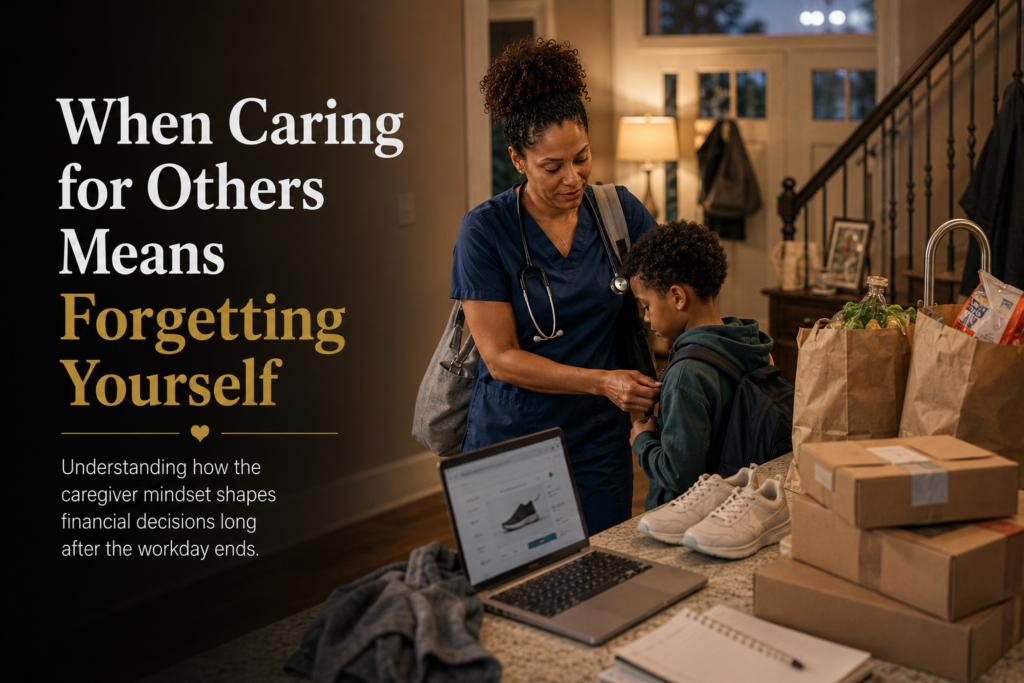
Many nurses don’t realize that the guilt they feel about spending money on themselves often begins long before they make a purchase. It develops through years of caring for others, solving problems, and placing other people’s needs ahead of their own. Eventually, this caregiving mindset becomes so deeply ingrained that it influences nearly every financial decision they make.
Unlike many professions, nursing requires constant emotional investment. During every shift, nurses advocate for vulnerable patients, comfort grieving families, respond to emergencies, and make life-changing decisions under pressure. They become accustomed to asking one question over and over:
“What does someone else need right now?”
Unfortunately, many nurses rarely ask themselves the same question.
Putting Everyone Else First
Outside the hospital, the pattern often continues.
Many nurses are responsible for supporting children, spouses, aging parents, siblings, or even extended family members. They willingly pay for birthdays, holidays, school supplies, medical expenses, and household emergencies without hesitation. Seeing loved ones happy brings genuine satisfaction, making these purchases feel worthwhile.
However, when the same nurse considers buying something for herself, the internal conversation changes completely.
Instead of thinking:
“I’ve worked hard for this.”
She may think:
“I should save this money.”
“Maybe someone else needs it more.”
“I’ll wait until next month.”
This difference in thinking isn’t about the cost of the purchase—it’s about permission.
Many nurses simply don’t feel they have permission to prioritize themselves.
The Hidden Cost of Self-Sacrifice
Self-sacrifice is often celebrated in healthcare.
Nurses are praised for staying late, covering extra shifts, skipping breaks, and always putting patients first. While these actions reflect incredible dedication, they can unintentionally create the belief that personal needs should always come last.
Over time, that mindset can extend into every area of life—including finances.
A nurse may continue wearing uncomfortable shoes because replacing them feels “unnecessary.”
She may postpone routine dental care because the money could be used elsewhere.
She may continue using an outdated laptop that slows her work because spending money on herself feels indulgent.
Although each decision seems small, together they reinforce the belief that her comfort isn’t important.
Caregiving Doesn’t Mean Self-Neglect
One of the biggest misconceptions nurses face is believing that caring for themselves somehow takes away from caring for others.
In reality, the opposite is true.
A well-rested nurse makes better decisions.
A healthier nurse has more energy.
A financially secure nurse experiences less chronic stress.
A confident nurse is better equipped to provide compassionate care.
Investing in yourself isn’t an act of selfishness—it’s an investment in your ability to continue serving others without sacrificing your own well-being.
Reframing the Way You Think About Spending
One of the most effective ways to reduce financial guilt is to change the question you’re asking yourself.
Instead of asking:
“Do I deserve to spend this money?”
Try asking:
- Will this improve my health?
- Will this reduce stress?
- Will this help me perform my job more effectively?
- Does this align with my financial goals?
- Can I comfortably afford it without harming my budget?
These questions shift the focus from guilt to intentional decision-making.
Healthy spending isn’t about buying everything you want. It’s about making thoughtful purchases that support your long-term well-being while maintaining financial stability.
When spending aligns with your values and your budget, there’s no reason to feel guilty. You’ve earned the right to enjoy the rewards of your hard work.
The Emotional Cycle of Financial Stress and Avoidance
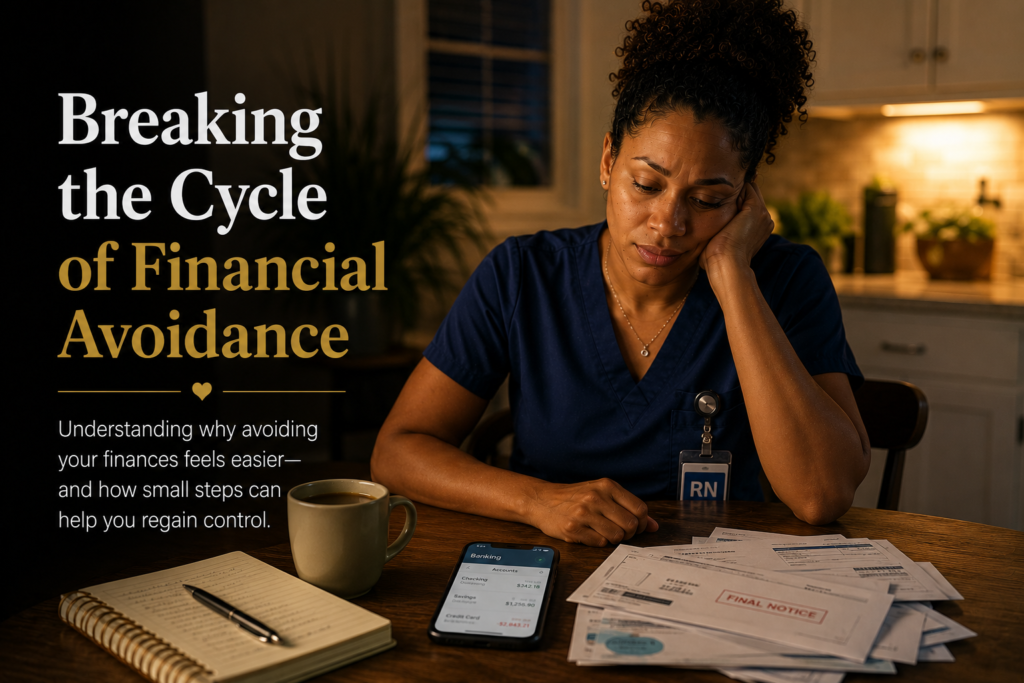
Financial avoidance rarely begins with laziness or irresponsibility. More often, it starts with emotional exhaustion. Nurses spend their shifts responding to emergencies, comforting patients, making critical decisions, and managing overwhelming workloads. By the time they return home, even simple financial tasks—checking a bank balance, reviewing a credit card statement, or opening an email from the bank—can feel emotionally draining.
What begins as a decision to “look tomorrow” often becomes a cycle that repeats for weeks or even months.
Understanding this cycle is the first step toward breaking it.
Stage 1: Stress Creates Fear
Unexpected expenses, rising bills, student loans, childcare costs, or reduced work hours can quickly create financial pressure. Even nurses with stable incomes are not immune to these challenges.
Instead of seeing money as a helpful tool, many begin associating it with anxiety. Every financial notification feels like bad news waiting to happen.
Soon, checking a bank account becomes emotionally uncomfortable rather than routine.
Stage 2: Avoidance Provides Temporary Relief
Avoidance offers an immediate emotional reward.
Ignoring the banking app prevents seeing a lower-than-expected balance.
Avoiding unopened bills delays uncomfortable feelings.
Skipping budget reviews creates the illusion that everything is still manageable.
For a short time, anxiety decreases because the brain believes it has escaped the problem.
Unfortunately, nothing has actually changed financially.
The bills still exist.
The due dates continue approaching.
Interest continues accumulating.
The temporary relief eventually gives way to even greater stress.
Stage 3: Anxiety Grows Larger
As more time passes, uncertainty replaces facts.
Instead of knowing exactly where their finances stand, nurses begin imagining worst-case scenarios.
Questions begin running through their minds:
- “What if I don’t have enough to cover rent?”
- “Did that automatic payment already come out?”
- “How much is left on my credit card?”
- “Can I even afford groceries this week?”
Ironically, the fear of checking often becomes much worse than the actual financial situation.
Many nurses discover that while their finances need attention, they were never as catastrophic as their minds imagined.
Stage 4: Guilt Takes Over
Once avoidance continues for several weeks, guilt often appears.
Nurses frequently tell themselves:
“I should know better.”
“I’m responsible for everyone else, but I can’t even manage my own money.”
“I’ve worked so hard. Why am I still struggling?”
This self-criticism makes financial tasks feel even heavier.
Instead of motivating action, guilt creates additional emotional resistance.
Stage 5: Financial Problems Become Bigger
Unfortunately, avoidance can allow small problems to become larger ones.
Examples include:
- Missing payment due dates
- Accruing unnecessary interest charges
- Forgetting subscription renewals
- Incurring overdraft fees
- Losing track of spending habits
- Delaying savings goals
None of these issues occur because someone lacks intelligence.
They occur because stress interferes with decision-making.
Research has shown that chronic stress reduces our ability to plan, organize, and make thoughtful financial choices. When the brain is overwhelmed, it naturally focuses on immediate survival rather than long-term planning.
Breaking the Cycle
The encouraging news is that this emotional cycle can be interrupted with very small actions.
Instead of trying to solve every financial problem at once, begin with one manageable step:
- Open your banking app for two minutes.
- Review only your current account balance.
- Look at one credit card statement.
- Write down your next upcoming bill.
- Celebrate completing the task rather than judging the numbers.
Small, consistent actions build confidence over time.
Financial peace isn’t created through perfection—it’s created through awareness.
Every time you choose to face your finances, even for a few minutes, you’re teaching yourself that avoiding them is no longer necessary.

Real Nurse Scenario: Choosing Everyone Else Before Yourself
Imagine this.
Sarah is a 34-year-old medical-surgical nurse who has just finished her third consecutive 12-hour shift. She’s physically exhausted, emotionally drained, and looking forward to going home. On her drive home, she remembers that her nursing shoes have become uncomfortable. The soles are worn down, her feet ache after every shift, and several coworkers have suggested replacing them.
She stops at a sporting goods store and finds a pair of supportive shoes that would make her long shifts much more comfortable.
She tries them on.
They fit perfectly.
The price is $145.
For a moment, she’s ready to buy them.
Then the thoughts begin.
“My daughter needs school supplies next month.”
“The electric bill is due next week.”
“Maybe I can make these old shoes last another few months.”
“I don’t really need them.”
She quietly puts the shoes back on the shelf and walks out of the store.
On the way home, she stops at another store and spends over $180 on groceries for her family without thinking twice.
Later that evening, she orders a birthday gift for her mother online.
She doesn’t hesitate.
She never questions whether her family deserves those purchases.
But when it came to something that directly affected her own health and comfort, guilt won.
This Story Is More Common Than You Think
Sarah’s experience reflects what thousands of nurses face every day.
Many nurses have no problem spending money when it benefits someone else.
They happily purchase gifts for loved ones.
They contribute to school fundraisers.
They help relatives through financial emergencies.
They donate to charities.
They celebrate birthdays and holidays with generosity.
Yet when it comes to replacing their own work shoes, scheduling a massage after weeks of overtime, buying healthier groceries, or taking a weekend vacation, hesitation suddenly appears.
The money isn’t always the problem.
The emotional permission is.
The Hidden Cost of Waiting
Putting yourself last often feels responsible in the moment.
But over time, the hidden costs begin to add up.
Continuing to wear worn-out shoes may contribute to foot pain, knee discomfort, and back problems.
Ignoring emotional exhaustion can increase stress and burnout.
Skipping preventive healthcare appointments may allow small health issues to become larger ones.
Postponing professional development opportunities may delay career advancement and future income.
Saving money is important.
But constantly sacrificing your own well-being can become far more expensive than the purchase you avoided.
What Sarah Could Have Asked Herself Instead
Rather than asking,
“Should I spend $145 on myself?”
Sarah could have reframed the decision by asking:
- Will these shoes reduce pain during my 12-hour shifts?
- Will they improve my comfort and physical health?
- Can I comfortably afford them within my monthly budget?
- Will replacing them now prevent more expensive problems later?
Those questions shift the focus from guilt to value.
Instead of seeing the purchase as an unnecessary expense, it becomes an investment in her health and her ability to continue providing excellent patient care.
The Lesson
Many nurses don’t need permission to care for others.
They need permission to care for themselves.
Financial wellness isn’t about saying “yes” to every purchase.
It’s about recognizing that investing in your own health, comfort, and happiness isn’t selfish—it helps you show up as your best self at work, at home, and in every part of your life.
The next time you find yourself hesitating over a purchase that genuinely supports your well-being, remember this simple truth:
You work hard for your income. You deserve to benefit from it, too.

Conclusion
As nurses, you dedicate your career to improving the lives of others. You work long shifts, make difficult decisions, provide comfort during life’s most challenging moments, and often place everyone else’s needs ahead of your own. Those qualities make you an exceptional healthcare professional—but they shouldn’t come at the expense of your own well-being.
Feeling guilty about spending money on yourself is more common than many nurses realize. Whether it’s buying a new pair of supportive shoes, scheduling a much-needed vacation, replacing outdated work equipment, or simply enjoying a meal out with friends, many nurses struggle with the belief that their own needs should always come last. Over time, this mindset can contribute to burnout, chronic stress, and an unhealthy relationship with money.
The truth is that financial wellness isn’t measured by how little you spend on yourself. It’s measured by how intentionally you manage your money to support both your future goals and your present well-being. Saving for emergencies, paying down debt, and investing for retirement are all important—but so is investing in the person who works tirelessly to earn that income.
Giving yourself permission to spend wisely on your health, comfort, education, and happiness isn’t selfish. It’s a form of self-care that allows you to continue showing up as your best self for your patients, your family, and your community. A healthier, happier, and less stressed nurse is ultimately a better caregiver.
The next time guilt begins to creep in before making a thoughtful purchase, pause and ask yourself one simple question:
“Will this improve my life without harming my financial goals?”
If the answer is yes, remind yourself that caring for yourself is not a reward you must earn—it’s a responsibility you owe yourself.
After all, you spend every day helping others heal. You deserve the same compassion, kindness, and care that you so freely give to everyone else.

Frequently Asked Questions
Why do nurses feel guilty spending money on themselves?
Many nurses develop a strong caregiver mindset that encourages them to prioritize patients, family members, and household responsibilities before their own needs. Over time, this can create feelings of guilt whenever they spend money on themselves, even when the purchase is practical, affordable, or beneficial to their health and well-being. Learning to view intentional self-care as a necessary investment rather than a selfish expense can help create a healthier relationship with money.
Can burnout affect spending behavior?
Yes. Burnout can significantly influence financial decision-making. Emotional exhaustion often makes it more difficult to think clearly about money, leading some nurses to avoid spending altogether while others make impulsive purchases in an attempt to relieve stress. Recognizing the connection between burnout and financial habits is the first step toward making more balanced, intentional spending decisions.
Is it irresponsible to spend money on self-care?
Not at all. Responsible self-care is an important part of maintaining both physical and mental health. Purchasing supportive work shoes, scheduling preventive healthcare appointments, taking a short vacation, or investing in professional development can improve your overall well-being and help prevent burnout. The key is to make these purchases intentionally and within the limits of your financial plan.
Why does survival mode affect financial emotions?
When the body and mind remain under chronic stress for long periods, the brain naturally shifts into survival mode. In this state, financial decisions are often driven by fear, anxiety, or scarcity rather than careful planning. Nurses working demanding schedules may find themselves worrying about every purchase, delaying necessary expenses, or feeling guilty about spending money on themselves. Building healthy financial habits, reducing stress where possible, and creating a realistic budget can help shift decision-making from survival mode to a place of confidence and balance.
Disclaimer
The information provided in this article is for educational and informational purposes only and should not be considered financial, legal, tax, medical, or mental health advice. Every nurse’s financial situation is unique, and the strategies discussed may not be appropriate for everyone.
Before making significant financial decisions, consider consulting a qualified financial advisor, tax professional, or other licensed professional who can provide guidance based on your individual circumstances. If you’re experiencing severe financial hardship, overwhelming stress, anxiety, or burnout, seeking support from a licensed mental health professional or your employer’s employee assistance program (EAP) may also be beneficial.
While every effort has been made to ensure the accuracy of the information presented, Nurse Money Lab makes no guarantees regarding the completeness, reliability, or outcomes associated with applying the ideas discussed in this article. Your financial journey is personal, and lasting success comes from making informed decisions that align with your goals, values, and circumstances.