
Introduction
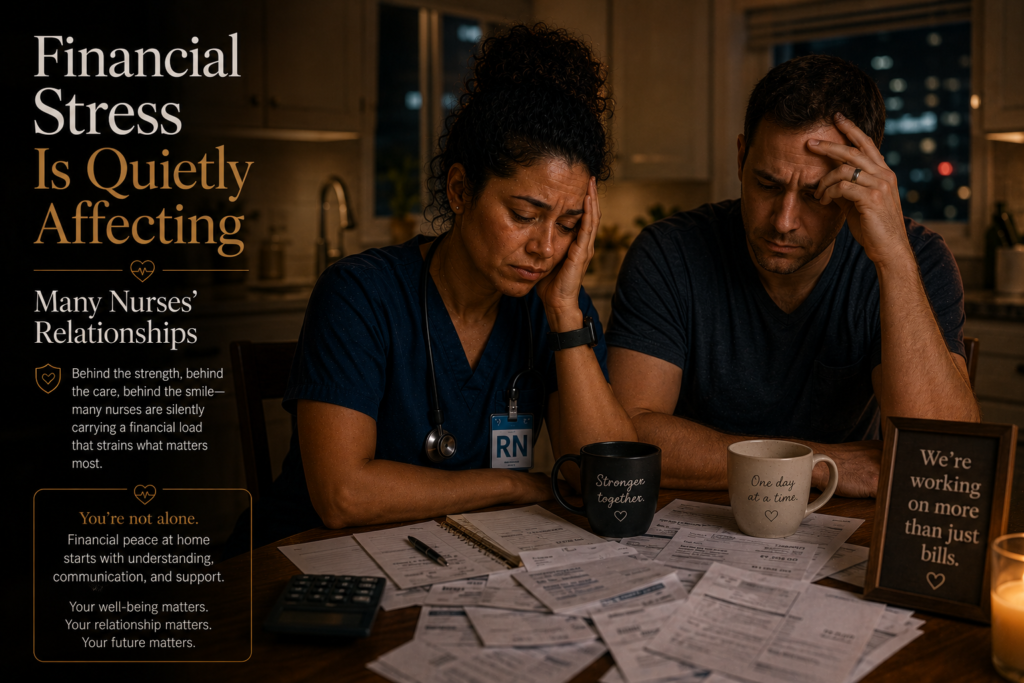
Financial stress in nurses is becoming an increasingly common challenge that affects far more than monthly budgets. For many nurses, money worries quietly spill over into their emotional well-being, relationships, family life, and overall quality of life. Long shifts, rising living expenses, student loan payments, childcare costs, and the pressure to pick up overtime can create constant financial anxiety that follows nurses long after they leave work.
Although nursing is often viewed as a stable and rewarding career, financial stress in nurses remains a growing concern across every stage of the profession. New graduates may struggle with debt, experienced nurses may feel trapped by increasing financial responsibilities, and many families depend on nursing income to meet everyday expenses. Over time, this ongoing pressure can create tension at home, increase emotional exhaustion, and make healthy communication more difficult.
In this article, you’ll learn why financial stress in nurses can quietly affect relationships, recognize the warning signs before they become overwhelming, and discover practical strategies to improve both financial and emotional well-being.
Financial Stress in Nurses Can Quietly Change Emotional Connection
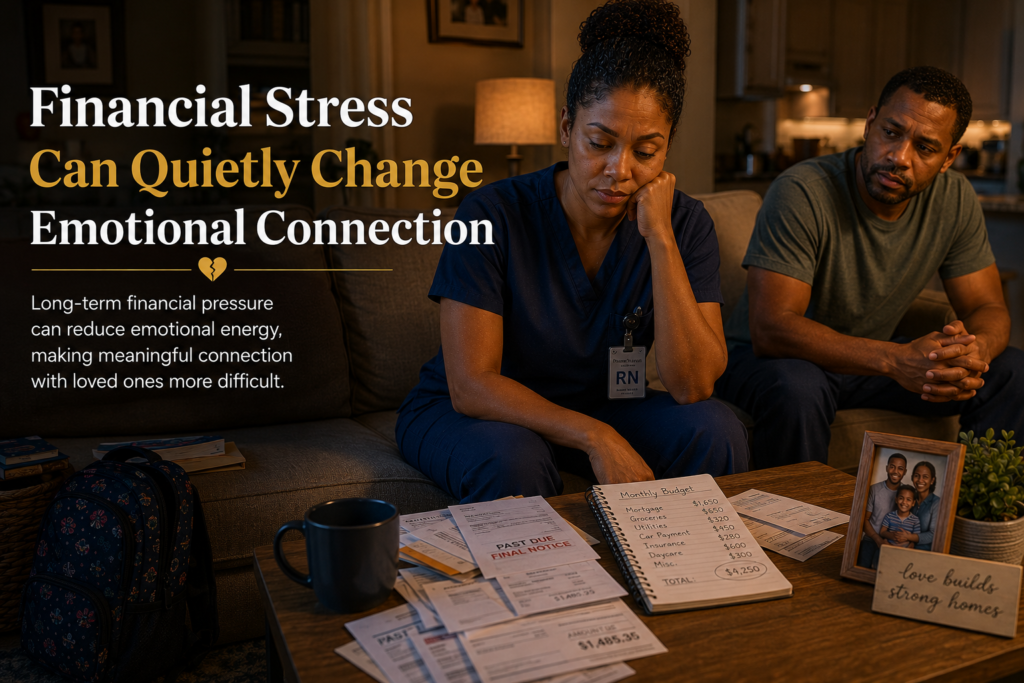
Financial stress in nurses often affects much more than monthly budgets or financial goals. When financial pressure continues for months or years, it can quietly reshape emotional well-being, making it more difficult to connect with spouses, children, friends, and even coworkers. Many nurses spend their workdays caring for others while carrying invisible financial burdens that continue long after their shifts end.
Living under constant financial pressure places the body in a prolonged state of stress. Worrying about paying bills, rising living expenses, student loans, childcare costs, or the need to work additional shifts can keep the nervous system in a heightened state of alert. Instead of fully relaxing at home, many nurses remain mentally occupied by financial concerns, leaving little emotional energy for meaningful relationships.
Over time, financial stress in nurses can contribute to emotional exhaustion caused by:
- Burnout
- Overtime
- Debt
- Survival mode
- Financial anxiety
- Chronic stress
As emotional reserves become depleted, some nurses may notice themselves becoming:
- Emotionally withdrawn
- Mentally exhausted
- Less patient
- More irritable
- Disconnected
- Emotionally unavailable
This does not mean they have stopped caring about the people they love. Instead, it often reflects the effects of prolonged stress on emotional capacity. When someone spends years constantly solving problems, caring for patients, and worrying about finances, there is simply less energy available for healthy communication and emotional connection at home.
Recognizing how financial stress in nurses influences relationships is an important first step toward protecting both emotional well-being and long-term financial health. By addressing financial challenges early and creating healthier coping strategies, nurses can begin restoring the emotional connection that chronic stress often erodes.se they are overwhelmed.
Many Nurses Feel Emotionally Drained Before They Even Get Home
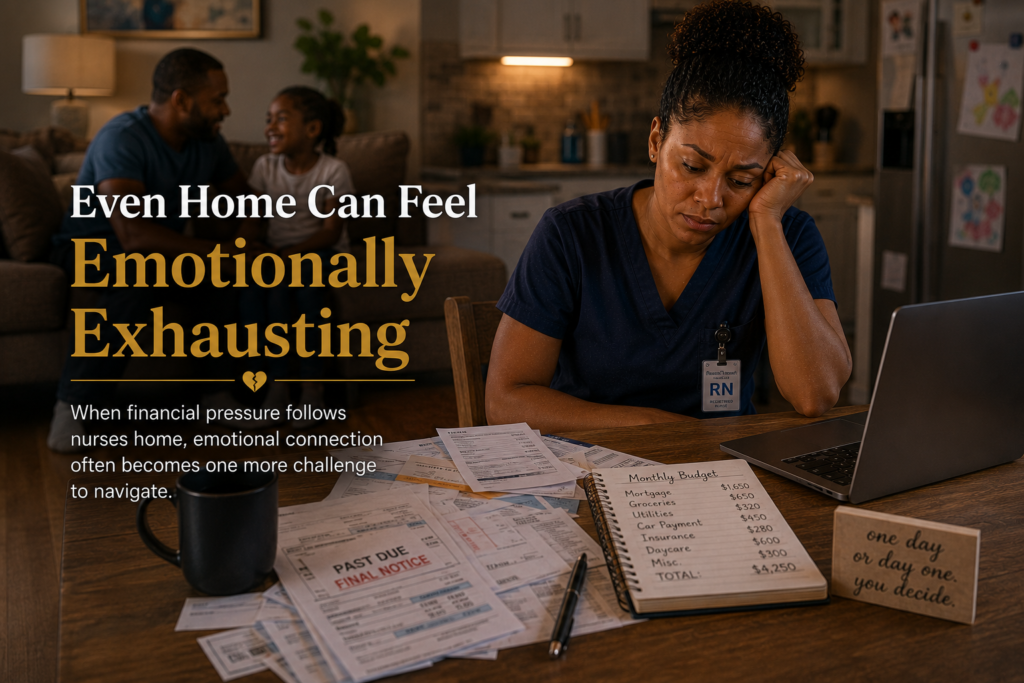
Nursing already demands enormous emotional energy. Every shift requires nurses to make critical decisions, comfort frightened patients, support grieving families, and remain calm during stressful situations. By the end of a long day, many nurses have already given away much of their emotional capacity at work. When financial stress in nurses is added to these daily demands, the emotional burden can become even heavier.
For many healthcare professionals, financial concerns don’t stay at the hospital—they follow them home. Thoughts about paying bills, covering childcare expenses, managing debt, saving for retirement, or deciding whether to pick up another overtime shift often continue long after the workday has ended. Instead of feeling relief after clocking out, many nurses carry an invisible emotional load that leaves little energy for the people they love.
Financial pressure often builds on top of challenges nurses already face, including:
- Difficult shifts
- Understaffing
- Mandatory or frequent overtime
- Patient trauma
- Physical exhaustion
- Compassion fatigue
- Burnout
- Financial anxiety
Over time, these combined stressors can leave even the most dedicated nurses emotionally depleted. Rather than feeling refreshed during time off, many continue operating in survival mode, where every decision is influenced by work demands and financial responsibilities.
As a result, some nurses quietly notice they have very little emotional energy left for:
- Meaningful communication
- Physical and emotional intimacy
- Deep emotional connection
- Patience with loved ones
- Healthy conflict resolution
- Being fully present with family and friends
This emotional withdrawal rarely happens because someone has stopped caring. Instead, it is often the result of prolonged stress and emotional overload. When the mind is constantly focused on work responsibilities and financial survival, it becomes increasingly difficult to be emotionally available at home.
Over months or years, financial stress in nurses can quietly influence relationships in ways that are easy to overlook. Small conversations become shorter, misunderstandings become more frequent, and moments that once brought joy may feel overshadowed by worry and exhaustion. Recognizing these patterns early allows nurses to prioritize both financial wellness and emotional recovery before chronic stress begins to affect every aspect of their lives.
Real Nurse Scenario: Feeling Emotionally Distant After Constant Stress
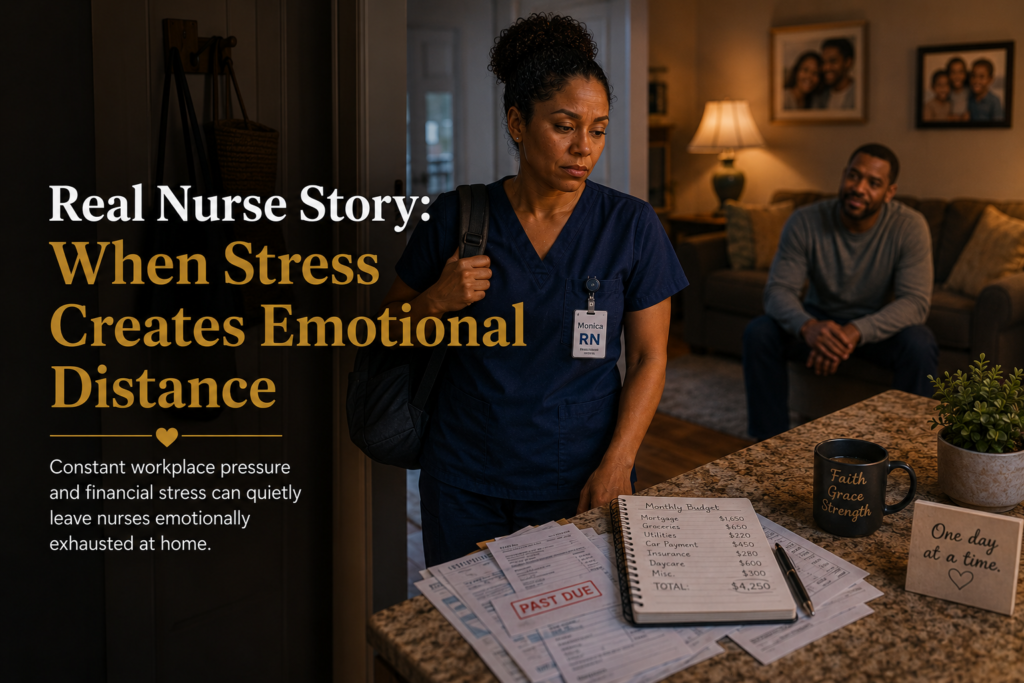
Monica has always considered herself a caring partner. At work, she spends twelve-hour shifts comforting frightened patients, supporting families during difficult moments, and making critical decisions under constant pressure. She genuinely loves her partner and values the life they have built together.
But over the past few years, something has quietly changed.
Between long hospital shifts, mandatory overtime, rising living expenses, and the emotional demands of nursing, Monica often feels mentally exhausted before she even walks through her front door. Instead of looking forward to relaxing at home, she finds herself replaying the events of her shift while worrying about upcoming bills, extra hours she may need to work, and whether her family is financially secure. This is how financial stress in nurses can slowly extend beyond the workplace and into personal relationships.
Some evenings, Monica barely has the emotional energy to start a conversation.
Not because she has stopped caring.
Not because her relationship is failing.
But because her nervous system already feels overloaded from constantly carrying:
- Patient stress
- Financial pressure
- Household responsibilities
- Monthly bills
- Overtime exhaustion
- Survival anxiety
She notices herself becoming quieter during dinner, less engaged in conversations, and more likely to retreat into silence after work. Even simple questions from her partner can feel overwhelming after spending an entire day solving problems for everyone else.
Over time, Monica begins feeling emotionally distant, even inside a relationship that means everything to her. She misses laughing together, enjoying quiet evenings, and feeling fully present, yet she struggles to find the emotional energy to reconnect. Like many healthcare professionals, she doesn’t realize that financial stress in nurses and chronic workplace stress are quietly draining the emotional reserves needed to maintain healthy relationships.
Recognizing these changes helps Monica understand that emotional distance is not always a reflection of love or commitment. Sometimes, it is the result of prolonged stress, burnout, and financial pressure that leave even the most compassionate nurses emotionally depleted. By acknowledging the impact of chronic stress, nurses can begin taking intentional steps to restore both their emotional well-being and the relationships that matter most.

Financial Stress Does Not Only Affect Money
Many people assume that financial stress in nurses only affects savings accounts, monthly budgets, or the ability to pay bills. While financial pressure certainly impacts a nurse’s financial stability, its effects often extend far beyond money. Long-term financial stress can quietly influence emotional well-being, physical health, relationships, and overall quality of life in ways that are not always immediately obvious.
For many nurses, financial concerns become a constant mental background noise. Questions about mortgage payments, rent, childcare expenses, student loans, rising living costs, retirement savings, or the need to work extra overtime rarely disappear when a shift ends. Instead, these worries often follow nurses home, leaving the mind with very little opportunity to fully relax and recover.
Over time, financial stress in nurses can quietly affect:
- Emotional connection
- Communication
- Patience
- Mental health
- Intimacy
- Emotional availability
- Nervous system recovery
- Sleep quality
- Family relationships
- Overall life satisfaction
When the brain remains under continuous stress, it often stays in a heightened state of alert. Instead of experiencing true rest, the nervous system continues preparing for the next financial challenge, the next unexpected expense, or the next overtime shift. This prolonged state of stress can make even small everyday interactions feel emotionally draining.
As emotional reserves become depleted, nurses may find themselves becoming quieter, less patient, more easily frustrated, or emotionally withdrawn. Conversations with loved ones may become shorter. Moments that once brought joy may feel overshadowed by worry or exhaustion. These changes rarely happen because someone has stopped caring. More often, they reflect the cumulative effects of chronic stress on emotional capacity.
Relationships are often among the first areas where prolonged financial pressure becomes visible. Partners, children, and close family members may notice emotional distance long before the nurse recognizes it themselves. While love and commitment remain strong, emotional energy becomes increasingly difficult to access after months or years of constantly operating in survival mode.
The encouraging reality is that recognizing these patterns creates an opportunity for change. Understanding how financial stress in nurses affects emotional health allows healthcare professionals to prioritize both financial wellness and personal recovery. Addressing financial challenges, setting healthy boundaries, seeking support, and making intentional time for rest can gradually restore emotional resilience and strengthen the relationships that matter most.

Emotional Exhaustion Can Affect Relationships Without Anyone Realizing It
Many nurses become so focused on surviving emotionally, financially, and professionally that they do not immediately recognize how chronic stress is influencing their relationships. The effects often develop gradually rather than all at once. After months or years of balancing demanding shifts, staffing shortages, financial obligations, and family responsibilities, emotional exhaustion can become so familiar that it simply feels like everyday life.
For many healthcare professionals, financial stress in nurses adds another layer of pressure to an already demanding career. Worrying about rising living expenses, debt, childcare costs, retirement savings, or the need to work extra overtime keeps the mind constantly occupied. Even after leaving the hospital, the nervous system may remain in a heightened state of alert, making it difficult to fully relax, recover, or be emotionally present with loved ones.
When someone constantly feels:
- Overwhelmed
- Emotionally overloaded
- Financially anxious
- Physically exhausted
- Mentally drained
- Burned out
the nervous system often has less emotional energy available for:
- Meaningful conversations
- Emotional connection
- Patience
- Conflict resolution
- Affection
- Recovery and relaxation
Over time, even healthy relationships can begin to reflect the effects of prolonged stress. Conversations may become shorter, misunderstandings may happen more often, and emotional closeness can slowly fade—not because love has disappeared, but because emotional reserves have been depleted.
This does not mean relationships are failing.
It does not mean someone has stopped caring.
More often, it means emotional exhaustion has been quietly building for too long. Recognizing this reality can be incredibly freeing because it shifts the focus away from blame and toward understanding. Many nurses discover that once they begin addressing both burnout and financial stress in nurses, they also begin rebuilding emotional connection at home.
Healing usually begins with greater awareness, honest communication, healthier financial habits, intentional recovery, and consistent self-care. Small changes—such as creating financial goals, setting healthier work boundaries, prioritizing quality time with loved ones, and allowing the nervous system time to recover—can gradually restore emotional resilience.
Nurses dedicate their careers to helping other people through some of life’s most difficult moments. They deserve relationships where they also feel supported, understood, and emotionally safe. By caring for their own mental, emotional, and financial well-being, nurses can strengthen not only their own health but also the relationships that matter most.upport, understanding, and recovery feel possible too.
Conclusion
Financial stress rarely stays confined to bank accounts. For many nurses, the emotional weight of living paycheck to paycheck, working frequent overtime, and constantly worrying about expenses gradually follows them home. Over time, this pressure can affect communication, emotional availability, patience, and the overall quality of personal relationships. While these challenges are common, they do not have to become permanent.
Recognizing the connection between financial stress and emotional well-being is an important first step toward positive change. Small improvements—such as creating a realistic financial plan, reducing unnecessary debt, setting healthier work boundaries, prioritizing rest, and communicating openly with loved ones—can make a meaningful difference over time. Recovery is rarely immediate, but consistent, intentional habits can strengthen both financial stability and emotional resilience.
Nurses spend their careers caring for others, yet they also deserve the opportunity to care for themselves and the people who matter most. Protecting your emotional health, strengthening your relationships, and improving your financial future are not competing goals—they work together to support a healthier, more balanced life. By addressing financial stress with practical strategies and seeking support when needed, you can build a future that includes not only greater financial security but also stronger relationships, renewed emotional energy, and lasting peace of mind. For additional information on nurse well-being, burnout prevention, and creating healthier work environments, the American Nurses Association (ANA) provides educational resources and professional guidance that can help nurses prioritize their physical and emotional health.
Frequently Asked Questions
Can financial stress affect relationships?
Yes. Financial stress can have a significant impact on relationships, especially when it becomes a long-term source of anxiety. Many nurses work overtime or multiple jobs to keep up with bills, debt, or rising living expenses, leaving little time or emotional energy for loved ones. Over time, chronic financial pressure can contribute to irritability, emotional withdrawal, communication difficulties, sleep problems, and increased conflict. While money itself is not always the cause of relationship struggles, the stress surrounding financial uncertainty often affects emotional connection. Creating a realistic budget, reducing unnecessary financial pressure, and having honest conversations with a partner can help strengthen both financial and relationship well-being.
Why do some nurses become emotionally withdrawn?
Many nurses become emotionally withdrawn after experiencing prolonged periods of burnout, compassion fatigue, and chronic stress. Nursing requires constant emotional investment, and after caring for patients throughout long shifts, there may be little emotional energy left for family or friends. Emotional withdrawal is often the brain’s way of protecting itself from continued stress rather than a sign that someone no longer cares. Recognizing these early signs and prioritizing recovery, healthy boundaries, adequate sleep, and emotional support can help nurses gradually reconnect with the people they love.
Can emotional exhaustion affect intimacy and communication?
Yes. Emotional exhaustion can make it more difficult to communicate openly, show affection, and remain emotionally present in a relationship. Nurses experiencing burnout often report feeling mentally drained, making even simple conversations feel overwhelming after work. This exhaustion can lead to misunderstandings, reduced patience, and emotional distance if left unaddressed. Taking time to recover physically and emotionally, improving work-life balance, and maintaining honest communication can help rebuild trust, intimacy, and emotional connection over time.
Can relationship stress improve gradually?
Absolutely. Relationship stress caused by burnout or financial pressure does not have to be permanent. Many nurses experience meaningful improvements once they begin addressing the underlying causes of chronic stress. Prioritizing rest, setting healthier work boundaries, managing finances more intentionally, and spending quality time with loved ones can gradually restore emotional closeness. Recovery is often a process rather than an overnight change, but consistent small steps can strengthen communication, rebuild trust, and improve overall relationship satisfaction while supporting long-term emotional well-being.
Learn More About Nurse Well-Being and Stress
Then paste these two paragraphs underneath it:
Nurses experiencing chronic stress, burnout, or emotional exhaustion can benefit from trusted, evidence-based resources. The American Nurses Association (ANA) offers guidance on nurse well-being, workplace safety, and building healthier work environments for healthcare professionals.
Chronic stress can affect emotional health, relationships, and overall well-being. The National Institute of Mental Health (NIMH) provides reliable information about stress, anxiety, and mental health, along with practical resources that can help individuals better understand these challenges.