

Many nurses feel constantly behind financially despite earning stable incomes and working long hours. This article explores why nurses feel constantly behind financially, the common money challenges they face, and practical strategies for building a stronger financial future.
Many nurses work incredibly hard yet still quietly feel financially behind all the time. From the outside, nursing is often viewed as a stable and well-paying profession. Many people assume that once someone becomes a nurse, financial stress should automatically disappear. However, the reality for many healthcare professionals is very different.
Even after working overtime, picking up extra shifts, earning certifications, and sacrificing personal time, many nurses still struggle with the feeling that they are constantly trying to catch up financially. The paycheck arrives, bills get paid, and responsibilities are handled, yet there never seems to be enough left over to feel truly secure.
Bills continue coming.
Expenses continue rising.
Financial goals continue getting pushed further into the future.
And the stress never fully disappears.
For many nurses, financial pressure is not caused by one major event. Instead, it is the accumulation of dozens of smaller challenges over time. Rising housing costs, inflation, student loans, credit card debt, childcare expenses, transportation costs, healthcare expenses, and everyday living costs can slowly create financial strain even for those earning a decent income.
As a result, many nurses begin feeling emotionally exhausted from constantly surviving financially without ever feeling truly ahead. They may find themselves working extra shifts not because they want to, but because they feel they have no choice. Time that could be spent resting, recovering, or enjoying life becomes dedicated to generating additional income simply to maintain financial stability.
This ongoing financial pressure often creates a cycle of stress and burnout. The harder someone works, the more exhausted they become. Yet despite the effort, the feeling of being financially behind remains. Over time, this can affect confidence, emotional well-being, relationships, sleep quality, and overall quality of life.
Many nurses quietly wonder:
“Why does it still feel this hard even though I work so much?”
The answer is often more complex than income alone. Financial wellness depends on many factors, including debt levels, spending habits, financial literacy, savings, investing, and long-term financial planning. A good income can help, but it does not automatically create financial freedom.
The truth is that many nurses are carrying financial burdens that are invisible to others. They may appear successful on the surface while privately dealing with financial anxiety, money stress, and the constant pressure to stay afloat.
Understanding why nurses feel constantly behind financially is the first step toward changing the situation. Once the underlying causes are identified, it becomes possible to create healthier financial systems, reduce financial stress, and begin building a more secure financial future.
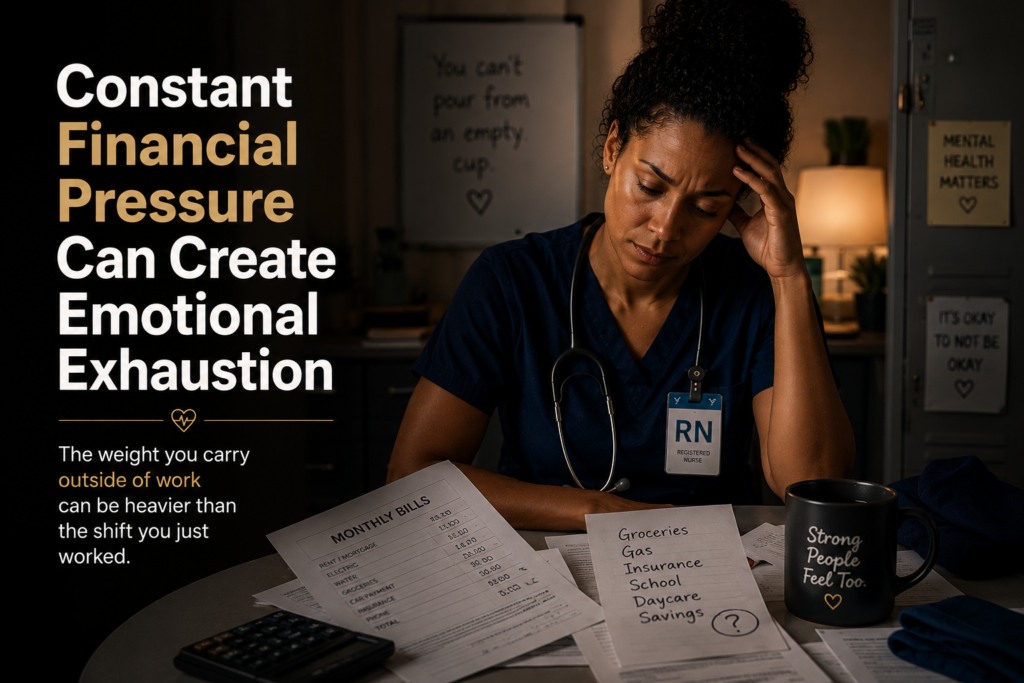
For many nurses, financial stress does not come from one single problem. Instead, it develops gradually through the accumulation of ongoing financial pressures that never seem to fully disappear.
It comes from the exhausting feeling of constantly trying to stay ahead while new expenses continue appearing.
Just when one financial challenge is resolved, another often takes its place. A credit card balance gets paid down, but a car repair appears. Overtime helps cover monthly bills, but inflation increases grocery costs. An emergency fund begins to grow, but an unexpected expense forces it to be used.
Over time, this cycle can leave many nurses feeling emotionally drained and financially overwhelmed.
Some nurses quietly struggle with:
- Monthly bills that continue increasing
- Student loan payments
- Credit card debt
- Overtime dependency
- Rising living expenses
- Childcare costs
- Unexpected emergencies
- Housing expenses
- Family financial responsibilities
- Pressure to work harder just to maintain stability
While each individual challenge may seem manageable on its own, the combined weight of these financial obligations can create significant emotional strain.
Many nurses spend their days caring for patients, solving problems, making critical decisions, and supporting others through difficult situations. Yet after leaving work, they often face another source of stress waiting at home: financial pressure.
The emotional impact of chronic financial stress is often underestimated. Financial worries can follow nurses throughout the day, making it difficult to fully relax, recover, or enjoy time away from work. Even during days off, thoughts about bills, debt, savings, or upcoming expenses can remain in the background.
As financial pressure continues, emotional exhaustion often follows.
Many nurses report feeling:
- Mentally drained
- Constantly worried about money
- Emotionally fatigued
- Less motivated
- Irritable or frustrated
- Unable to fully relax
- Concerned about the future
- Trapped in a cycle of financial survival
The nervous system is not designed to remain under constant stress indefinitely. When financial concerns persist for months or years, the body and mind often remain in a heightened state of alertness. This can contribute to anxiety, sleep disturbances, burnout, difficulty concentrating, and feelings of hopelessness.
One of the most challenging aspects of chronic financial pressure is that it can slowly change a person’s outlook. Many nurses who were once optimistic about their financial future begin lowering expectations and focusing only on getting through the next month.
Long-term financial goals such as investing, retirement planning, wealth building, and financial freedom may begin to feel unrealistic or out of reach.
Instead of asking:
“How can I build wealth?”
Many begin asking:
“How can I make it to next month?”
This shift from long-term growth to short-term survival is one of the clearest signs that chronic financial stress is taking an emotional toll.
The good news is that recognizing the impact of financial pressure is an important first step toward change. Understanding how financial stress affects emotional health can help nurses begin creating healthier financial systems, reducing financial anxiety, and rebuilding a sense of hope about their future.
Financial recovery is not only about improving numbers on a spreadsheet. It is also about restoring peace of mind, reducing emotional exhaustion, and creating a life that feels less dominated by financial stress and more focused on long-term stability and well-being.

Many Nurses Feel Like Resting Means Falling Further Behind
For some nurses, chronic financial pressure slowly changes the way rest feels emotionally. What should feel like recovery, self-care, and restoration can instead become associated with anxiety, guilt, and financial worry.
Instead of viewing days off as an opportunity to recharge, many nurses begin connecting time away from work with:
- Missed overtime opportunities
- Lost income
- Unpaid bills
- Financial pressure
- Growing debt
- Financial responsibilities
- Falling behind financially
Over time, this mindset can create a difficult emotional conflict. The body may desperately need rest, but the mind remains focused on financial obligations and the need to earn more money.
Many nurses find themselves caught between competing needs:
- Needing physical rest after long shifts
- Needing additional income to cover expenses
- Needing emotional recovery from workplace stress
- Needing greater financial stability
- Needing time with family and loved ones
- Needing to focus on personal well-being
This internal struggle can become deeply exhausting over time.
A nurse may finally have a day off after working several demanding shifts, yet instead of feeling relaxed, thoughts immediately turn toward finances. Questions such as “Should I pick up another shift?”, “Can I afford to take this weekend off?”, or “What bills are coming up next week?” begin to dominate the day.
As financial stress increases, rest can start feeling unproductive. Some nurses report feeling guilty when they are not working because they know additional hours could generate more income. Others feel anxious because every day off appears to represent money they are not earning.
Unfortunately, this mindset can contribute to a dangerous cycle.
The more financial pressure increases, the more overtime becomes necessary. The more overtime becomes necessary, the less time remains for recovery. The less time available for recovery, the greater the risk of emotional exhaustion, compassion fatigue, and burnout.
Many nurses become so accustomed to operating in survival mode that they struggle to fully relax even when opportunities for rest exist. Their minds remain focused on financial responsibilities, upcoming expenses, and the constant need to stay ahead.
Over time, this can affect both physical and emotional health. Chronic stress may contribute to sleep disturbances, anxiety, fatigue, irritability, difficulty concentrating, and feelings of being overwhelmed.
What makes this situation particularly challenging is that many nurses genuinely need both things at the same time. They need financial stability, but they also need recovery. They need additional income, but they also need time to rest, heal, and reconnect with the parts of life that exist outside of work.
Financial wellness is not simply about earning more money. It is also about creating a life where rest does not feel financially dangerous. True financial stability allows people to take time off, recover from stress, spend time with family, and enjoy life without feeling guilty for not constantly working.
For many nurses, learning to balance financial goals with personal well-being is an important step toward breaking the cycle of chronic financial stress. Rest is not a luxury. It is a necessity for long-term physical health, emotional resilience, career sustainability, and overall quality of life.
When nurses begin building stronger financial systems, reducing debt, increasing savings, and improving financial literacy, they often discover that rest gradually becomes less stressful and more restorative. Over time, financial stability can create something many nurses have not felt in years: the ability to rest without fear of falling further behind..

Real Nurse Scenario: Working Constantly but Never Feeling Ahead
Lauren is a registered nurse who works hard, picks up overtime whenever possible, and rarely turns down opportunities to earn extra income. Like many healthcare professionals, she believed that working more hours would eventually create the financial security she had been searching for.
From the outside, people assume she must be doing financially well because she works so much. Coworkers see the extra shifts. Friends notice how often she is working. Family members assume that her nursing income should be more than enough to cover her expenses.
But privately, Lauren’s reality feels very different.
Despite her long hours and consistent effort, she still feels financially overwhelmed almost every month. The paycheck arrives, bills get paid, and for a brief moment things seem manageable. Then another expense appears.
A car repair.
A medical bill.
A higher utility payment.
An unexpected family expense.
A credit card balance that refuses to disappear.
As soon as one financial problem is handled, another seems to take its place.
Because of this, Lauren often finds herself mentally carrying a constant financial checklist everywhere she goes. Even during breaks at work or on days off, her mind continues racing through:
- Bills that need to be paid
- Outstanding debt
- Grocery expenses
- Upcoming monthly obligations
- Overtime opportunities
- Family responsibilities
- Emergency expenses
- Financial goals she feels unable to reach
The financial pressure never feels completely gone.
Instead of feeling secure, Lauren often feels like she is simply managing one financial crisis after another. She is not necessarily falling apart financially, but she never feels fully ahead either.
Over time, this constant pressure begins affecting her emotionally far more than most people realize.
She finds it difficult to fully relax on her days off because she worries about money.
She feels guilty when she turns down overtime because she knows the extra income could help.
She struggles to enjoy moments of rest because part of her mind remains focused on financial responsibilities.
Even when she accomplishes something financially positive, such as paying off a debt or increasing her savings, the relief often feels temporary because another expense eventually appears.
What makes Lauren’s situation so challenging is that her experience is not unusual.
Many nurses live in a similar cycle of working hard, earning respectable incomes, and still feeling financially stressed. The problem is not always income. In many cases, it is the combination of rising expenses, debt obligations, inflation, financial pressure, and emotional exhaustion that creates the feeling of constantly being behind.
Over time, survival mode becomes normal.
Instead of focusing on financial freedom, investing, wealth building, or long-term goals, the focus shifts toward simply making it through the next month without falling further behind.
The emotional weight of carrying financial stress every day can be significant. Many nurses like Lauren begin questioning whether all their hard work is actually making a difference. They may feel frustrated, discouraged, or emotionally exhausted despite doing everything they believe they are supposed to do.
Lauren’s story highlights an important reality: financial stress is not always visible. Someone can appear successful, hardworking, and financially stable on the outside while privately struggling with constant financial anxiety and emotional exhaustion.
Recognizing this reality is often the first step toward meaningful change. Once nurses understand that they are not alone in these feelings, they can begin focusing on healthier financial habits, stronger financial systems, and long-term strategies that create genuine financial stability rather than constant financial survival.e.

Many nurses become so focused on financial survival that they do not immediately realize how deeply chronic financial stress is affecting them emotionally.
When financial pressure becomes a daily reality, people often adapt to it without recognizing the long-term impact it is having on their mental and emotional well-being. The stress becomes so familiar that it begins to feel normal.
But constantly feeling:
- Financially behind
- Emotionally overwhelmed
- Pressured to keep working
- Unable to fully relax
- Trapped in survival mode
- Worried about money
- Anxious about future expenses
- Responsible for everyone else’s needs
can quietly increase emotional exhaustion over time.
Many nurses spend their careers caring for patients, supporting families, solving problems, and helping others through difficult situations. However, when they return home, they may be carrying their own invisible burden of financial stress.
At first, the symptoms may seem minor.
A little more worry.
A little less sleep.
More difficulty relaxing.
Increased frustration.
Feeling mentally exhausted more often.
Over time, however, chronic financial stress can begin affecting nearly every area of life.
Some nurses report experiencing:
- Increased anxiety
- Emotional fatigue
- Difficulty sleeping
- Irritability
- Reduced motivation
- Difficulty concentrating
- Feelings of hopelessness
- Increased burnout
- Constant mental exhaustion
The nervous system is not designed to remain under continuous stress indefinitely. When financial worries continue for months or years, the brain may remain in a heightened state of alertness. Instead of feeling safe and secure, the body continues preparing for the next problem, the next bill, or the next financial emergency.
As a result, many nurses struggle to fully disconnect from stress even when they are not actively dealing with financial challenges. Their minds continue running through unpaid bills, upcoming expenses, debt balances, overtime opportunities, and future financial obligations.
Some nurses eventually stop asking:
“When will life finally feel easier?”
because survival itself becomes the primary focus.
Long-term goals such as financial freedom, investing, retirement planning, wealth building, and personal growth begin to feel distant or unrealistic. The focus shifts toward simply getting through the next week or the next month.
Unfortunately, living in a constant state of financial survival can create emotional consequences that are often overlooked. When stress remains present for long periods, many people begin feeling emotionally disconnected, discouraged, or trapped. They may lose confidence in their ability to improve their situation, even when opportunities for positive change exist.
The good news is that awareness creates opportunity. Recognizing the connection between financial stress and mental health is often the first step toward recovery.
Financial wellness and emotional wellness are closely connected. Improving financial stability can help reduce anxiety, create a greater sense of control, and allow the nervous system to experience more periods of rest and recovery.
While financial challenges may not disappear overnight, understanding their emotional impact can help nurses approach both financial recovery and mental well-being with greater compassion, patience, and realistic expectations. Sometimes the most important step forward is simply recognizing that constant financial stress is affecting more than your bank account—it is affecting your quality of life as well.f time can become deeply draining mentally and emotionally.

Many nurses spend years functioning under nonstop emotional and financial pressure. What begins as a temporary season of working harder, picking up extra shifts, and managing financial obligations can slowly become a long-term way of life.
Over time, constantly feeling financially behind can begin making financial stability feel emotionally impossible to reach.
Many nurses become so accustomed to living under pressure that they struggle to imagine a different reality. The idea of having enough savings, feeling secure about the future, taking time off without guilt, or enjoying life without constant money worries can begin to feel distant or unrealistic.
When financial stress continues for months or years, it often affects far more than a person’s bank account.
Chronic financial pressure can quietly affect:
- Emotional recovery
- Nervous system regulation
- Burnout recovery
- Mental health
- Sleep quality
- Personal relationships
- Physical health
- Emotional resilience
- Self-confidence
- Overall quality of life
Many nurses spend so much time focusing on responsibilities that they do not realize how much energy is being consumed by financial worry. Even when they are not actively paying bills or dealing with expenses, part of their mind remains occupied by thoughts about money, debt, overtime opportunities, and future financial obligations.
Over time, this constant state of vigilance can make true rest feel difficult. Days off no longer feel restorative. Vacations may feel stressful. Even positive financial progress can feel temporary because another expense always seems to appear.
This is one reason many nurses report feeling exhausted even when they are doing everything “right.”
They are working hard.
They are showing up for patients.
They are supporting their families.
They are handling responsibilities.
Yet they still feel emotionally drained because survival mode requires a tremendous amount of mental and emotional energy.
One of the greatest misconceptions about financial wellness is the belief that more income automatically creates peace of mind. While earning more money can certainly help, financial peace often comes from something deeper: feeling a sense of control, stability, and confidence about the future.
Many nurses feel constantly behind financially because income alone does not automatically create financial stability. Rising living expenses, debt, lifestyle inflation, inflation, unexpected emergencies, and a lack of financial education can make it difficult to build wealth even when income increases.
As a result, many nurses respond by working more hours. While additional income may provide temporary relief, it does not always address the underlying financial systems and habits that contribute to ongoing stress.
Understanding why nurses feel constantly behind financially is often the first step toward meaningful change.
The goal is not perfection overnight.
The goal is not eliminating every financial challenge immediately.
And the goal is not pretending financial stress does not exist.
Instead, the goal is gradually creating more breathing room emotionally, financially, and mentally over time.
That may mean:
- Building an emergency fund
- Paying down debt consistently
- Improving financial literacy
- Creating a realistic budget
- Developing healthier money habits
- Reducing reliance on overtime
- Learning about investing and wealth building
- Setting realistic long-term financial goals
Each small step creates momentum.
Each positive financial decision creates a stronger foundation.
Each improvement helps move life away from survival mode and closer to financial stability.
For many nurses, healing begins when survival mode is no longer the only way life feels possible. Financial recovery is often a gradual process, but progress is possible.
Nurses spend their careers helping others heal, recover, and move forward. They deserve the same opportunity in their own lives.
They deserve lives that feel calmer than constant pressure.
They deserve financial systems that support peace rather than anxiety.
They deserve opportunities to rest without guilt, plan without fear, and look toward the future with confidence.
Most importantly, they deserve to know that constantly feeling behind today does not mean they will always feel that way. With time, education, consistency, and healthier financial habits, it is possible to create a future that feels more stable, more secure, and far less dominated by financial stress.

Conclusion
Many nurses feel constantly behind financially despite working hard, earning stable incomes, and dedicating their lives to caring for others. From the outside, it may seem like a nursing career should automatically provide financial security. However, the reality is often much more complicated.
Rising living expenses, student loan debt, credit card balances, inflation, childcare costs, housing expenses, and unexpected emergencies can create ongoing financial pressure that feels difficult to escape. For many nurses, the challenge is not a lack of effort. The challenge is carrying the weight of multiple financial responsibilities while also managing the emotional and physical demands of a healthcare career.
Over time, this constant pressure can become emotionally exhausting. Many nurses find themselves trapped in a cycle of working more shifts, picking up overtime, and sacrificing rest in an attempt to stay ahead financially. Unfortunately, this approach often leads to burnout, emotional fatigue, and the feeling that no matter how much they work, they never truly make progress.
One of the most difficult aspects of chronic financial stress is that it can quietly affect every area of life. Financial worries can influence sleep quality, mental health, relationships, physical well-being, job satisfaction, and overall happiness. When survival mode becomes a daily reality, financial peace can feel impossible to achieve.
The good news is that financial recovery does not require perfection. It does not happen overnight, and it rarely comes from a single decision. Instead, lasting financial improvement is often the result of small, consistent actions repeated over time. Creating a realistic budget, paying down debt, building emergency savings, increasing financial literacy, improving money management skills, and developing healthier financial habits can gradually create meaningful change.
Many nurses who once felt financially overwhelmed eventually reach a point where they feel more in control of their money, less dependent on overtime, and more confident about their future. The journey may take time, but progress is possible.
If you currently feel constantly behind financially, remember that your financial situation today does not have to define your future. Every positive financial decision, no matter how small, can help move you closer to greater financial stability, reduced stress, and long-term financial freedom.
You have already developed the discipline, resilience, and dedication required to succeed in a demanding profession. Those same qualities can help you build a stronger financial future. Financial peace may feel far away right now, but with patience, consistency, and a commitment to improving your financial habits, it is possible to create a future that feels more secure, more stable, and less stressful.
Frequently Asked Questions
Why do some nurses constantly feel financially behind?
Rising expenses, debt, overtime dependency, burnout, and chronic financial pressure can make many nurses feel emotionally stuck in survival mode.
Can chronic financial stress affect mental health?
Yes. Long-term financial stress can contribute to anxiety, emotional exhaustion, burnout, sleep problems, and nervous system overload.
Why does survival mode feel emotionally exhausting?
When someone spends long periods focusing only on financial survival, the nervous system often remains emotionally activated and overwhelmed.
Can financial recovery happen gradually?
Yes. Many nurses slowly improve financial stability, emotional recovery, and nervous system healing over time through healthier financial systems and reduced chronic stress.
Can nurses feel financially stressed even with a good income?
Yes. Many nurses experience financial stress despite earning a stable income. Student loans, credit card debt, rising living expenses, inflation, childcare costs, and a lack of financial planning can make it difficult to build savings or achieve financial freedom.
What are the most common causes of financial stress for nurses?
Common causes of financial stress for nurses include debt, overtime dependency, insufficient emergency savings, lifestyle inflation, unexpected expenses, and limited financial literacy. These challenges can make long-term wealth building feel difficult and overwhelming.
How can nurses improve their financial stability over time?
Nurses can improve financial stability by creating a realistic budget, reducing high-interest debt, building an emergency fund, increasing income strategically, improving money management skills, and focusing on long-term financial goals. Small, consistent changes often lead to meaningful financial progress.