
Can you build wealth using an IUL? Many people interested in financial freedom, retirement planning, and tax-advantaged growth want to know whether they can build wealth using an IUL as part of a long-term financial strategy.
Many nurses work incredibly hard to earn strong incomes.
But over time, many also begin realizing that earning money and building lasting wealth are not always the same thing.
Taxes.
Debt.
Burnout spending.
Lifestyle inflation.
Financial stress.
Lack of long-term strategy.
All of these things can quietly slow wealth building — even for high earners.
That is one reason more nurses, business owners, and higher-income professionals have started exploring strategies focused on:
- long-term protection
- tax diversification
- cash value accumulation
- legacy planning
- financial flexibility
And one financial tool that often enters those conversations is Indexed Universal Life Insurance — commonly called an IUL.
But despite how heavily IULs are marketed online, many people still do not fully understand:
- how they work
- how wealth building inside an IUL actually happens
- who they may help
- who they may NOT be appropriate for
- and why proper policy design matters so much
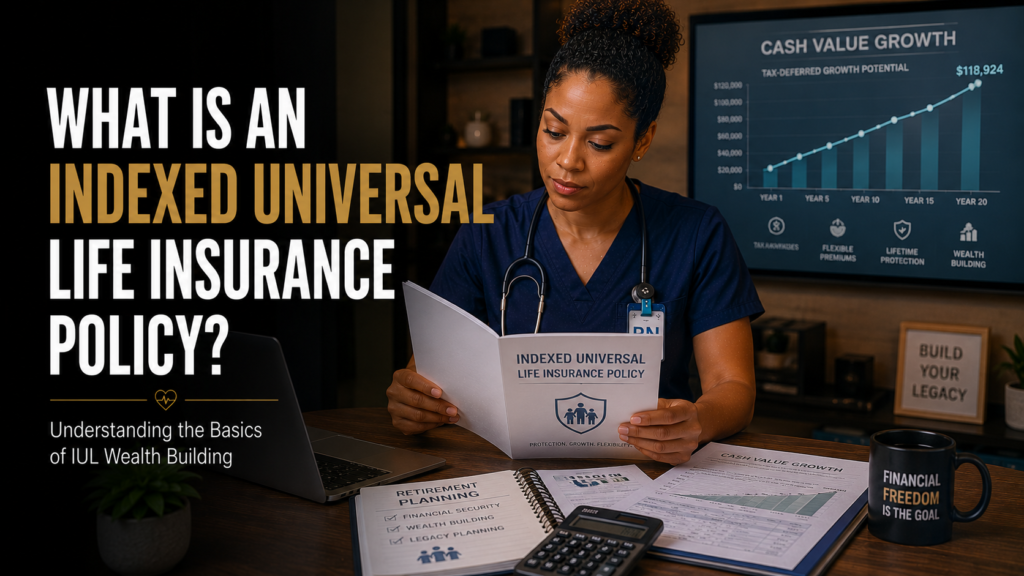
What Is an Indexed Universal Life Insurance (IUL) Policy?
AnAn Indexed Universal Life Insurance policy — often called an IUL — is a type of permanent life insurance designed to combine life insurance protection, cash value accumulation, and financial flexibility into a single financial product.
Unlike term life insurance, which provides coverage for a specific period of time, an IUL is designed to remain in force throughout a person’s lifetime as long as policy requirements are met. In addition to the death benefit, an IUL also includes a cash value account that has the potential to grow over time.
This cash value component is one of the primary reasons many people explore whether they can build wealth using an IUL as part of their long-term financial strategy.
Like traditional life insurance, an IUL includes a death benefit designed to help financially protect loved ones if something happens to the insured person.
However, unlike basic term insurance, an IUL may also build cash value over time.
That cash value growth is typically linked to the performance of a market index such as the S&P 500 without directly investing the policyholder’s money into the stock market itself.
That distinction is extremely important.
The policy owner does not own stocks within the policy. Instead, the insurance company credits interest based on the performance of a selected market index according to specific policy rules.
These rules may include:
- Participation rates
- Caps
- Spreads
- Floors
- Crediting methods
Many policies include a floor of 0%, meaning a negative market year may result in no credited interest from index performance but not a direct market loss from the index itself.
This downside protection is one feature that attracts many individuals seeking a balance between growth potential and risk management.
Supporters of IULs often view them as a tool that can provide:
- Permanent life insurance protection
- Tax-advantaged cash value growth
- Potential supplemental retirement income
- Access to policy loans
- Financial flexibility during retirement
- Legacy planning opportunities
At the same time, it is important to understand that IULs are complex financial products. Policy performance depends on fees, expenses, policy design, funding levels, and long-term management.
For that reason, anyone considering an IUL should take time to understand how the policy works before making a financial commitment.
Many people focus only on the potential benefits while overlooking the importance of proper policy structure and realistic expectations.
Understanding the foundation of how an IUL works is the first step toward determining whether it can play a meaningful role in your overall wealth-building strategy.
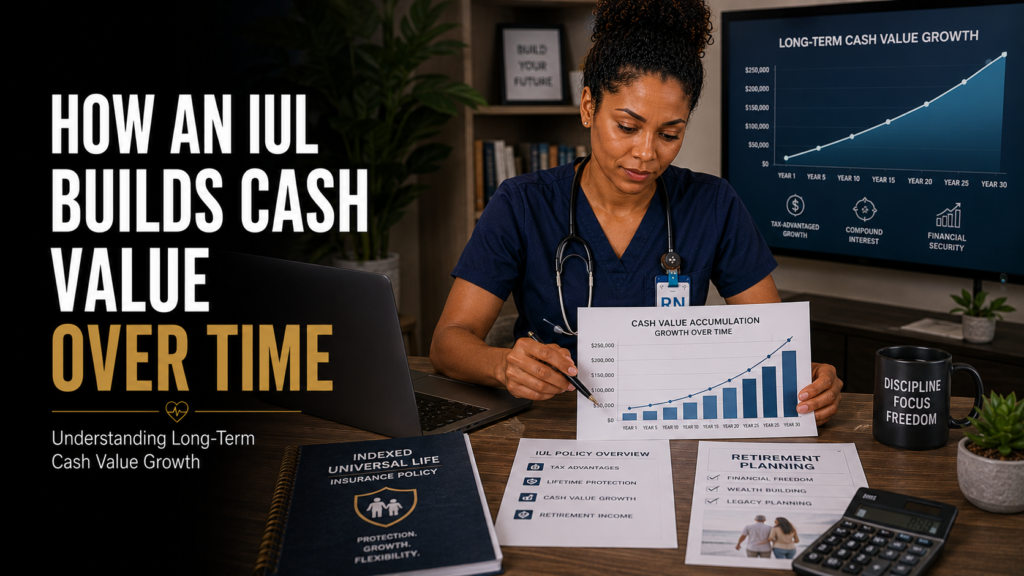
How an IUL Builds Cash Value Over Time
One of the primary reasons people explore whether they can build wealth using an IUL is the policy’s ability to accumulate cash value over time.
When premiums are paid into an Indexed Universal Life Insurance policy, the money does not all go into a single account. Instead, the premium is generally allocated among several components of the policy.
Portions of the premium may go toward:
- Insurance costs
- Administrative expenses
- Policy charges
- Riders and optional benefits
- Cash value accumulation
The remaining amount is credited to the policy’s cash value account, where it has the potential to grow over time according to the policy’s indexing strategy and crediting method.
Unlike traditional investment accounts, the cash value inside an IUL is not directly invested in the stock market. Instead, the insurance company uses a formula tied to the performance of a selected market index to determine how much interest may be credited to the policy.
As years pass and the policy continues to be funded properly, cash value may begin growing into a meaningful financial asset.
This growth is often most noticeable over longer time horizons because IULs are generally designed as long-term financial vehicles rather than short-term investment strategies.
Depending on policy structure and performance, some policyholders later use accumulated cash value for:
- Supplemental retirement income
- Business opportunities
- Emergency liquidity
- Tax diversification strategies
- Major life expenses
- College funding strategies
- Legacy planning
- Long-term financial flexibility
Many individuals appreciate the flexibility that comes from having access to a source of cash value that may be available during retirement or unexpected financial situations.
However, it is important to understand that cash value growth is not guaranteed beyond the policy’s contractual guarantees.
Like any financial strategy, long-term outcomes depend heavily on:
- Policy design
- Funding levels
- Time horizon
- Policy expenses
- Crediting rates
- Market conditions
- Insurance company performance
- How the policy is managed over time
One of the biggest mistakes people make is underfunding an IUL while expecting significant long-term cash value growth. The effectiveness of an IUL often depends on consistent funding and a long-term perspective.
For this reason, many financial professionals encourage policyholders to view an IUL as part of a broader financial strategy rather than relying on it as their only wealth-building tool.
When properly structured and managed, an IUL can provide both life insurance protection and the potential for meaningful cash value accumulation over time.
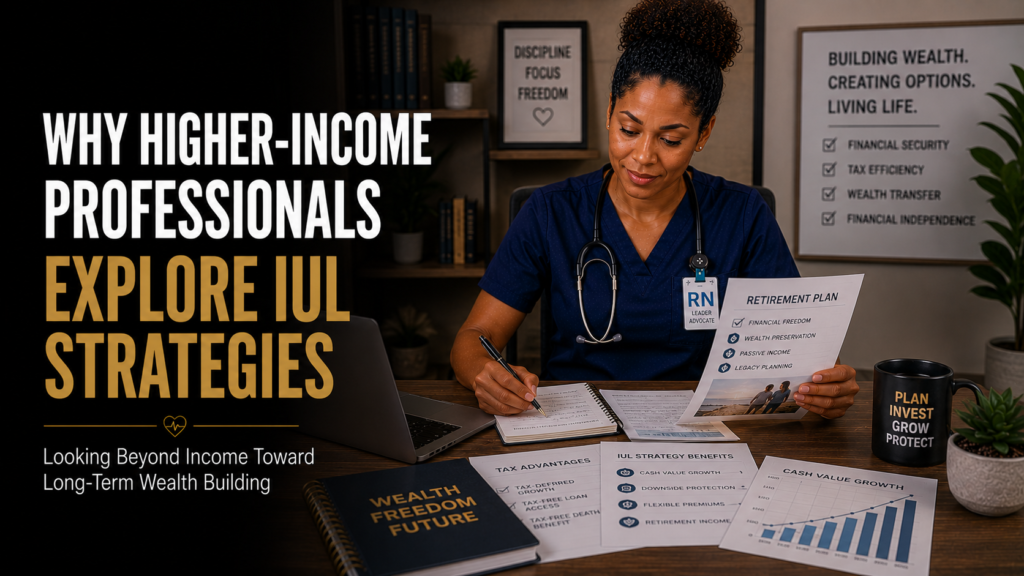
Why Higher-Income Professionals Often Explore IUL Strategies
Many higher-income professionals eventually realize that building wealth involves far more than simply earning a good income.
While a larger paycheck can certainly create opportunities, income alone does not automatically create financial security, financial freedom, or long-term wealth. Over time, many professionals discover that taxes, lifestyle inflation, market volatility, debt obligations, and a lack of strategic planning can quietly slow wealth-building progress.
This realization often occurs after years of hard work.
A nurse may be earning six figures.
A physician may have a thriving practice.
A business owner may be generating substantial revenue.
Yet despite strong earnings, they may still feel concerned about taxes, retirement planning, asset protection, and preserving wealth for future generations.
As a result, many higher-income professionals begin exploring financial strategies that focus on:
- Tax diversification
- Long-term protection
- Liquidity access
- Retirement flexibility
- Wealth accumulation
- Legacy planning
- Asset preservation
- Financial efficiency
- Estate planning
- Long-term financial security
For some nurses, physicians, business owners, and entrepreneurs, an Indexed Universal Life Insurance policy becomes attractive because it offers several potential benefits within a single financial vehicle.
Depending on the policy structure, an IUL may provide:
- Permanent life insurance protection
- Tax-deferred cash value growth
- Potential access to policy loans
- Downside protection features
- Supplemental retirement income opportunities
- Legacy planning benefits
- Long-term financial flexibility
- Potential tax-free death benefits for beneficiaries
One feature that particularly attracts higher-income earners is the concept of tax diversification.
Many individuals already contribute to retirement accounts that may create taxable income in retirement. Some professionals explore IUL strategies as a way to create additional sources of future funds that may be accessed differently from traditional retirement accounts, depending on policy design and applicable tax laws.
Another reason some professionals consider IULs is the desire for flexibility.
Unlike certain retirement accounts that may have contribution limits, withdrawal restrictions, or required distributions, an IUL may offer different planning opportunities depending on the policy’s structure and performance.
However, it is important to maintain realistic expectations.
An IUL is not a shortcut to wealth.
It is not a replacement for saving, investing, budgeting, or responsible financial management.
And it is certainly not appropriate for every individual.
Like any financial tool, the value of an IUL depends heavily on:
- Proper structure
- Long-term funding
- Consistent policy management
- Appropriate expectations
- Professional guidance
- Alignment with overall financial goals
A poorly designed policy can produce disappointing results, while a properly structured and adequately funded policy may provide meaningful long-term benefits.
For this reason, many financial professionals recommend evaluating an IUL within the context of a complete financial plan rather than viewing it as a standalone wealth-building solution.
When used appropriately, an IUL may serve as one component of a broader strategy designed to support wealth accumulation, retirement planning, financial protection, and long-term financial flexibility.

The Biggest Misunderstanding About IUL Wealth Building
One of the biggest misconceptions surrounding Indexed Universal Life Insurance is the belief that an IUL is a shortcut to instant wealth.
It is not.
In today’s social media environment, many financial products are often promoted using simplified marketing messages that focus on benefits while minimizing the importance of long-term planning and realistic expectations.
As a result, some people begin exploring IULs believing they will immediately generate significant wealth, produce extraordinary returns, or replace traditional investing altogether.
That expectation often leads to disappointment.
In reality, building wealth using an IUL is typically a long-term process that requires patience, consistency, and proper policy design.
Like many financial strategies, meaningful results rarely happen overnight.
Most successful IUL strategies depend on:
- Long-term funding
- Consistent contributions
- Proper policy structure
- Realistic expectations
- Ongoing policy management
- Time for cash value accumulation
- Financial discipline
- A long-term planning mindset
One reason misunderstandings occur is that many people only hear about the potential advantages of an IUL without fully understanding how the policy operates during its early years.
During the initial stages of a policy, a portion of premiums may be allocated toward:
- Insurance charges
- Administrative expenses
- Cost of insurance
- Policy fees
- Rider expenses
- Surrender charge periods
- Policy administration costs
Because of these expenses, early cash value growth is often slower than many people expect.
This is normal.
An IUL is generally designed to be a long-term financial vehicle rather than a short-term investment account.
Over time, as the policy matures and continues to be properly funded, the cash value may begin growing more efficiently. However, this process requires patience and a commitment to the strategy.
Another common misunderstanding is the belief that an IUL should replace all other financial planning tools.
For most individuals, an IUL works best as one component of a diversified financial strategy rather than the entire strategy itself.
Many financial professionals recommend balancing multiple tools such as:
- Emergency savings
- Retirement accounts
- Traditional investments
- Tax diversification strategies
- Life insurance protection
- Debt reduction plans
- Estate planning tools
When viewed within the context of a complete financial plan, an IUL may provide valuable benefits. When viewed as a guaranteed path to rapid wealth, unrealistic expectations often develop.
That is why an IUL is better understood as a long-term financial strategy rather than a quick investment shortcut.
For many people, whether an IUL makes sense depends entirely on their:
- Financial goals
- Income level
- Debt situation
- Family responsibilities
- Protection needs
- Tax planning objectives
- Retirement goals
- Overall financial foundation
The most successful financial strategies are rarely built around hype or shortcuts.
They are built around education, consistency, realistic expectations, and long-term planning.
Understanding this distinction can help individuals evaluate IULs more objectively and determine whether they fit into their broader wealth-building and financial protection goals.
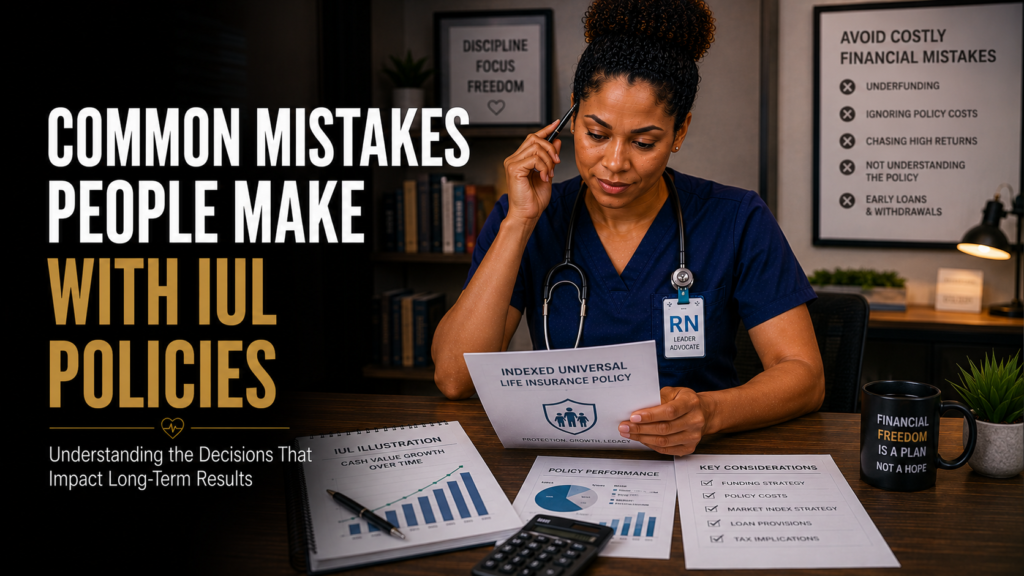
Like many financial products, the effectiveness of an Indexed Universal Life Insurance policy often depends far more on how the policy is designed, funded, and managed than on the product name itself.
Two people can own IUL policies from the same insurance company and experience dramatically different outcomes depending on how their policies are structured.
This is one reason why education is so important before purchasing any life insurance product.
Many of the negative experiences people report with IULs are not necessarily caused by the concept of Indexed Universal Life Insurance itself. Instead, they are often linked to unrealistic expectations, improper funding, poor policy design, or a lack of understanding about how the policy works.
Some of the most common mistakes people make include:
- Underfunding the policy
- Expecting short-term results
- Not understanding policy charges
- Buying based solely on marketing hype
- Focusing only on illustrations instead of long-term strategy
- Ignoring policy expenses and insurance costs
- Failing to review policy performance regularly
- Not understanding policy loan provisions
- Comparing illustrations rather than actual policy design
- Working with someone focused only on selling the policy rather than designing it properly
One of the biggest mistakes is underfunding the policy.
Many people want the benefits of cash value accumulation but contribute only the minimum amount necessary to keep the policy active. While this may maintain coverage, it often limits the policy’s ability to build meaningful cash value over time.
Another common mistake is expecting immediate results.
Because IULs are designed as long-term financial tools, early policy years often include insurance costs, administrative expenses, and other charges that can slow initial cash value growth. Individuals who expect rapid returns may become discouraged before the policy has had sufficient time to mature.
Policy illustrations can also create confusion.
Illustrations are projections based on assumptions and are not guarantees of future performance. While illustrations can help demonstrate how a policy may perform under certain conditions, they should never be viewed as promises or guarantees.
Understanding the difference between projected results and guaranteed values is critical.
Another mistake involves choosing a policy based entirely on marketing claims rather than personal financial goals.
An IUL should support a broader financial strategy rather than serve as the entire strategy. The best financial plans often include multiple tools working together, including emergency savings, retirement accounts, investments, insurance protection, and debt management strategies.
Because every insurance company structures policies differently, understanding the details matters significantly.
Important factors to review include:
- Cost of insurance charges
- Policy fees
- Crediting methods
- Participation rates
- Cap rates
- Loan provisions
- Surrender charge schedules
- Financial strength of the insurance company
These details can have a substantial impact on long-term policy performance.
Ultimately, successful long-term wealth-building strategies rarely depend on finding the “perfect” financial product.
Instead, they are built through:
- Realistic expectations
- Proper education
- Strong financial foundations
- Consistent funding
- Long-term planning
- Disciplined financial habits
- Ongoing review and adjustment
An IUL can be a valuable financial tool when used appropriately, but understanding the common mistakes can help individuals make more informed decisions and avoid costly misunderstandings.

Who Might Benefit From an IUL — And Who May Need Different Priorities First
An IUL may appeal to people who:
- earn stable income
- want long-term protection
- value tax diversification
- think long-term financially
- own businesses
- want legacy planning strategies
- seek additional financial flexibility
But an IUL may not always be the first financial priority for everyone.
Some people may first need to focus on:
- emergency savings
- high-interest debt reduction
- basic life insurance protection
- cash flow stability
- financial recovery from chronic stress
In many cases, strong financial foundations should come before more advanced wealth-planning strategies.
Wealth Building Is About More Than Just Income
Many nurses and higher-income professionals spend years focusing almost entirely on earning more money.
But eventually, many begin realizing that long-term financial security also involves:
- protection
- tax strategy
- liquidity
- legacy planning
- emotional financial stability
- intentional long-term systems
An IUL is not a magic shortcut to wealth.
And it is not the right solution for every financial situation.
But when properly structured and aligned with someone’s long-term goals, it may become one piece of a broader financial strategy focused on:
- protection
- flexibility
- wealth preservation
- and long-term planning
Because true wealth is not simply about income.
It is also about creating:
- financial resilience
- family protection
- long-term options
- reduced financial vulnerability
- and greater peace of mind over time.
For many nurses, financial transformation begins when money is no longer viewed only through the lens of survival — but through the lens of long-term stability and legacy as well.

Explore Wealth Strategies More Intentionally
AtAn Indexed Universal Life Insurance policy can be a valuable financial tool for certain individuals, but it is not automatically the right solution for everyone.
One of the biggest mistakes people make in financial planning is assuming that every strategy works equally well for every situation. The reality is that the effectiveness of an IUL often depends on a person’s income, financial foundation, long-term goals, and overall financial health.
An IUL may appeal to individuals who:
- Earn stable income
- Want long-term life insurance protection
- Value tax diversification strategies
- Think long-term financially
- Own businesses
- Want legacy planning opportunities
- Seek additional financial flexibility
- Have already established strong financial foundations
- Are looking for supplemental retirement planning tools
- Want potential access to tax-advantaged cash value accumulation
For these individuals, an IUL may serve as one component of a broader financial strategy designed to balance protection, growth, and long-term planning.
However, an IUL may not always be the first financial priority.
In many cases, foundational financial needs should be addressed before exploring more advanced wealth-planning strategies.
Some people may first need to focus on:
- Building emergency savings
- Reducing high-interest debt
- Establishing basic life insurance protection
- Improving cash flow stability
- Creating a realistic budget
- Strengthening financial literacy
- Recovering from chronic financial stress
- Building retirement savings
- Developing healthier financial habits
For example, someone carrying significant credit card debt at high interest rates may benefit more from debt reduction before allocating substantial resources toward advanced financial strategies.
Likewise, an individual with little or no emergency savings may find greater financial security by first building a financial safety net.
Strong financial foundations create flexibility.
Without those foundations, even the most sophisticated financial products may fail to produce the results people expect.
This is why many financial professionals recommend approaching wealth building in stages.
First, establish stability.
Then strengthen protection.
Then explore advanced planning opportunities.
When viewed through this lens, an IUL becomes one potential tool within a larger financial strategy rather than a one-size-fits-all solution.
The most successful financial plans are often built on strong fundamentals, thoughtful planning, and a clear understanding of personal goals rather than chasing the latest financial trend.
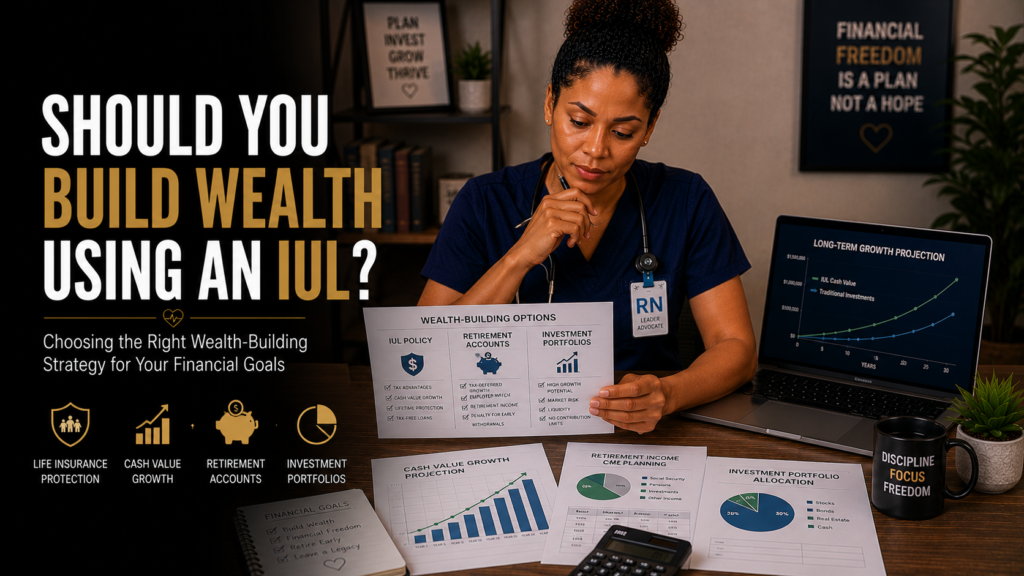
Should You Build Wealth Using an IUL?
Many people ask whether they should build wealth using an IUL as part of their financial plan. The answer depends on individual goals, income, protection needs, and long-term planning objectives.
For some individuals, the opportunity to build wealth using an IUL while maintaining permanent life insurance protection may be attractive. Others may decide that traditional investing, retirement accounts, or debt reduction deserve higher priority.
The key is understanding how to build wealth using an IUL within the context of a complete financial strategy rather than viewing it as a standalone solution.
That adds the exact keyword 3 more times naturally.

Conclusion
Can you build wealth using an IUL?
The answer is that it depends on how the policy is designed, funded, managed, and how it fits into your overall financial strategy.
An Indexed Universal Life Insurance policy is not a shortcut to instant wealth, nor is it a replacement for strong financial fundamentals. However, when properly structured and used appropriately, an IUL may provide a combination of permanent life insurance protection, cash value accumulation, tax diversification opportunities, and long-term financial flexibility.
Like any financial tool, an IUL works best when it is part of a larger plan.
Before exploring advanced wealth-building strategies, many individuals benefit from first creating a strong financial foundation through:
- Emergency savings
- Debt reduction
- Cash flow stability
- Retirement planning
- Financial education
- Income protection
Once those foundations are in place, an IUL may become one of several tools used to support long-term financial goals.
The most important lesson is that wealth is rarely built through a single product.
Wealth is usually built through consistent habits, intentional planning, disciplined decision-making, and a long-term perspective.
For some people, an IUL may play a meaningful role in that process.
For others, different priorities may come first.
The key is understanding how each financial strategy works and making decisions based on your unique goals rather than marketing claims or financial trends.
At Nurse Money Lab, the goal is not simply helping nurses earn more money.
The goal is helping nurses build financial confidence, reduce financial stress, protect their families, and create long-term wealth with clarity and purpose.
Because true financial freedom is not just about having more money.
It is about having more choices, more security, more flexibility, and greater peace of mind for the future.
Whether you ultimately decide to build wealth using an IUL or pursue other financial strategies, informed decisions and long-term planning will always remain some of the most valuable investments you can make.

Frequently Asked Questions
Can an IUL help build wealth?
Yes, an Indexed Universal Life Insurance policy may help build wealth over time through cash value accumulation when the policy is properly structured and consistently funded. Many individuals use IULs as part of a broader financial strategy that includes retirement planning, tax diversification, asset protection, and long-term wealth building. However, results depend on policy performance, funding levels, fees, and how the policy is managed over time.
Is an IUL the same as investing directly in the stock market?
No. An IUL does not directly invest policyholder funds into the stock market. Instead, the insurance company credits interest based on the performance of a selected market index according to specific policy rules. This means policyholders may benefit from some market growth while also receiving certain downside protection features that differ from traditional stock market investing.
Who may benefit most from an IUL?
Individuals who earn stable income, think long-term financially, value tax diversification, own businesses, want permanent life insurance protection, or are interested in legacy planning may explore IUL strategies. Many higher-income professionals, including nurses, physicians, entrepreneurs, and business owners, investigate IULs as part of their overall financial planning approach.
Are IULs good for short-term wealth building?
Typically no. IULs are generally designed as long-term financial strategies rather than short-term investment vehicles. Early policy years often include insurance costs, administrative expenses, and other charges that can affect cash value growth. Most IUL strategies require patience, consistent funding, and a long-term time horizon to achieve their intended objectives.
What are the biggest risks of an IUL policy?
Some of the most common risks include underfunding the policy, misunderstanding policy charges, relying too heavily on illustrations, unrealistic expectations, and failing to maintain the policy properly over time. Because every insurance company structures policies differently, it is important to fully understand the details before purchasing an IUL.
Can I access the cash value in my IUL?
In many cases, policyholders may be able to access cash value through withdrawals or policy loans, depending on the policy structure and available cash value. However, loans and withdrawals can affect policy performance, cash value growth, and death benefit amounts. It is important to understand how policy access works before using cash value funds.
Should an IUL replace my retirement accounts?
For most people, an IUL should not completely replace traditional retirement accounts such as 401(k)s or IRAs. Instead, many financial professionals view IULs as one component of a diversified financial strategy. Retirement accounts, investments, emergency savings, and insurance protection often work best together as part of a comprehensive financial plan.
What should I do before purchasing an IUL?
Before purchasing an IUL, it is important to evaluate your overall financial foundation. Many individuals benefit from first building emergency savings, reducing high-interest debt, creating stable cash flow, and establishing basic financial protection. Understanding your goals, risk tolerance, and long-term financial priorities can help determine whether an IUL fits your overall wealth-building strategy.