

Introduction
Nursing is one of the most physically and emotionally demanding professions, yet many nurses discover that the hardest part of the day doesn’t always end when they leave the hospital. After caring for patients, making critical clinical decisions, and working long hours on their feet, many return home expecting to rest—only to find their minds consumed by financial worries. Financial stress in nurses has become an increasingly common challenge that affects far more than a bank account. It can interfere with sleep, emotional recovery, mental health, and overall well-being.
For many nurses, financial concerns continue long after the shift is over. Thoughts about rising living expenses, student loan payments, credit card balances, childcare costs, unexpected emergencies, or the need to work extra overtime often replace the peace and relaxation that days off are meant to provide. Instead of allowing the body and mind to recover, these ongoing financial pressures keep the brain in a constant state of alertness, making it difficult to truly disconnect from stress.
Many nurses spend their evenings and days off thinking about:
- Paying monthly bills before the next paycheck arrives
- Picking up extra shifts to cover household expenses
- Managing credit card debt or student loans
- Saving for retirement while meeting current financial obligations
- Preparing for unexpected medical or family emergencies
- Supporting children, spouses, or aging parents
- Wondering whether their income will ever feel like enough
This constant mental burden has real consequences. Research has consistently shown that chronic financial stress can contribute to anxiety, poor sleep quality, emotional exhaustion, decreased concentration, and symptoms of burnout. For nurses, who already work in high-pressure clinical environments, the combination of workplace stress and financial anxiety can create a cycle that feels impossible to escape. Even after a full night’s sleep, many wake up feeling mentally drained because their minds never had the opportunity to fully rest.
The ability to rest is about more than simply getting enough hours of sleep. True rest requires a sense of safety, stability, and peace of mind. When financial worries dominate every quiet moment, the body’s natural recovery processes are interrupted. Over time, this can affect physical health, emotional resilience, relationships, job satisfaction, and overall quality of life. Understanding Why Financial Stress Makes It Hard for Nurses to Truly Rest empowers nurses to recognize the connection between financial well-being, emotional health, and restorative sleep. Taking small, consistent steps toward financial stability can lead to meaningful improvements in overall quality of life.
In this article, we’ll explore why financial stress makes it hard for nurses to truly rest, the psychological and physiological effects of ongoing money worries, why so many healthcare professionals experience this challenge despite earning stable incomes, and practical strategies nurses can use to reduce financial stress, improve their financial wellness, and begin experiencing genuine rest again.

Financial Stress Keeps the Nervous System Activated
For many nurses, financial stress does not disappear when the shift ends. Walking out of the hospital may signal the end of a workday, but it rarely signals the end of the mental and emotional demands that accompany ongoing financial pressure. While the body may be home, the mind often remains occupied with worries about money, leaving little room for genuine relaxation or recovery.
Nursing requires constant vigilance. Throughout a shift, nurses are trained to assess risks, respond to emergencies, prioritize patient care, and make critical decisions under pressure. Ideally, the nervous system should gradually transition from this heightened state of alertness into a calmer, restorative mode once the workday is over. However, for many nurses experiencing financial stress, that transition never fully happens.
Instead of mentally unwinding, many continue to think about:
- Paying rent or the mortgage before the next paycheck
- Credit card balances and student loan payments
- Rising grocery, childcare, and transportation costs
- Whether another overtime shift is necessary
- Unexpected medical or household emergencies
- Building an emergency fund that never seems to grow
- Retirement savings that have been delayed because current expenses take priority
These persistent financial concerns keep the brain engaged in problem-solving mode. Rather than allowing the body to recover, the mind remains focused on identifying solutions, calculating expenses, and preparing for the next financial challenge. This constant mental activity can make it difficult to experience the sense of safety and calm that is necessary for quality rest.
When the nervous system remains activated for extended periods, the effects extend beyond simple fatigue. Nurses may notice that they struggle to fall asleep, wake frequently during the night, or wake up feeling as exhausted as they did before going to bed. Even during vacations or scheduled days off, it may feel impossible to disconnect because financial worries continue to occupy their thoughts.
Many nurses also experience an emotional conflict surrounding rest. After years of relying on overtime, extra shifts, or side income to meet financial obligations, relaxation can begin to feel undeserved. Instead of viewing time off as an opportunity to recover, some nurses begin to associate rest with lost income. They may feel guilty watching television, spending time with family, or simply sitting quietly because every hour away from work feels like money they are not earning.
Over time, this pattern can create a cycle in which financial stress in nurses continually reinforces physical exhaustion and emotional burnout. The body rarely receives the uninterrupted recovery it needs, making it increasingly difficult to return to work feeling refreshed, focused, and emotionally resilient. Breaking this cycle requires more than additional sleep—it often begins by addressing the underlying financial stress that keeps the nervous system in a constant state of alertness.

Many Nurses Begin Associating Rest With Lost Income
One of the most overlooked consequences of financial stress in nurses is the way it changes how rest is perceived. Instead of viewing time off as an essential part of maintaining physical and emotional health, many nurses begin to see it as time when they are not earning money. As financial pressure increases, days off can start to feel less like an opportunity to recover and more like a reminder of income that could have been earned.
This mindset often develops gradually. Nurses who repeatedly rely on overtime, incentive shifts, or second jobs to keep up with monthly expenses may begin to associate productivity with financial security. Over time, the idea of taking a day off can trigger feelings of anxiety rather than relief. Instead of enjoying a well-deserved break, many find themselves calculating how much additional income they could have made by picking up another shift.
On what should be a relaxing day at home, many nurses quietly think about:
- Overtime opportunities they decided not to accept
- Extra income they could have earned that week
- Credit card balances and student loan payments
- Utility bills, mortgage payments, or rent that is coming due
- Rising grocery prices and household expenses
- Unexpected financial emergencies that could happen at any time
- Long-term goals, such as retirement or building an emergency fund, that seem increasingly difficult to achieve
These thoughts are not simply about money—they reflect a deeper sense of financial insecurity that can make true relaxation feel out of reach. Even while spending time with family, watching a movie, or trying to sleep in, many nurses continue mentally reviewing budgets, calculating upcoming expenses, or wondering whether they should have accepted one more shift. Instead of feeling restored, they carry an invisible burden that prevents them from fully enjoying their time away from work.
Over time, this pattern can reshape a nurse’s relationship with rest. Recovery begins to feel unproductive because it does not generate income. Some nurses even experience guilt when they are not working, believing they should always be doing something to improve their financial situation. Unfortunately, this way of thinking can create a cycle in which chronic exhaustion is normalized, while rest is viewed as a luxury rather than a necessity.
The irony is that consistently sacrificing recovery for additional income often leads to diminishing returns. Without adequate rest, nurses are more likely to experience fatigue, emotional exhaustion, reduced concentration, and symptoms of burnout. Their overall well-being suffers, making it harder to provide safe patient care and maintain a healthy work-life balance. In the long run, protecting time for genuine recovery is not a sign of laziness—it is an investment in both personal health and professional longevity.
Learning to separate financial security from self-worth is an important step toward breaking this cycle. While working extra shifts may sometimes be necessary, every day off should not be measured by the income that was not earned. True rest allows the body to recover, the mind to recharge, and nurses to return to work healthier, more focused, and better equipped to care for others.truly rested because the mind rarely feels financially safe enough to fully relax.
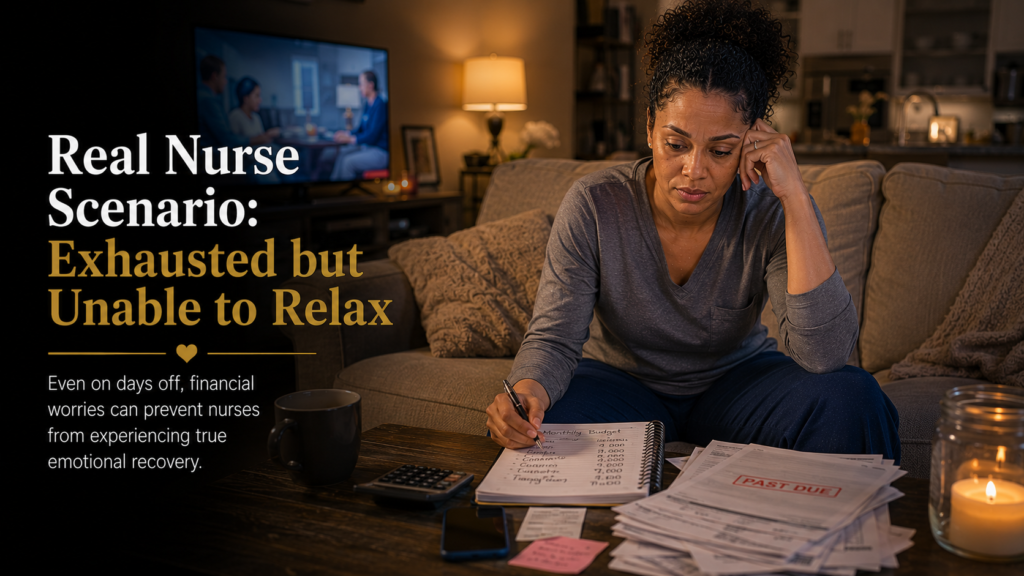
Real Nurse Scenario: Exhausted but Unable to Relax
Alicia, a 36-year-old medical-surgical nurse, works three 12-hour hospital shifts each week. Like many nurses, she spends her shifts constantly moving—administering medications, coordinating patient care, responding to emergencies, and supporting families during some of their most difficult moments. By the time she clocks out, she is physically exhausted and looks forward to finally getting some rest.
Yet when she gets home, rest never comes as easily as she hopes.
Although her body is tired, her mind remains active. Instead of relaxing, Alicia finds herself mentally reviewing her finances and worrying about the weeks ahead. Her thoughts quickly shift away from recovery and toward questions about money and financial stability.
Much of her free time is spent thinking about:
- Monthly bills that still need to be paid
- Whether she should volunteer for another overtime shift
- Credit card balances and student loan payments
- Rising grocery prices and household expenses
- Upcoming childcare and family costs
- Unexpected emergencies that could disrupt her budget
- Long-term financial goals that seem increasingly difficult to achieve
On paper, Alicia has a stable nursing career and a dependable income. However, the combination of inflation, debt, and everyday living expenses often leaves her feeling as though she is constantly trying to catch up. Rather than enjoying her days off, she quietly worries that taking time to rest means falling further behind financially.
Sometimes she even feels guilty for relaxing.
While watching television with her family, reading a book, or lying in bed, a small voice in the back of her mind keeps reminding her that she could be earning more money by picking up another shift. Instead of feeling refreshed after a day off, she often returns to work feeling emotionally depleted because her mind never truly stopped working.
Over time, Alicia begins to notice that her financial worries affect more than her bank account. They interfere with her sleep, increase her anxiety, make it harder to enjoy time with loved ones, and leave her feeling emotionally drained even before the next workweek begins. She realizes that her greatest source of exhaustion is no longer just the demands of nursing—it is the constant mental burden of carrying financial stress wherever she goes.
Alicia’s story reflects the experience of many nurses. While every financial situation is different, countless healthcare professionals quietly carry money-related worries that make it difficult to fully disconnect from work and experience genuine rest. Recognizing this pattern is an important first step toward improving both financial wellness and overall well-being.ach.

Rest Is Difficult When the Mind Never Feels Safe
Many people think that rest simply means getting enough sleep or taking a day off from work. While physical recovery is important, true rest also requires emotional and psychological recovery. For nurses, whose careers demand constant attention, critical thinking, and emotional resilience, resting involves more than putting their feet up after a long shift. It requires the ability to feel safe, calm, and free from the constant burden of worry. Why Financial Stress Makes It Hard for Nurses to Truly Rest becomes clearer when nurses spend their time off worrying about bills, debt, or the need to work additional shifts instead of allowing their minds and bodies to recover.
For nurses experiencing ongoing financial stress, that sense of emotional safety can be difficult to achieve. Even when they are no longer caring for patients, their minds often remain occupied with concerns about paying bills, managing debt, covering household expenses, or wondering whether they should work another overtime shift. As a result, the body may be resting, but the brain continues operating as though it must remain on high alert.
The human nervous system is designed to respond to challenges and threats. When financial uncertainty becomes a daily reality, the brain may begin treating money worries as a continuous source of stress. Instead of transitioning into a relaxed state that promotes healing and recovery, many nurses remain mentally vigilant, making it difficult to fully unwind, enjoy quiet moments, or experience restorative sleep.
Over time, chronic financial pressure can quietly affect many areas of daily life, including:
- Sleep quality, making it difficult to fall asleep or stay asleep throughout the night.
- Emotional regulation, leading to increased irritability, anxiety, or feeling overwhelmed by minor challenges.
- Burnout recovery, preventing the mind and body from fully recovering between demanding work shifts.
- Mental clarity, making it harder to concentrate, solve problems, or make decisions both at work and at home.
- Relationships, as financial worries create emotional distance or reduce the ability to be fully present with loved ones.
- Emotional resilience, leaving nurses with less energy to cope with the everyday demands of their profession and personal lives.
Many nurses become so accustomed to living under constant pressure that emotional overload begins to feel normal. They may tell themselves that feeling tired, anxious, or mentally preoccupied is simply part of being a nurse. However, living in a prolonged state of stress is not the same as living in good health. When the nervous system rarely has an opportunity to slow down, genuine rest becomes increasingly difficult to experience.
Eventually, some nurses discover that even vacations, weekends, or scheduled days off provide only temporary relief. Although they are away from work, their minds remain consumed by financial concerns and future responsibilities. Instead of returning to work refreshed, they return feeling as though they never truly recovered. This cycle can gradually contribute to emotional exhaustion, compassion fatigue, and a reduced sense of personal well-being.
The good news is that this pattern can be changed. Creating greater financial stability, developing healthier money habits, and reducing unnecessary financial anxiety can help restore a sense of security that allows both the mind and body to recover. When nurses begin feeling safer about their financial future, they often find that rest becomes more restorative, sleep improves, and they regain the emotional resilience needed to thrive both inside and outside the workplace.

True Rest Requires More Than Time Off
Many nurses look forward to their days off believing they will finally have an opportunity to recover from the physical and emotional demands of their profession. Yet when those days arrive, they often discover that simply being away from the hospital does not automatically bring a sense of peace. Although their schedules may be temporarily free from patient care, charting, and long shifts, their minds remain occupied with financial worries that make genuine relaxation difficult.
This experience is far more common than many nurses realize. Financial stress in nurses can create a constant sense of emotional tension that follows them long after they leave work. Instead of enjoying uninterrupted rest, many spend their time thinking about bills, upcoming expenses, debt, childcare costs, or whether they should pick up another overtime shift. Their bodies may finally have an opportunity to slow down, but their minds continue working overtime.
This does not mean they are lazy, weak, or failing to manage stress effectively. It simply reflects what prolonged financial pressure can do to the human mind and body. When financial uncertainty becomes part of everyday life, the nervous system may remain in a heightened state of alertness, making it difficult to experience the emotional safety necessary for true recovery.
Real rest involves much more than sleeping later or taking a vacation. It also requires creating an environment where the mind can gradually release its constant state of vigilance. For many nurses, that emotional recovery begins when they experience more moments of feeling:
- Financially safer and more secure
- Calmer during everyday life
- Less overwhelmed by ongoing responsibilities
- Less pressured to rely on overtime simply to make ends meet
- Emotionally supported by family, friends, or trusted colleagues
- Confident that unexpected expenses will not immediately create a financial crisis
It is important to recognize that achieving this sense of security does not happen overnight. Most nurses cannot eliminate financial stress with a single paycheck, nor should they expect to become financially perfect within a few weeks. Financial wellness is a gradual process built through consistent, manageable steps rather than dramatic changes.
Over time, small improvements can create meaningful emotional breathing room. These may include developing healthier spending habits, creating a realistic budget, paying down high-interest debt, building an emergency savings fund, seeking financial education, and establishing healthier boundaries around overtime. Just as importantly, prioritizing emotional recovery through adequate sleep, exercise, mindfulness, counseling, or quality time with loved ones can help reduce the effects of chronic stress while improving overall well-being.
As financial stability slowly improves, many nurses notice that their relationship with rest begins to change. Days off no longer feel overshadowed by constant worry, evenings become more peaceful, and sleep becomes more restorative. Instead of viewing recovery as lost productivity, they begin to recognize that caring for themselves is essential to sustaining a long, healthy, and fulfilling nursing career.
Nurses dedicate their lives to helping patients heal, recover, and regain their strength. They offer compassion during life’s most difficult moments and work tirelessly to improve the health of others. They deserve that same compassion in their own lives. Every nurse deserves the opportunity to experience genuine rest—not only through time away from work, but through a life where financial stress no longer overshadows every quiet moment. Building that future may take time, but every positive financial decision and every act of self-care is a meaningful step toward lasting peace, resilience, and emotional well-being.ssible again.

Conclusion
Rest is one of the most essential parts of maintaining physical health, emotional resilience, and professional longevity. Yet for many nurses, true rest feels increasingly difficult to achieve—not because they lack time off, but because financial stress continues to occupy their minds long after their shifts have ended. When worries about bills, debt, overtime, and future financial responsibilities become constant companions, the body may be away from work, but the nervous system never fully receives the message that it is safe to relax.
If this experience feels familiar, know that you are not alone. Many nurses silently carry the emotional weight of financial pressure while continuing to provide exceptional care for others. Recognizing how financial stress affects your ability to rest is not a sign of weakness—it is the first step toward making meaningful changes that support both your financial wellness and your overall well-being.
The journey toward genuine rest does not require becoming financially perfect overnight. It begins with small, consistent actions that gradually reduce financial anxiety and create a greater sense of stability. Building healthier financial habits, creating a realistic budget, paying down debt, establishing an emergency fund, setting healthy work boundaries, and making time for emotional recovery can all contribute to a life where rest becomes more restorative and less interrupted by constant worry.
Remember, your value as a nurse is not measured by how many overtime shifts you work or how much you sacrifice to keep going. Your ability to care for others depends on your ability to care for yourself as well. Protecting your financial health and your emotional well-being is not selfish—it is an investment in your future, your career, and the people who depend on you.
At Nurse Money Lab, our mission is to help nurses build financial confidence without sacrificing their health or happiness. With practical financial education, budgeting strategies, and wealth-building resources designed specifically for nurses, you can take meaningful steps toward reducing financial stress and creating a future where genuine rest is not something you have to earn—it is something you deserve.

Frequently Asked Questions
1. Why does financial stress make it hard for nurses to truly rest?
Financial stress can keep the mind in a constant state of worry, even after a shift has ended. Many nurses continue thinking about bills, debt, overtime opportunities, and future expenses, making it difficult for the nervous system to fully relax. As a result, they may struggle to experience restorative sleep and emotional recovery, even during their days off.
2. Can financial stress affect a nurse’s mental health?
Yes. Chronic financial stress can contribute to anxiety, emotional exhaustion, irritability, and symptoms of burnout. When financial worries persist for long periods, they can interfere with concentration, emotional resilience, and overall well-being, making it harder to cope with both personal and professional responsibilities.
3. Why do some nurses feel guilty taking time off?
Many nurses rely on overtime or extra shifts to meet financial obligations. Over time, they may begin to associate rest with lost income instead of recovery. This mindset can create feelings of guilt during days off, making it difficult to relax without thinking about the money they could have earned.
4. How does financial stress affect sleep quality?
Financial worries can make it difficult to fall asleep, stay asleep, or feel rested after sleeping. When the brain remains focused on financial problems, the body may struggle to enter the deep, restorative stages of sleep needed for physical and emotional recovery.
5. Can improving financial wellness reduce stress?
Yes. While financial challenges may not disappear overnight, developing healthier money habits can gradually reduce financial anxiety. Creating a realistic budget, building an emergency fund, paying down high-interest debt, and setting achievable financial goals can help nurses feel more secure and improve their overall quality of life.
6. What are some signs that financial stress is affecting my ability to rest?
Common signs include feeling mentally exhausted even after a day off, difficulty falling or staying asleep, constantly thinking about money during personal time, feeling guilty for relaxing instead of working, increased anxiety or irritability, difficulty concentrating, and feeling emotionally drained before the next work shift. Recognizing these signs early can help you take proactive steps toward improving both your financial and emotional well-being.
7. What can nurses do to reduce financial stress over time?
Reducing financial stress often starts with small, consistent changes rather than drastic solutions. Nurses can benefit from tracking their spending, creating a monthly budget, building an emergency savings fund, reducing unnecessary debt, increasing financial education, and setting healthy boundaries around overtime. Seeking guidance from a trusted financial professional can also provide clarity and confidence.
8. Why is emotional recovery just as important as physical recovery?
Physical rest allows the body to heal, but emotional recovery helps reduce mental fatigue, improve resilience, and restore a sense of well-being. Nurses regularly care for others in high-pressure environments, making emotional recovery essential for preventing burnout, improving job satisfaction, and maintaining long-term health. When financial stress is addressed alongside physical recovery, nurses are more likely to experience genuine, restorative rest.
Further Reading
Learn more about financial wellness, stress management, and nurse well-being from these trusted organizations:
- American Nurses Association – Healthy Nurse, Healthy Nation
- Consumer Financial Protection Bureau – Managing Your Money
- National Institute of Mental Health – Caring for Your Mental Health
- Centers for Disease Control and Prevention – Coping with Stress
Disclaimer
The information provided on NurseMoneyLab.com is for educational and informational purposes only. While we strive to provide accurate, current, and reliable information, the content published on this website should not be considered financial, legal, tax, medical, or professional advice.
Every individual’s financial and healthcare situation is unique. Before making financial, investment, insurance, employment, or healthcare decisions, you should consult with a qualified financial advisor, accountant, attorney, healthcare provider, or other licensed professional who can provide guidance based on your specific circumstances.
Although many of our articles are written by a registered nurse and may discuss healthcare topics, the information provided is intended for general education only and should not be used as a substitute for professional medical advice, diagnosis, or treatment. Always seek the advice of your physician or another qualified healthcare provider regarding any medical concerns.
NurseMoneyLab may participate in affiliate marketing programs. This means we may earn a commission if you purchase products or services through certain links on our website, at no additional cost to you. We only recommend products and services that we believe provide value to our readers.
We make every effort to keep the information on this website accurate and up to date; however, we make no guarantees regarding the completeness, accuracy, reliability, or availability of any information presented. Your use of this website and reliance on any information provided is solely at your own risk.
By using NurseMoneyLab.com, you acknowledge that you have read, understood, and agree to this disclaimer.
Last Updated: July 2026