

Introduction
Why Nurses feel trapped by lifestyle inflation more often than many people realize. While earning a higher salary can create opportunities for financial growth, it can also bring new financial pressures that quietly replace old ones. As income increases, so do monthly expenses, larger purchases, recurring subscriptions, upgraded homes, newer vehicles, and lifestyle expectations. Instead of feeling financially free, many nurses discover they are working just as hard—or even harder—to maintain a standard of living that continues to grow.
For many healthcare professionals, this cycle develops gradually. A raise leads to a bigger apartment. A promotion makes a new vehicle seem affordable. Overtime pay justifies additional spending. Credit becomes easier to access, and monthly payments begin replacing long-term financial goals. None of these decisions may seem harmful on their own, but together they can create a financial lifestyle that requires a consistently high income simply to maintain.
Many nurses are surviving financially—but not truly feeling secure.
They work exhausting shifts.
Pay their bills.
Show up professionally.
Keep pushing forward.
Yet beneath the surface, many continue living with constant financial pressure that extends far beyond their bank account.
Some nurses quietly experience:
- Nonstop financial anxiety
- Fear of unexpected emergencies
- Dependence on overtime income
- Emotional exhaustion from financial responsibilities
- Paycheck-to-paycheck stress despite earning a good salary
- Chronic burnout from working extra shifts
- A persistent feeling that financial stability is always just out of reach
Over time, constantly surviving can begin to feel normal. Many nurses no longer recognize how emotionally overwhelming financial pressure has become because it has become woven into their daily routine. They may believe they simply need one more raise, one more contract, or one more overtime shift to finally feel comfortable. Unfortunately, if spending continues to increase alongside income, that feeling of financial security may never fully arrive.
Understanding why most nurses feel trapped by lifestyle inflation is the first step toward breaking this cycle. Lifestyle inflation is not about enjoying the rewards of hard work—it is about recognizing when rising expenses begin to limit financial freedom instead of expanding it. By becoming aware of these patterns, nurses can make intentional financial decisions that support long-term stability, reduce money-related stress, and create a future where higher earnings lead to greater peace of mind rather than greater financial obligations.
In this article, you’ll learn what lifestyle inflation is, why it affects so many nurses, the warning signs to watch for, and practical strategies to regain control of your finances while building lasting wealth and financial confidence.
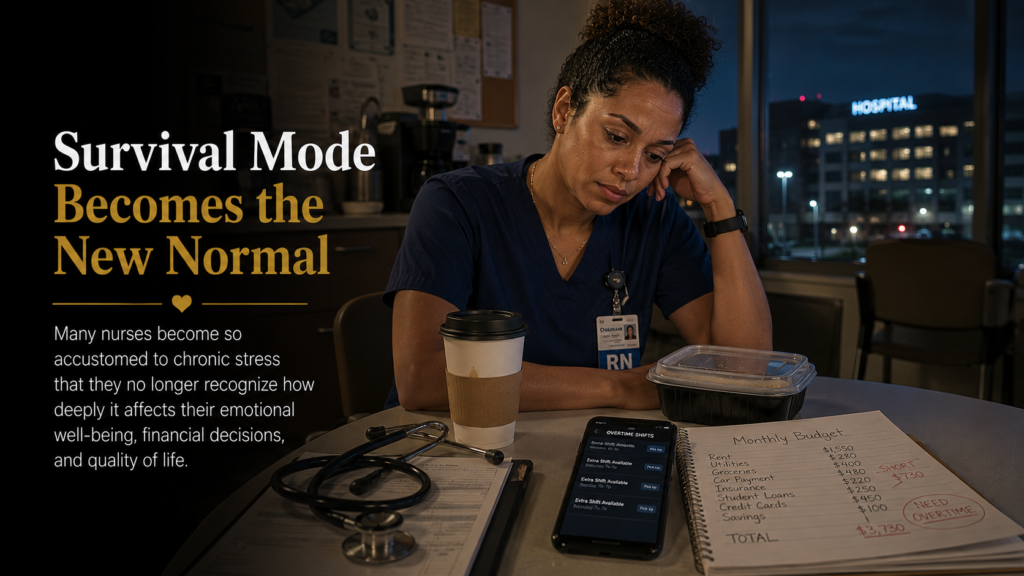
Survival Mode Changes the Way Nurses Experience Life
Many nurses enter the profession because they are passionate about caring for others, yet few anticipate how years of physical, emotional, and financial demands can gradually reshape their daily lives. Long shifts, staffing shortages, emotionally challenging patient situations, and ongoing financial responsibilities can create a level of stress that becomes constant rather than occasional. When this happens, the body and mind often adapt by remaining in a prolonged state of survival mode.
Survival mode is the body’s natural response to ongoing stress. It is designed to help people respond to immediate challenges by increasing alertness, focus, and energy. While this response is beneficial during emergencies, it is not intended to remain activated for weeks, months, or years at a time. Unfortunately, many nurses spend much of their professional and personal lives operating under continuous pressure without having enough time to fully recover.
As financial obligations grow alongside demanding work schedules, many nurses begin functioning in a constant cycle of:
- Stress
- Urgency
- Physical exhaustion
- Emotional overload
- Financial pressure
- Mental fatigue
Over time, this constant state of alertness can begin affecting nearly every aspect of daily life. Many nurses continue to perform their responsibilities professionally while quietly carrying an emotional burden that others rarely see. They may become so accustomed to managing stress that they no longer recognize how significantly it is influencing their overall well-being.
Living in survival mode can gradually affect:
- Sleep quality and the ability to feel rested
- Emotional regulation during stressful situations
- Spending habits and impulse purchases made for temporary comfort
- Relationships with family, friends, and coworkers
- Motivation to pursue long-term financial or personal goals
- Mental health, including increased anxiety and emotional fatigue
- Financial decision-making and confidence when planning for the future
Because survival mode develops gradually, it often feels normal. Many nurses simply adapt to functioning while tired, emotionally drained, or financially overwhelmed. They may assume that feeling constantly stressed is just part of being a nurse rather than recognizing it as a warning sign that their mind and body need recovery. This normalization of chronic stress can make it difficult to identify unhealthy patterns, including dependence on overtime, emotional spending, or delaying financial planning because immediate responsibilities always seem more urgent.
Recognizing survival mode is not about assigning blame or suggesting that nurses are doing something wrong. Instead, it is about understanding how prolonged stress influences thoughts, emotions, and financial behaviors. Awareness is the first step toward creating healthier routines, making more intentional financial decisions, and allowing both the body and mind the opportunity to recover. By breaking the cycle of constant survival, nurses can begin building a future that supports not only financial stability but also lasting emotional well-being and a greater sense of peace.are.
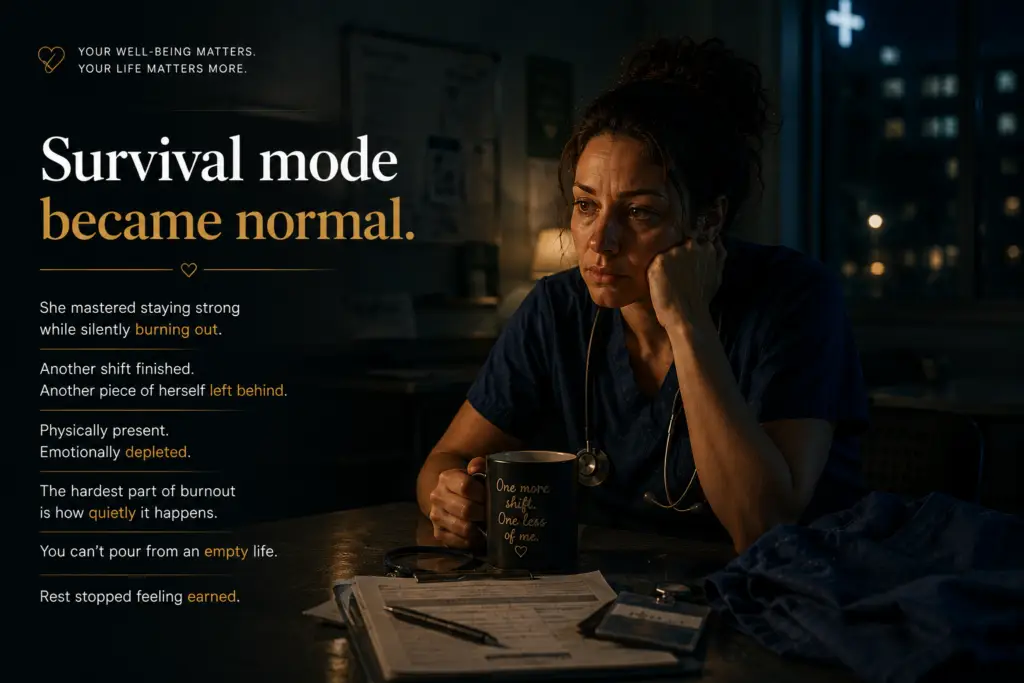
Constant Financial Pressure Keeps the Nervous System Activated
Financial stress does not always disappear when a nurse clocks out at the end of a shift. While the workday may be over, the mental workload often continues long after leaving the hospital, clinic, or healthcare facility. Many nurses carry an invisible list of financial responsibilities that constantly competes for their attention, making it difficult to experience genuine relaxation. Even during moments that should feel peaceful, the mind may remain focused on solving the next financial problem.
For many nurses, financial stress never fully turns off.
Even outside of work, the brain may still be constantly calculating:
- Monthly bills
- Credit card debt
- Overtime opportunities
- Grocery expenses
- Unexpected emergencies
- Upcoming payments
- Childcare costs
- Transportation expenses
- Insurance premiums
- Future financial obligations
When the nervous system remains under continuous pressure, it can begin treating everyday life as though it is one ongoing emergency. Instead of recognizing that it is safe to rest, the brain stays alert, constantly searching for the next problem that needs to be solved. This persistent state of vigilance can make relaxation feel uncomfortable rather than restorative.
Many nurses begin experiencing thoughts such as:
“Should I pick up another shift?”
“What if something unexpected happens this month?”
“I can’t afford to slow down right now.”
“Maybe I’ll finally catch up financially after just a few more overtime shifts.”
Although these thoughts often come from a desire to provide for themselves and their families, they can gradually reinforce a cycle where productivity becomes closely tied to feelings of security. Over time, the body may begin associating constant activity with safety and stillness with vulnerability.
As a result, some nurses begin feeling guilty whenever they attempt to relax. Others become anxious when they are not accomplishing something productive. Even on scheduled days off, many continue thinking about unfinished responsibilities, financial obligations, or opportunities to earn additional income. Rather than feeling refreshed, they remain mentally occupied by concerns that prevent true emotional recovery.
Eventually, many nurses become emotionally dependent on staying busy simply because slowing down feels unfamiliar. Rest may begin to feel unproductive instead of necessary. Unfortunately, living in this constant state of mental alertness can contribute to chronic fatigue, emotional exhaustion, difficulty sleeping, increased anxiety, and reduced overall well-being.
Recognizing how constant financial pressure affects the nervous system is an important step toward breaking this cycle. Financial wellness is not only about earning more money—it is also about creating enough stability to allow the mind and body to experience genuine rest. When nurses begin reducing unnecessary financial stress, they create space for emotional recovery, healthier decision-making, and a more sustainable balance between work, finances, and personal well-being.
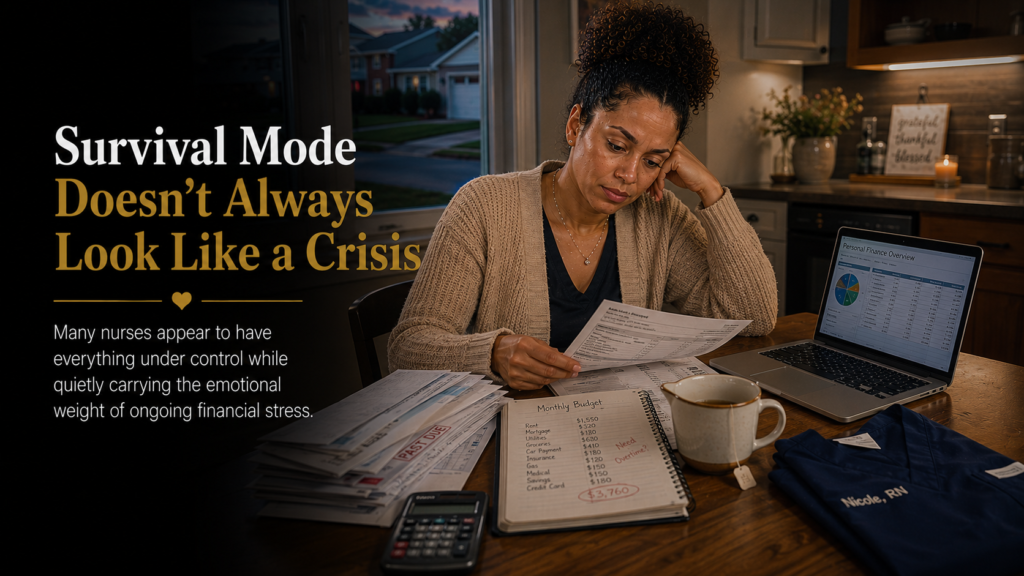
Real Nurse Scenario: Feeling Constantly “On Edge”
Nicole is a dedicated registered nurse who works full-time in a busy hospital. She enjoys caring for her patients, takes pride in her work, and consistently shows up for every shift with professionalism and compassion. To friends, coworkers, and even family members, her life appears stable. She has a steady income, pays her bills on time, and rarely complains about the pressures she faces. From the outside, it seems as though she has everything under control.
Behind the scenes, however, Nicole carries a different reality.
Like many nurses, she constantly feels as though she is trying to stay one step ahead financially. Rising household expenses, inflation, student loans, insurance premiums, childcare costs, and everyday living expenses leave little room to feel truly secure. Although she works hard and earns a respectable income, financial peace always seems just beyond reach.
Even during her scheduled time off, Nicole finds it difficult to fully relax.
Instead of enjoying quiet moments with her family or focusing on activities that help her recharge, her mind continually cycles through thoughts about:
- Monthly bills
- Opportunities to work additional overtime
- Grocery expenses
- Upcoming household costs
- Unexpected financial emergencies
- Credit card balances
- Responsibilities waiting at home
- Long-term financial goals that seem increasingly difficult to reach
She tells herself she is simply being responsible by planning ahead. However, over time, the constant mental planning has become exhausting. Even while watching television, eating dinner, or preparing for bed, part of her mind remains occupied with financial calculations and future responsibilities.
Nicole has also noticed that slowing down feels uncomfortable. When she has an entire day off, she often feels guilty for not being productive or wonders whether she should have picked up another shift instead. Although her body is physically tired, her mind rarely feels calm enough to enjoy genuine rest. Sleep comes more slowly, and she frequently wakes up already thinking about everything she needs to accomplish.
Over time, survival mode stopped feeling temporary.
It simply became normal.
Nicole’s story reflects the experience of many nurses who quietly carry financial stress while continuing to provide exceptional care for others. Their dedication often hides the emotional weight they carry every day. Recognizing this pattern is not about criticizing hard work or ambition—it is about acknowledging that constant financial pressure can gradually reshape the way nurses think, feel, and recover from stress. By identifying these signs early, nurses can begin creating healthier financial habits, setting realistic boundaries around overtime, and building a future where financial stability supports both emotional well-being and long-term career satisfaction.

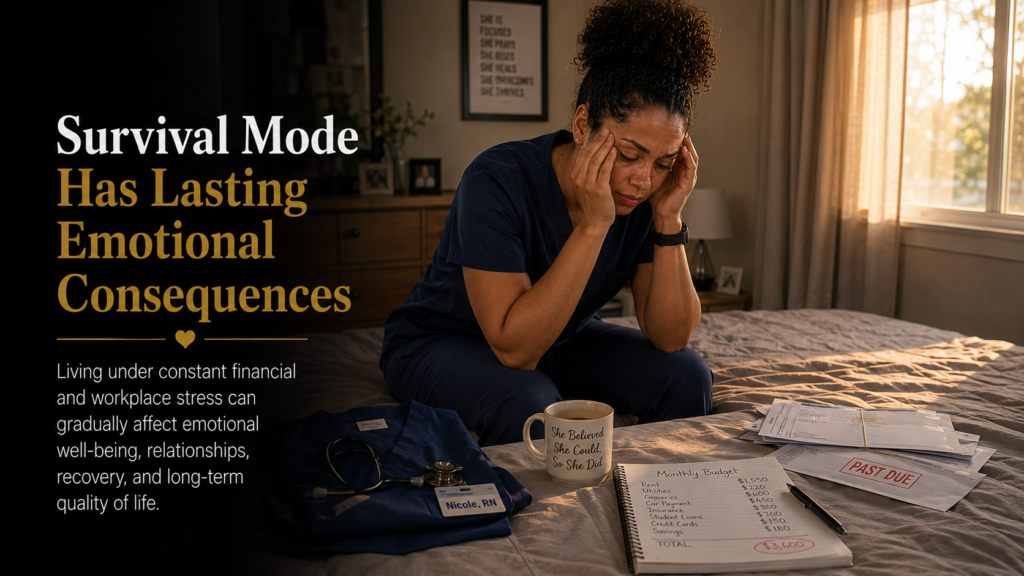
Living in Survival Mode for Too Long Has Emotional Consequences
For many nurses, living with constant stress becomes so familiar that they no longer recognize how deeply it affects their emotional well-being. What may begin as a temporary response to a demanding work schedule, unexpected expenses, or a challenging season of life can gradually become a permanent way of functioning. As days turn into months and months into years, the mind and body adapt to operating under continuous pressure, making emotional exhaustion feel like a normal part of everyday life.
Nurses are often exceptionally skilled at caring for others while ignoring their own needs. They comfort patients, support families during difficult moments, and work through physically and emotionally demanding shifts with remarkable resilience. Yet that same resilience can sometimes lead them to overlook the signs that they themselves are struggling. Instead of acknowledging emotional fatigue, they continue pushing forward because they believe slowing down is not an option.
Living in survival mode for an extended period can quietly influence nearly every area of life. Many nurses notice changes that develop gradually rather than all at once, making them difficult to recognize until the effects become overwhelming.
Long-term survival mode can affect:
- Emotional health and overall resilience
- Relationships with family, friends, and coworkers
- Physical recovery between demanding shifts
- Sleep quality and the ability to feel rested
- Financial behaviors, including emotional or impulsive spending
- Confidence and self-worth
- Long-term burnout and career satisfaction
- Motivation to pursue personal and financial goals
As emotional reserves become depleted, even simple daily responsibilities may begin to feel overwhelming. Nurses who once found joy in hobbies, spending time with loved ones, or planning for the future may discover they no longer have the emotional energy to fully engage in those experiences. Instead, much of their attention is devoted to simply making it through the next shift, paying the next bill, or handling the next responsibility.
Over time, many nurses stop asking themselves one of the most important questions:
“Am I okay?”
Instead, the focus shifts almost entirely toward surviving the day, caring for everyone else, and keeping life moving forward. Personal well-being becomes something to think about later—a “later” that often never seems to arrive. Unfortunately, when emotional needs remain unaddressed for long periods, chronic stress can gradually erode both physical and mental health while making it increasingly difficult to experience genuine happiness, fulfillment, or peace.
Recognizing the emotional consequences of prolonged survival mode is not a sign of weakness—it is an act of self-awareness. Nurses deserve the same compassion they so freely extend to their patients every day. By acknowledging the emotional weight of ongoing financial and workplace stress, they can begin taking meaningful steps toward healthier boundaries, improved financial wellness, restorative rest, and a more balanced life. True financial freedom is not measured only by income; it is also reflected in the ability to experience peace, recovery, and emotional well-being without constantly feeling trapped in survival mode.
Survival Mode Is Not Meant to Be Permanent
Many nurses have spent so much of their careers surviving emotionally, physically, and financially that chronic stress begins to feel like a normal part of life. The constant demands of patient care, staffing shortages, rising living expenses, and personal responsibilities can create a lifestyle where simply making it through each day becomes the primary goal. Over time, surviving becomes a routine rather than a temporary response to difficult circumstances.
While resilience is one of nursing’s greatest strengths, living in a constant state of survival comes with real consequences. The body and mind were never designed to remain under continuous pressure without opportunities for recovery. When stress becomes chronic, it can gradually affect emotional health, physical well-being, relationships, financial confidence, and overall quality of life. Many nurses continue functioning at a high level professionally while quietly carrying a heavy emotional burden that few people ever see.
Constantly living with:
- Physical exhaustion
- Financial anxiety
- Emotional overload
- Dependence on overtime income
- Ongoing nervous system activation
- Chronic mental fatigue
- Persistent feelings of overwhelm
can slowly erode both physical and emotional resilience. Even when financial situations improve, many nurses discover that their minds continue operating as though another emergency is always just around the corner. This lingering stress response can make it difficult to fully relax, celebrate progress, or enjoy the financial security they have worked so hard to achieve.
The encouraging news is that recovery does not require perfection.
It does not require eliminating every source of stress overnight.
Instead, meaningful change often begins with small, intentional decisions that gradually create greater stability, confidence, and emotional balance. Every positive financial habit, every healthy boundary, and every opportunity for genuine rest contributes to long-term well-being.
For many nurses, that journey may begin by:
- Reducing financial chaos one step at a time
- Improving emotional recovery outside of work
- Creating healthier spending and saving habits
- Lowering dependence on overtime whenever possible
- Building an emergency fund for greater financial security
- Rebuilding the nervous system through consistent rest and self-care
- Creating moments of genuine peace without guilt or constant productivity
Healing from survival mode is rarely immediate. Like financial wellness itself, it is a gradual process built through consistency, patience, and self-compassion. Every small improvement matters because lasting transformation is often the result of many intentional choices made over time.
Nurses dedicate their lives to caring for others during some of life’s most difficult moments. They deserve the opportunity to experience that same care in their own lives. Financial stability is about more than increasing income—it is about creating the freedom to rest, recover, and enjoy life without feeling trapped in a constant state of emergency. With healthier financial habits and intentional self-care, it is possible to build a future where peace replaces pressure, and recovery becomes part of everyday life rather than a rare luxury.

Conclusion
Lifestyle inflation is often subtle, making it one of the most overlooked financial challenges nurses face. As income increases throughout a nursing career, it is natural to want a more comfortable home, a newer vehicle, nicer vacations, or greater convenience in everyday life. There is nothing inherently wrong with enjoying the rewards of hard work. However, when spending continually rises alongside income, financial progress can quietly stall, leaving many nurses feeling as though they are working harder than ever without experiencing greater financial security.
Many nurses devote their careers to improving the lives of others while unintentionally postponing their own financial goals. Overtime becomes routine, emergency savings are delayed, retirement planning takes a back seat, and financial peace remains just out of reach. Over time, this cycle can create emotional exhaustion, dependence on extra shifts, and the persistent feeling that no paycheck is ever quite enough.
The encouraging news is that lifestyle inflation is a habit—not a permanent condition. Small, intentional financial decisions made consistently over time can create significant improvements in both financial stability and overall well-being. Building wealth does not require earning the highest salary; it requires aligning spending with long-term priorities rather than short-term lifestyle upgrades.
Breaking free from lifestyle inflation may begin with simple steps such as creating a realistic budget, increasing savings before increasing spending, paying down high-interest debt, building an emergency fund, and making thoughtful purchasing decisions. These habits allow each future raise or bonus to become an opportunity to strengthen financial security instead of expanding monthly obligations.
Most importantly, financial freedom is about far more than money. It is about reducing stress, creating choices, protecting your future, and building a life where you can enjoy time away from work without constantly worrying about the next bill or the need to pick up another overtime shift. Nurses dedicate their lives to helping others heal, and they deserve the opportunity to build lives that support their own health, happiness, and peace of mind.
Recognizing why nurses feel trapped by lifestyle inflation is the first step toward breaking the cycle. With patience, financial education, and consistent habits, it is possible to replace financial pressure with confidence, create lasting wealth, and build a future where your income works for you instead of your lifestyle controlling your income.

Frequently Asked Questions (FAQs)
What is lifestyle inflation?
Lifestyle inflation occurs when your spending increases as your income grows. Instead of using raises or overtime pay to build savings, reduce debt, or invest for the future, higher earnings are often spent on larger homes, newer vehicles, dining out, subscriptions, vacations, or other lifestyle upgrades. Over time, this can make it difficult to achieve lasting financial stability despite earning a good salary.
Why do nurses often feel trapped by lifestyle inflation?
Many nurses experience regular pay increases, shift differentials, bonuses, and overtime opportunities throughout their careers. While these higher earnings can improve financial security, they can also lead to increased spending. As monthly expenses grow alongside income, nurses may find themselves working more hours simply to maintain their lifestyle instead of building long-term wealth.
How can I tell if lifestyle inflation is affecting my finances?
Some common signs include relying on overtime to cover monthly expenses, living paycheck to paycheck despite earning a higher income, carrying increasing credit card balances, delaying retirement savings, struggling to build an emergency fund, or feeling financially stressed after receiving a raise. If every increase in income quickly disappears into new expenses, lifestyle inflation may be limiting your financial progress.
Is enjoying my income considered lifestyle inflation?
Not necessarily. There is nothing wrong with enjoying the rewards of your hard work. Lifestyle inflation becomes a concern only when increased spending consistently prevents you from achieving important financial goals such as saving, investing, paying down debt, or preparing for unexpected emergencies. The goal is to enjoy your income while maintaining a healthy financial balance.
How can nurses avoid lifestyle inflation?
Nurses can reduce the effects of lifestyle inflation by creating a realistic budget, increasing savings before increasing spending, building an emergency fund, paying down high-interest debt, contributing regularly to retirement accounts, and making intentional financial decisions before committing to new recurring expenses. Small, consistent habits often lead to the greatest long-term financial success.
Can lifestyle inflation contribute to nurse burnout?
Yes. When higher monthly expenses require nurses to work additional overtime or extra shifts simply to maintain their lifestyle, emotional and physical exhaustion can increase over time. Financial pressure combined with demanding work schedules may contribute to chronic stress, reduced work-life balance, and a greater risk of burnout.
Can reducing lifestyle inflation improve mental well-being?
Absolutely. Lowering unnecessary financial obligations can reduce money-related anxiety, decrease dependence on overtime, improve work-life balance, and create greater peace of mind. Financial stability often supports better emotional health because it allows nurses to make decisions based on long-term goals rather than immediate financial pressure.
What is the first step toward breaking the cycle of lifestyle inflation?
The first step is becoming aware of your spending habits. Review your monthly expenses, identify recurring costs that no longer align with your priorities, and create a financial plan that focuses on saving, investing, and reducing debt before increasing lifestyle expenses. Over time, these intentional choices can help you build lasting financial freedom instead of becoming trapped by continually rising costs.
Disclaimer
The information provided in this article is for educational and informational purposes only and should not be considered financial, legal, tax, investment, medical, or mental health advice. While every effort has been made to ensure the accuracy of the information presented, financial circumstances vary from person to person, and the strategies discussed may not be appropriate for every individual.
NurseMoneyLab encourages readers to consult with qualified financial advisors, tax professionals, licensed mental health providers, or other appropriate professionals before making significant financial or healthcare decisions. Any references to budgeting, saving, investing, debt management, or financial planning are intended to provide general guidance and should not replace personalized professional advice.
The nurse scenarios and examples included in this article are fictional and are provided solely for educational purposes. Any resemblance to actual persons or events is purely coincidental.
Your financial journey is unique. Building financial wellness takes time, consistency, and intentional decision-making. The goal of NurseMoneyLab is to provide reliable educational resources that empower nurses to make informed financial choices, reduce financial stress, and work toward long-term financial freedom.
Read More
Consumer Financial Protection Bureau (CFPB) – Budgeting & Saving
https://www.consumerfinance.gov/consumer-tools/budgeting/Consumer Financial Protection Bureau – Managing Debt
https://www.consumerfinance.gov/consumer-tools/debt-collection/MyMoney.gov – Financial Education Resources
https://www.mymoney.gov/U.S. Department of Labor – Retirement Savings Information
https://www.dol.gov/general/topic/retirementInvestor.gov – Financial Planning and Investing Basics
https://www.investor.gov/Federal Deposit Insurance Corporation (FDIC) – Money Smart Financial Education
https://www.fdic.gov/resources/consumers/money-smart/National Institute of Mental Health (NIMH) – Caring for Your Mental Health
https://www.nimh.nih.gov/health/topics/caring-for-your-mental-healthAmerican Nurses Association (ANA) – Healthy Nurse, Healthy Nation®
https://www.healthynursehealthynation.org/