
Introduction
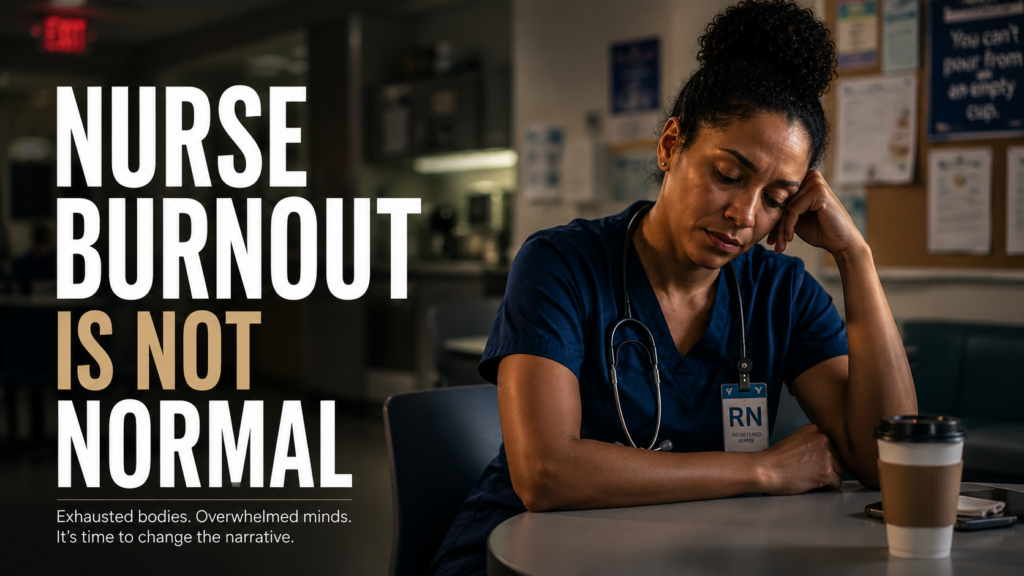
Burnout has become so common in nursing that many healthcare professionals no longer recognize it as a warning sign—they see it as part of the job. Working 12-hour shifts that stretch into 14 hours, skipping meals to keep up with patient care, staying late to complete documentation, covering for short-staffed units, and sacrificing weekends and holidays have become routine experiences for countless nurses. Ask almost any nurse how they’re doing, and you’ll often hear responses like, “I’m exhausted,” “I’m surviving,” or “It’s been a rough week.” These statements are spoken so frequently that they have become accepted as the normal language of nursing.
But here’s the reality: nurse burnout is not normal.
Feeling tired after a demanding shift is expected. Feeling emotionally detached from patients, constantly overwhelmed, physically depleted, anxious before every shift, or questioning whether you can continue in the profession you once loved is something entirely different. Burnout is not a badge of honor, nor is it proof that you’re dedicated enough. It is a serious occupational challenge that affects your health, your relationships, your career, and ultimately the quality of care you can provide to your patients.
The nursing profession has always required resilience, compassion, and sacrifice. Every day, nurses make countless decisions that impact the lives of others. They comfort frightened families, advocate for vulnerable patients, respond to emergencies without hesitation, and continue showing up even on days when they are emotionally exhausted. Yet somewhere along the way, healthcare culture began celebrating endurance instead of wellness. Nurses are often praised for working through lunch breaks, picking up extra shifts, staying late without complaint, and putting everyone else’s needs before their own. While these actions reflect incredible commitment, they also contribute to the dangerous belief that chronic exhaustion is simply part of being a “good nurse.”
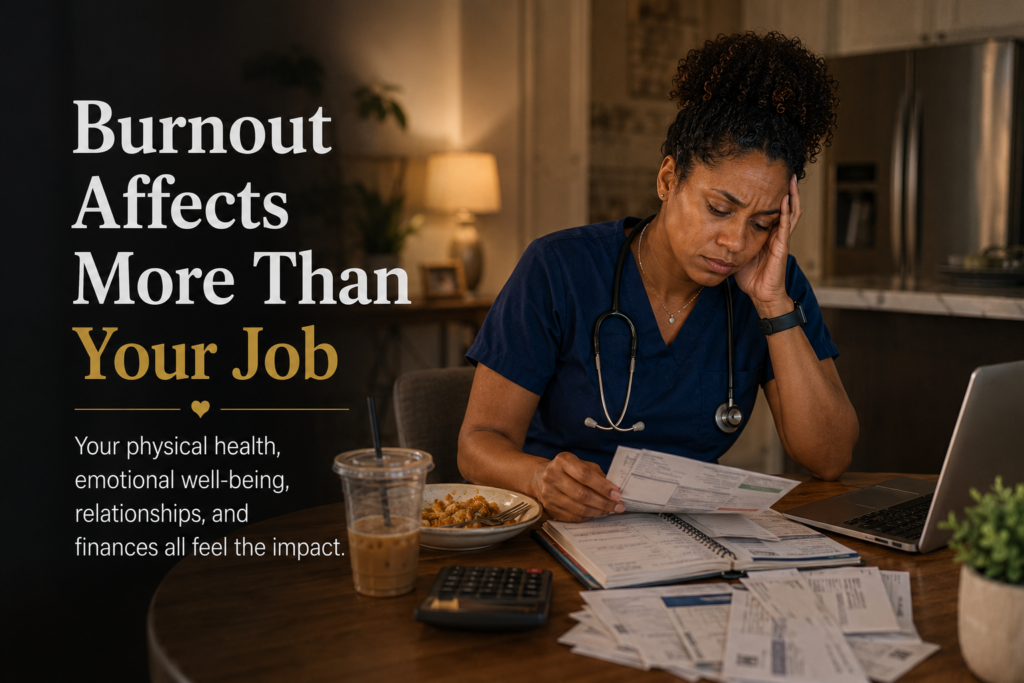
This mindset carries consequences that extend far beyond the hospital walls. Burnout doesn’t disappear when you clock out. It follows nurses home, affecting sleep, relationships, physical health, emotional well-being, and financial stability. Many nurses find themselves relying on takeout because they’re too exhausted to cook, spending money on convenience to compensate for lack of time, or making impulse purchases in an attempt to relieve stress after difficult shifts. Others withdraw from friends and family, lose interest in hobbies they once enjoyed, or begin questioning whether they should leave nursing altogether. What begins as workplace stress can gradually influence every aspect of life if left unaddressed.
Perhaps the most concerning aspect of burnout is how quietly it develops. It rarely happens overnight. Instead, it builds slowly through repeated exposure to chronic stress, increasing workloads, staffing shortages, emotional trauma, and the constant pressure to do more with fewer resources. Because the changes occur gradually, many nurses don’t recognize burnout until they reach a breaking point. They convince themselves that everyone feels this way, that things will improve after the next vacation, or that they simply need to work harder. Unfortunately, ignoring burnout doesn’t make it disappear—it often allows it to become even more severe.
The encouraging news is that burnout is neither inevitable nor a personal failure. Feeling overwhelmed doesn’t mean you’re weak, and asking for support doesn’t mean you’re incapable of handling your responsibilities. Burnout is a signal that something needs attention, not a measure of your dedication or competence. Recognizing it early gives you the opportunity to make meaningful changes that protect your health, preserve your passion for nursing, and improve your overall quality of life.
In this article, we’ll explore why nurse burnout has become so normalized within healthcare, the physical, emotional, and financial consequences of chronic workplace stress, and practical strategies for protecting your well-being without sacrificing your commitment to patient care. Most importantly, we’ll challenge the belief that suffering in silence is simply part of the profession—because it isn’t. Nurses deserve healthy work environments, meaningful support, and the same compassion they provide to others every single day.
Why Has Nurse Burnout Become So Normalized?
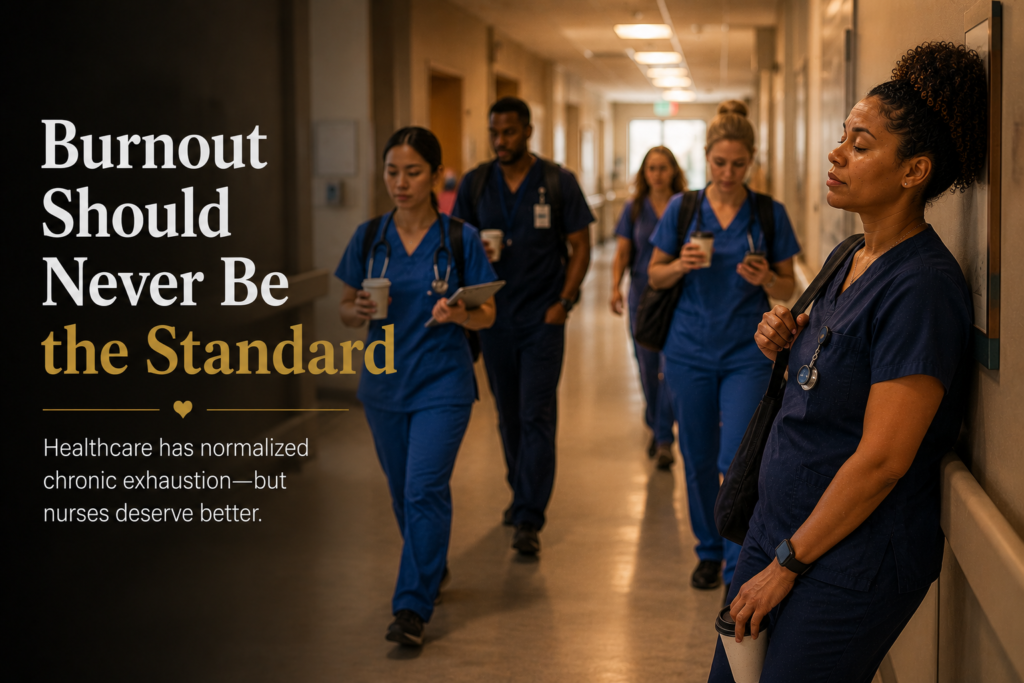
If you ask ten nurses whether they have ever experienced burnout, chances are that nearly all of them will say yes. What is even more concerning is that many won’t describe burnout as a problem—they’ll describe it as an expectation. Statements like “That’s just nursing,” “Everyone feels this way,” or “You’ll get used to it” have become deeply woven into healthcare culture. Instead of recognizing burnout as a serious occupational issue, many healthcare professionals have unintentionally accepted it as a normal part of the job.
But burnout was never meant to be normal.
Somewhere along the way, the profession began confusing resilience with endurance. Nurses have always been resilient. They adapt quickly, solve problems under pressure, advocate for vulnerable patients, and continue providing compassionate care even during the most difficult circumstances. Resilience allows nurses to recover from challenges. Burnout, however, is what happens when those challenges never stop. It develops when stress becomes constant, recovery becomes impossible, and emotional exhaustion becomes a daily reality rather than an occasional experience.
One reason burnout has become so normalized is the persistent shortage of healthcare workers. Across hospitals, long-term care facilities, outpatient clinics, and home health agencies, nurses are frequently expected to care for more patients with fewer resources. Staffing shortages often mean skipped meal breaks, delayed restroom breaks, mandatory overtime, and caring for patient assignments that stretch beyond what feels safe or sustainable. While many nurses rise to the occasion because they care deeply about their patients, repeatedly working under these conditions comes at a personal cost.
Healthcare has also developed an unfortunate culture of celebrating overwork. Nurses who volunteer for extra shifts, stay late to help coworkers, or consistently work through breaks are often praised for their dedication. While teamwork and commitment deserve recognition, constantly sacrificing your own health should never become the standard for professional excellence. When exhaustion is rewarded, nurses may begin believing that setting boundaries or asking for help is a sign of weakness rather than wisdom.
Social media has also contributed to the normalization of burnout in subtle ways. It’s common to see humorous videos and memes about surviving on caffeine, functioning without sleep, crying after work, or working multiple consecutive shifts. While humor can help nurses cope with stressful situations, it can also make chronic exhaustion appear inevitable. Laughing about burnout may temporarily ease emotional stress, but it doesn’t address the underlying workplace conditions causing it.
Another reason burnout often goes unnoticed is that nurses become incredibly skilled at pushing through discomfort. Nursing education emphasizes perseverance, critical thinking, and maintaining professionalism during high-pressure situations. These are essential qualities, but they can sometimes make it difficult for nurses to recognize when they themselves need support. Many continue working while emotionally depleted because they worry about burdening coworkers, disappointing managers, or letting patients down. Over time, ignoring personal needs becomes second nature.
The emotional demands of nursing further contribute to this cycle. Nurses routinely witness suffering, grief, trauma, and death while simultaneously managing complex clinical responsibilities. Unlike many professions, nurses are expected to remain compassionate and composed even during emotionally devastating situations. Without adequate opportunities to process these experiences, emotional fatigue accumulates over months and years. What begins as temporary stress can gradually evolve into compassion fatigue, emotional detachment, and eventually burnout.
Financial pressures also play a significant role. Rising living expenses, student loan payments, childcare costs, and household responsibilities often encourage nurses to work additional overtime or multiple jobs. While the extra income may provide short-term financial relief, consistently sacrificing rest for higher earnings can increase the risk of physical and emotional exhaustion. Ironically, burnout itself can create additional financial strain. Nurses experiencing chronic stress may spend more on convenience meals, last-minute childcare, online shopping, or other coping mechanisms simply because they lack the time or energy to make intentional decisions.
Perhaps the most dangerous aspect of normalized burnout is that it discourages nurses from seeking help. When everyone around you appears equally exhausted, it’s easy to believe your experience isn’t serious enough to deserve attention. Many nurses convince themselves they simply need a vacation, a different unit, or another cup of coffee. Others silently question whether they’re “strong enough” for the profession, blaming themselves instead of recognizing that they’re responding to an unhealthy environment.
The truth is that burnout is not a personal weakness, nor is it evidence that you chose the wrong career. It is a predictable response to prolonged, unmanaged workplace stress. Recognizing burnout doesn’t make you less committed to nursing—it demonstrates self-awareness and the courage to protect your health before chronic stress causes even greater harm.
Changing this culture begins with changing the conversation. Instead of glorifying exhaustion, healthcare organizations and nursing professionals must normalize rest, recovery, mental health support, realistic staffing, and healthy boundaries. Nurses should feel just as comfortable asking for support as they do asking for assistance with patient care. A profession built on compassion should extend that same compassion to the people providing it.
Most importantly, every nurse deserves to remember one simple truth: being constantly exhausted is not proof that you’re a great nurse. It’s a sign that something needs to change. Caring for yourself is not abandoning your patients—it is ensuring that you can continue caring for them safely, compassionately, and sustainably for years to come.
How Nurse Burnout Affects Your Physical, Emotional, and Financial Health
According to the World Health Organization’s definition of burnout, burnout is recognized as an occupational phenomenon resulting from chronic workplace stress. Burnout is often described as feeling “tired,” but the reality is far more serious. True nurse burnout doesn’t simply disappear after a good night’s sleep or a weekend off. It develops gradually through prolonged exposure to chronic workplace stress and eventually begins affecting nearly every aspect of a nurse’s life. What starts as occasional exhaustion can evolve into persistent physical fatigue, emotional numbness, declining mental health, strained relationships, and even financial hardship.
Many nurses don’t realize they’re experiencing burnout because the symptoms develop slowly. Instead of one dramatic event, burnout often feels like a series of small changes. You stop looking forward to work. You become more irritable after your shifts. You find yourself emotionally detached from patients or coworkers. Activities that once brought joy no longer seem enjoyable. You begin surviving each day instead of truly living it.
One of the earliest signs of burnout is persistent physical exhaustion. Nursing is already a physically demanding profession. Long hours on your feet, lifting and repositioning patients, responding to emergencies, and working rotating shifts place tremendous strain on the body. When adequate recovery never occurs, your body remains in a prolonged state of stress. You may wake up feeling tired even after sleeping for eight hours. Muscle aches, headaches, digestive problems, and frequent illnesses become increasingly common because chronic stress weakens the immune system.
Sleep disturbances are another hallmark of burnout. Ironically, many burned-out nurses feel exhausted throughout the day but struggle to fall asleep at night. Others wake repeatedly, replaying difficult patient situations or worrying about upcoming shifts. Poor sleep creates a vicious cycle. Fatigue reduces concentration and decision-making abilities, making work more stressful, which then further disrupts sleep. Over time, this cycle can significantly affect both personal health and professional performance.
Burnout also has profound emotional consequences. Compassion is one of the greatest strengths of nursing, but chronic emotional stress gradually depletes even the most dedicated caregivers. Nurses experiencing burnout may notice they are becoming less patient with coworkers, emotionally distant from patients, or overwhelmed by situations they previously handled with confidence. This emotional exhaustion isn’t a sign that someone no longer cares. In many cases, it reflects that they have been caring for others without giving themselves the opportunity to recover.
Many nurses also experience compassion fatigue, a condition that develops after repeated exposure to trauma, suffering, grief, and loss. Unlike ordinary stress, compassion fatigue affects a nurse’s ability to emotionally connect with patients. Some nurses begin feeling numb during situations that once deeply affected them. Others experience guilt because they worry they’ve become less compassionate. In reality, emotional detachment is often the mind’s attempt to protect itself from continuous psychological strain.
Mental health challenges frequently accompany burnout as well. Chronic workplace stress can contribute to anxiety, depression, irritability, difficulty concentrating, and feelings of hopelessness. Some nurses begin doubting their clinical abilities despite years of experience. Others constantly worry about making mistakes, even when they continue providing excellent care. This loss of confidence can become emotionally exhausting and further increase workplace stress.
Relationships outside of work often suffer too. After emotionally draining shifts, many nurses simply have nothing left to give. They may withdraw from family gatherings, cancel social plans, or spend their days off recovering rather than enjoying time with loved ones. Partners, children, and friends sometimes misinterpret this withdrawal as disinterest, when in reality the nurse is experiencing emotional depletion. Burnout doesn’t stay at work—it follows nurses home and influences every area of their lives.
One consequence that receives far less attention is the financial impact of burnout. Exhaustion changes the way people make financial decisions. After working multiple stressful shifts, cooking a healthy meal may feel impossible, leading to frequent takeout or food delivery purchases. Grocery shopping becomes less intentional, resulting in wasted food and unnecessary spending. Convenience often replaces careful budgeting simply because mental energy is limited.
Emotional spending is another common response to chronic stress. Many nurses reward themselves after difficult shifts with online shopping, expensive coffee, spa treatments, or impulse purchases that provide temporary emotional relief. While occasional self-care purchases are healthy, consistently relying on spending as a coping mechanism can quietly erode financial progress. Over months or years, these seemingly small purchases can add up to thousands of dollars.
Burnout may also affect long-term earning potential. Some nurses reduce their hours because they physically or emotionally cannot continue working full time. Others leave bedside nursing altogether before they had planned, sometimes accepting lower-paying positions simply to protect their mental health. Frequent job changes, unpaid leaves of absence, or extended recovery periods can create additional financial stress during an already difficult time.
Perhaps the greatest tragedy is that many nurses blame themselves for these struggles. They believe they should be stronger, more resilient, or better able to handle the demands of the profession. The truth is that burnout is not a character flaw. It is a predictable response to prolonged, unmanaged workplace stress. Even the most experienced, compassionate, and highly skilled nurses can experience burnout when they are consistently asked to give more than they have to offer.
Recognizing these physical, emotional, and financial warning signs is not an admission of failure—it is an act of self-awareness. The sooner burnout is identified, the sooner meaningful steps can be taken to restore health, rebuild resilience, and create a more sustainable nursing career. Caring for yourself isn’t selfish. It’s one of the most important investments you can make in your ability to continue caring for others.

Why “Pushing Through” Burnout Isn’t the Answer
One of the most common phrases heard in healthcare is, “Just push through.” Nurses hear it from coworkers, supervisors, instructors, and sometimes even from themselves. Whether it’s finishing one more shift, picking up overtime because the unit is short-staffed, working despite feeling sick, or ignoring emotional exhaustion, the culture of nursing has long encouraged perseverance above all else. While resilience is an essential quality in healthcare, there is a significant difference between being resilient and repeatedly ignoring your own physical and emotional needs.
For many nurses, “pushing through” becomes second nature. You tell yourself that you’ll rest after your next day off. Then your next day off becomes an opportunity to catch up on laundry, grocery shopping, childcare, household responsibilities, or recovering from the last several shifts. Before you know it, you’re back at work without ever truly recharging. This cycle repeats week after week, month after month, until exhaustion no longer feels temporary—it becomes your baseline.
The problem with constantly pushing through burnout is that the human body is not designed to operate under continuous stress without recovery. When you’re under pressure, your body activates its natural stress response, releasing hormones such as cortisol and adrenaline to help you respond to immediate challenges. This response is beneficial during short-term emergencies, such as responding to a patient code or managing a critical situation. However, when stress becomes chronic and recovery never occurs, those same stress hormones remain elevated for extended periods, placing tremendous strain on your body and mind.
Over time, chronic stress can contribute to high blood pressure, weakened immune function, digestive issues, chronic headaches, muscle tension, sleep disturbances, anxiety, depression, and an increased risk of cardiovascular disease. Many nurses attribute these symptoms to aging or simply having a demanding job, but prolonged burnout often plays a significant role. Ignoring these warning signs doesn’t make them disappear—it allows them to progress into more serious health concerns.
Pushing through burnout also affects cognitive performance, something every nurse should take seriously. Nursing requires critical thinking, attention to detail, sound clinical judgment, and the ability to make rapid decisions under pressure. Fatigue impairs these abilities in ways that aren’t always obvious. Research has consistently shown that sleep deprivation and chronic stress reduce concentration, slow reaction times, impair memory, and increase the likelihood of errors. Even the most experienced nurse is more vulnerable to mistakes when operating in a constant state of exhaustion.
Patient safety is closely connected to nurse well-being. Burned-out nurses are not less competent or less compassionate—they are working under conditions that make it more difficult to perform at their highest level. Medication administration, patient assessments, documentation, communication during handoff, and recognizing subtle changes in a patient’s condition all require mental clarity. When a nurse is physically depleted and emotionally overwhelmed, maintaining that level of vigilance becomes increasingly challenging. Protecting your own health is therefore not only beneficial for you but also for the patients who rely on your expertise.
Another consequence of constantly pushing through burnout is the gradual loss of passion for the profession. Most people enter nursing because they genuinely want to help others. They find purpose in providing compassionate care, advocating for patients, and making a meaningful difference. Burnout slowly erodes that sense of purpose. Nurses may begin dreading work, feeling emotionally detached, or questioning whether they chose the right career. Some eventually leave bedside nursing altogether—not because they stopped caring, but because they could no longer sustain the emotional and physical demands placed upon them.
This loss has consequences for the healthcare system as a whole. Experienced nurses carry valuable clinical knowledge, mentorship skills, and confidence that benefit patients and newer colleagues alike. When burnout drives talented nurses away from the profession, hospitals lose experienced clinicians, remaining staff face even heavier workloads, and staffing shortages become even more severe. The cycle continues, creating an environment where burnout becomes increasingly common for everyone who remains.
There is also a personal financial cost to pushing through. Many nurses believe working more overtime is the solution to financial stress, but without adequate recovery, that strategy often backfires. Chronic exhaustion can lead to increased healthcare expenses, missed work due to illness, emotional spending, and eventually reducing work hours or leaving a higher-paying role because of declining health. While overtime can be an effective financial tool when used strategically, relying on it as a permanent lifestyle can come at a significant physical and emotional price.
Breaking this cycle begins with rejecting the idea that self-care is selfish. Taking a meal break, using your earned vacation time, setting healthy boundaries, seeking counseling when needed, and declining extra shifts when you’re already exhausted are not signs of weakness. They are responsible decisions that help preserve your ability to provide safe, compassionate care over the long term. Just as nurses encourage patients to rest, recover, and prioritize their health, they deserve to extend that same compassion to themselves.
It’s also important to recognize that asking for help is a sign of professionalism, not failure. Whether that support comes from trusted coworkers, nurse leaders, employee assistance programs, mental health professionals, or family members, reaching out early can prevent burnout from becoming overwhelming. No nurse should feel obligated to suffer in silence simply because others appear to be doing the same.
Ultimately, the goal isn’t to become tougher—it is to create a career that is sustainable. Nursing should challenge you, inspire you, and allow you to grow professionally, but it should never require sacrificing your physical health, emotional well-being, or personal identity. You can be deeply committed to your patients while also protecting yourself. In fact, the two go hand in hand. A healthy nurse is better equipped to deliver exceptional care, support colleagues, and enjoy a long, fulfilling career.
The next time you’re tempted to tell yourself to “just push through,” pause and ask a different question: What do I need right now to continue caring for others without losing myself in the process? That shift in perspective may be one of the most important decisions you make—not only for your career, but for your life.

Practical Strategies to Prevent and Recover From Nurse Burnout
If you’ve been experiencing burnout, you may be wondering whether things can ever truly improve. The answer is yes—but recovery rarely happens overnight. Burnout isn’t something you can fix with one vacation, one good night’s sleep, or one relaxing weekend. It develops over weeks, months, and sometimes years of chronic workplace stress. In the same way, healing from burnout requires intentional changes that support your physical health, emotional well-being, and overall quality of life.
The encouraging news is that burnout is not permanent. Many nurses have successfully regained their energy, rediscovered their passion for patient care, and built healthier, more sustainable careers. Recovery begins with recognizing that taking care of yourself is not a luxury—it’s a professional responsibility. The better you care for yourself, the better equipped you are to care for others.
The first and perhaps most important strategy is learning to recognize your personal warning signs before burnout reaches a crisis point. Every nurse experiences stress differently. For some, burnout begins with constant fatigue that doesn’t improve after rest. Others become increasingly irritable, emotionally detached, or anxious before every shift. Some notice frequent headaches, poor sleep, or difficulty concentrating during patient care. Paying attention to these early signals allows you to intervene before chronic stress becomes overwhelming. Instead of asking yourself, “How much longer can I push through?” ask, “What is my body trying to tell me?”
Setting healthy boundaries is another essential step in preventing burnout. Nursing is a profession built on compassion, and many nurses naturally want to help whenever they’re needed. However, constantly saying yes to overtime, extra shifts, or additional responsibilities can gradually lead to emotional and physical exhaustion. While there may be times when working extra is necessary, it should not become your default response. Protecting your scheduled days off, taking your meal breaks whenever possible, and using your earned vacation time are not signs of laziness—they are investments in your long-term health and career.
Sleep should also become a non-negotiable priority. Shift work often disrupts natural sleep patterns, making quality rest more difficult to achieve. Creating a consistent sleep routine, limiting caffeine several hours before bedtime, keeping your bedroom cool and dark, and avoiding screens immediately before sleeping can improve sleep quality, even for nurses working nights or rotating shifts. Rest is one of the body’s most powerful tools for physical recovery, emotional regulation, and cognitive performance. Without adequate sleep, every other burnout prevention strategy becomes significantly less effective.
Nutrition and hydration are equally important but often overlooked. Nurses spend their shifts reminding patients to eat balanced meals and drink enough water, yet many neglect these same habits themselves. Skipping meals, relying on vending machine snacks, or consuming multiple energy drinks throughout the day may provide temporary relief but often leads to energy crashes later. Preparing simple meals ahead of time, keeping healthy snacks available during shifts, and staying hydrated can improve both physical endurance and mental clarity. Small, consistent habits often make a greater difference than dramatic lifestyle changes.
Physical activity is another powerful way to reduce the effects of chronic stress. Exercise doesn’t have to involve intense workouts or spending hours at the gym. Even a 20-minute walk, gentle stretching after a shift, yoga, or light strength training can help lower stress hormones, improve mood, and increase energy levels. Movement also helps counteract the physical strain that many nurses experience from long hours of standing, lifting, and repetitive movements. The goal isn’t perfection—it’s consistency.
Equally important is making space for emotional recovery. Nurses witness situations that most people never experience: trauma, suffering, grief, and loss. Carrying those experiences without processing them can contribute to compassion fatigue and emotional exhaustion. Talking with trusted coworkers, journaling after difficult shifts, participating in peer support groups, or speaking with a licensed mental health professional can provide healthy outlets for these emotions. Seeking counseling is not a sign that you’re unable to handle your job—it is a proactive way to protect your mental health and continue practicing safely.
One strategy that is often overlooked is evaluating whether your current work environment supports your well-being. Burnout is not always caused by nursing itself; sometimes it’s caused by a specific workplace culture. If your unit consistently experiences unsafe staffing levels, poor leadership, lack of support, or unrealistic expectations, it may be worth exploring opportunities elsewhere. Many nurses rediscover their passion after transitioning to outpatient clinics, procedural areas, case management, education, hospice, school nursing, utilization review, informatics, or other specialties that better align with their goals and lifestyle. Choosing a healthier work environment is not giving up—it’s choosing sustainability.
Financial wellness also plays a meaningful role in burnout recovery. Many nurses feel trapped because they depend on overtime to meet monthly expenses. This creates a cycle where financial stress leads to more work, and more work leads to greater burnout. Developing a realistic budget, building an emergency fund, reducing unnecessary expenses, and creating additional income streams outside of bedside nursing can provide greater flexibility and reduce dependence on excessive overtime. Financial security gives nurses more freedom to prioritize their health without feeling forced to accept every available shift.
Finally, remember that recovering from burnout requires practicing self-compassion. Nurses are often their own harshest critics. They expect themselves to remain strong, composed, and endlessly capable regardless of the circumstances. But no one can continuously pour into others without eventually needing to refill their own cup. Extending yourself the same kindness, patience, and understanding that you offer your patients is one of the healthiest habits you can develop.
Burnout recovery isn’t about becoming less dedicated to nursing. It’s about creating a life where your career supports your well-being instead of consuming it. Small changes practiced consistently—setting boundaries, prioritizing rest, seeking support, protecting your finances, and choosing healthier work environments—can gradually restore your energy and renew your passion for the profession. You deserve more than simply surviving your career. You deserve to thrive in it.

Creating a Sustainable Nursing Career Without Sacrificing Yourself
For many nurses, the idea of having a long, fulfilling career can feel almost impossible. It’s not because they no longer love caring for patients or because they’ve lost their clinical skills. More often, it’s because they have spent years believing that success in nursing requires constant self-sacrifice. They have been taught—directly or indirectly—that skipping breaks, working excessive overtime, staying late without complaint, and putting everyone else’s needs before their own are simply part of being a dedicated nurse.
The truth is that this mindset is neither healthy nor sustainable.
A successful nursing career should not be measured by how exhausted you are at the end of every shift. It should not require sacrificing your physical health, mental well-being, relationships, or financial stability. Instead, sustainability means creating a career that allows you to continue doing meaningful work while also living a healthy, balanced, and fulfilling life outside of the hospital. The goal is not merely to survive nursing for a few years—it is to build a career that you can enjoy for decades.
One of the first steps toward creating a sustainable nursing career is redefining what success looks like. Many nurses measure success by how much overtime they work, how often they help coworkers, or how many difficult assignments they can manage without asking for assistance. While dedication and teamwork are admirable qualities, they should never come at the expense of your own well-being. Real professional success includes maintaining your health, continuing to grow in your career, providing safe patient care, and still having enough energy to enjoy your personal life.
It’s also important to recognize that your nursing career will evolve over time. The specialty or schedule that works well early in your career may not be the best fit five or ten years later. Life circumstances change. You may become a parent, pursue higher education, care for aging family members, or simply discover new professional interests. Allowing yourself the flexibility to transition into different nursing roles is not a sign of failure—it is one of the greatest strengths of the profession.
Nursing offers an incredible variety of career paths beyond traditional bedside care. Some nurses discover they thrive in outpatient clinics, where schedules are more predictable and work-life balance is easier to maintain. Others find fulfillment in case management, utilization review, informatics, public health, education, research, quality improvement, hospice, school nursing, occupational health, telehealth, or leadership. These roles still allow nurses to make meaningful contributions while often reducing some of the physical and emotional demands associated with acute care settings.
Continuing education also plays a valuable role in building a sustainable career. Expanding your skills through certifications, specialty training, or advanced degrees not only increases your knowledge but also creates additional career opportunities. Professional growth gives nurses more flexibility to choose positions that align with their long-term goals rather than feeling trapped in environments that contribute to burnout. Investing in your education is ultimately an investment in your future well-being.
Financial planning is another essential component of career sustainability. Many nurses unintentionally become dependent on overtime to maintain their lifestyle. While overtime can temporarily increase income, relying on it indefinitely often leads to chronic fatigue and burnout. Creating a realistic budget, paying down high-interest debt, building an emergency fund, and consistently saving for retirement can reduce financial pressure and provide greater freedom to make career decisions based on health and personal goals instead of immediate financial necessity.
Developing additional income streams can also provide long-term flexibility. Many nurses successfully supplement their income through teaching CPR classes, health coaching, freelance healthcare writing, consulting, tutoring nursing students, creating digital educational products, or starting small online businesses. While these opportunities require effort to build, they can eventually reduce dependence on excessive overtime while allowing nurses to use their expertise in new and rewarding ways.
Equally important is protecting your life outside of nursing. One of the greatest risks of burnout is allowing your profession to become your entire identity. Nursing is a meaningful career, but it is only one part of who you are. You are also a spouse, parent, friend, sibling, mentor, traveler, artist, athlete, volunteer, entrepreneur, or simply someone with interests and passions beyond healthcare. Maintaining hobbies, nurturing relationships, taking vacations, celebrating milestones, and making time for activities that bring you joy are not distractions from your career—they are essential to sustaining it.
Healthy workplace boundaries become increasingly important as your career progresses. You do not have to accept every overtime request, volunteer for every committee, or remain in environments that consistently compromise your well-being. Learning to respectfully say “no” when necessary protects both your health and your ability to provide excellent patient care. Boundaries are not barriers to compassion—they are what make compassion sustainable.
Support systems also deserve intentional attention. Nursing can sometimes feel isolating, particularly after emotionally difficult shifts. Building relationships with supportive coworkers, mentors, family members, and friends creates a network of people who understand your challenges and encourage your growth. Professional organizations, peer support groups, and continuing education communities can also provide valuable opportunities for learning, encouragement, and career development.
Finally, remember why you became a nurse in the first place. Most nurses entered this profession because they wanted to help others, make a difference, and provide compassionate care during some of life’s most vulnerable moments. Those motivations remain valuable, but they should never require sacrificing your own health in the process. The best nurses are not those who work themselves into exhaustion—they are those who care for themselves well enough to continue caring for others with skill, empathy, and purpose throughout their careers.
A sustainable nursing career isn’t built through endless sacrifice. It’s built through intentional choices that protect your health, support your personal goals, strengthen your financial future, and preserve your passion for the profession. When you prioritize your well-being alongside your patients’ needs, you aren’t becoming less dedicated—you are creating the foundation for a career that can remain meaningful, rewarding, and fulfilling for many years to come.

Conclusion: Nurse Burnout Is Not Normal—And It Never Should Be
For far too long, burnout has been treated as an unavoidable part of nursing. It has been normalized through understaffing, overwhelming workloads, mandatory overtime, skipped breaks, and a workplace culture that often praises self-sacrifice while overlooking the well-being of the people providing care. Many nurses have come to believe that constant exhaustion is simply the price they must pay to serve others.
It isn’t.
Burnout is not a sign that you’re weak, ungrateful, or incapable of handling your responsibilities. It is a warning that the demands being placed upon you have exceeded the time, energy, and resources available to recover. Just as patients experience physical symptoms when their bodies are under prolonged stress, nurses experience physical, emotional, and mental symptoms when they continuously care for others without caring for themselves.
Throughout this article, we’ve explored why burnout has become so common in healthcare, how it affects nearly every area of a nurse’s life, and why constantly “pushing through” often makes the problem worse instead of better. Burnout doesn’t only affect your performance at work. It influences your sleep, physical health, emotional well-being, relationships, financial decisions, and overall quality of life. Left unaddressed, it can slowly take away the passion that first inspired you to become a nurse.
The encouraging news is that burnout is not permanent, and it does not have to define your career. Recovery is possible when nurses recognize the warning signs early, establish healthy boundaries, prioritize rest, seek support when needed, and make intentional choices that protect both their health and their future. Small changes—such as consistently taking meal breaks, using vacation time, improving sleep habits, seeking counseling, reducing unnecessary overtime, or exploring healthier work environments—may seem simple, but over time they can significantly improve your overall well-being.
It’s equally important to remember that creating a sustainable nursing career isn’t about becoming less committed to your patients. It’s about recognizing that the quality of care you provide is directly connected to the care you provide yourself. A nurse who is physically healthy, emotionally supported, mentally resilient, and financially stable is better equipped to think clearly, make sound clinical decisions, communicate effectively, and deliver compassionate patient care. Taking care of yourself isn’t selfish—it is one of the most responsible professional decisions you can make.
Healthcare organizations also have a responsibility to address burnout. While individual self-care is valuable, burnout cannot be solved by telling nurses to simply meditate more, practice gratitude, or become more resilient. Sustainable change requires healthy staffing levels, supportive leadership, access to mental health resources, realistic workloads, and workplace cultures that value the well-being of healthcare professionals as much as patient outcomes. Nurses should never feel guilty for advocating for safer working conditions or asking for the support they need to perform their jobs effectively.
If you’re currently experiencing burnout, know that you are not alone. Thousands of nurses across the country share similar struggles, even if they rarely talk about them openly. Reaching out for support is not a sign of failure—it is a sign of strength. Whether that support comes from trusted coworkers, family members, mentors, mental health professionals, or employee assistance programs, you deserve the same compassion that you provide to others every single day.
As you continue your nursing journey, remember this simple truth: your career should support your life, not consume it. Nursing is an incredibly meaningful profession, but it should never require sacrificing your health, happiness, relationships, or future. You deserve a career that allows you to care for patients with excellence while also caring for yourself with the same compassion, patience, and respect.
The next time someone tells you that burnout is “just part of nursing,” challenge that belief. Because it isn’t. Burnout is not normal, it is not inevitable, and it should never be accepted as the standard. By protecting your own well-being, you’re not only improving your life—you are helping build a healthier future for the entire nursing profession.

Frequently Asked Questions About Nurse Burnout
1. What is nurse burnout?
Nurse burnout is a state of physical, emotional, and mental exhaustion caused by prolonged workplace stress that has not been successfully managed. It develops over time as nurses face demanding workloads, staffing shortages, emotional trauma, long shifts, and constant pressure to provide high-quality care with limited resources. Burnout goes beyond simply feeling tired after work—it often includes emotional detachment, decreased job satisfaction, chronic fatigue, and difficulty maintaining work-life balance.
Unlike ordinary stress, burnout doesn’t disappear after a day off or a good night’s sleep. It affects multiple areas of life, including physical health, mental well-being, relationships, and even financial stability. Recognizing burnout early is essential because prolonged stress can lead to more serious health concerns if left unaddressed.
2. What are the early warning signs of nurse burnout?
Burnout usually develops gradually rather than appearing suddenly. Some of the most common early warning signs include:
- Feeling exhausted even after adequate sleep
- Dreading going to work before every shift
- Becoming emotionally detached from patients or coworkers
- Increased irritability or frustration
- Difficulty concentrating or making decisions
- Frequent headaches or muscle tension
- Poor sleep quality
- Loss of motivation or passion for nursing
- Feeling overwhelmed by tasks that once felt manageable
- Withdrawing from family, friends, or hobbies
Many nurses dismiss these symptoms as “just part of the job,” which is why burnout often progresses before it is recognized.
3. Can nurse burnout affect patient care?
Yes. Burnout can significantly impact patient care because nursing requires critical thinking, emotional presence, and sound clinical judgment. Chronic fatigue and prolonged stress may reduce concentration, slow reaction times, increase the risk of errors, and make effective communication more difficult.
This does not mean burned-out nurses are poor nurses. It means they are trying to provide excellent care while working under physically and emotionally demanding conditions. Supporting nurses’ well-being ultimately benefits both healthcare professionals and the patients they serve.
4. What’s the difference between stress and burnout?
Stress is usually temporary and related to specific situations, such as a busy shift or caring for high-acuity patients. After adequate rest or recovery, stress often improves.
Burnout is different. It develops when stress becomes chronic and recovery never fully occurs. Instead of feeling temporarily overwhelmed, nurses experiencing burnout often feel emotionally exhausted, disconnected from work, physically drained, and unable to regain their energy despite taking time off.
In simple terms:
- Stress says, “I’m overwhelmed today.”
- Burnout says, “I don’t know how much longer I can keep doing this.”
Recognizing this difference can help nurses seek support before burnout becomes severe.
5. How can nurses recover from burnout?
Recovery looks different for everyone, but several strategies can help:
- Prioritize quality sleep and recovery
- Set healthier workplace boundaries
- Take earned vacation time
- Speak with trusted coworkers or mentors
- Consider counseling or mental health support
- Maintain regular physical activity
- Eat nutritious meals and stay hydrated
- Reduce dependence on excessive overtime
- Explore nursing roles that better support work-life balance
- Develop healthy financial habits to reduce money-related stress
Burnout recovery is often a gradual process rather than an overnight solution. Consistency is more important than perfection.
6. Is it okay to leave a nursing job because of burnout?
Absolutely.
Choosing to leave an unhealthy work environment does not mean you’ve failed as a nurse. Sometimes the healthiest decision is transitioning to a different unit, specialty, healthcare organization, or even a non-bedside nursing role that better aligns with your personal and professional goals.
Nursing offers countless career opportunities, including education, case management, utilization review, informatics, hospice, public health, occupational health, telehealth, research, and leadership. Protecting your health allows you to continue using your skills without sacrificing your well-being.
7. Can financial stress contribute to nurse burnout?
Yes. Financial pressure and burnout often reinforce one another.
Many nurses work excessive overtime to cover living expenses, student loans, or family responsibilities. While additional income can help in the short term, consistently working extra shifts without adequate recovery increases the risk of physical and emotional exhaustion.
Burnout can also lead to emotional spending, frequent takeout purchases, impulse buying, and higher healthcare costs, making financial stress even worse. Building a budget, reducing unnecessary expenses, and creating additional income opportunities can help break this cycle.
8. Is nurse burnout preventable?
While not every workplace stressor can be eliminated, burnout can often be reduced or prevented through healthy habits and supportive work environments.
Strategies include:
- Recognizing early warning signs
- Maintaining healthy work-life boundaries
- Prioritizing sleep and recovery
- Taking regular breaks
- Seeking support when needed
- Building financial security
- Choosing workplaces that value employee well-being
- Practicing self-care consistently instead of only during crises
Preventing burnout is an ongoing commitment rather than a one-time solution
Disclaimer
The information provided in this article is intended for educational and informational purposes only and should not be considered medical, mental health, financial, or legal advice. While every effort has been made to ensure the accuracy of the content at the time of publication, healthcare guidelines, workplace policies, employment laws, and financial regulations may change over time.
Experiencing stress after a demanding shift is common, but persistent exhaustion, emotional distress, anxiety, depression, or symptoms of burnout should never be ignored. If you believe you are experiencing significant burnout or mental health concerns, consider speaking with your healthcare provider, a licensed mental health professional, or utilizing your employer’s Employee Assistance Program (EAP), if available. If you are experiencing thoughts of harming yourself or are in immediate emotional distress, seek emergency assistance or contact your local crisis services immediately.
Financial discussions in this article are intended to provide general educational guidance only. Every nurse’s financial situation is unique. Before making important financial decisions regarding budgeting, investing, debt repayment, retirement planning, insurance, or taxes, consult a qualified financial advisor or other licensed professional who understands your individual circumstances.
References to products, services, employers, healthcare organizations, or career opportunities are provided solely for educational purposes and should not be interpreted as endorsements or guarantees. Individual experiences, workplace cultures, compensation, and employment conditions vary significantly between healthcare organizations.
At Nurse Money Lab, our mission is to empower nurses with practical education on personal finance, career development, and professional well-being. However, the responsibility for healthcare decisions, employment choices, and financial planning ultimately rests with each individual reader.
Always use your professional clinical judgment, follow your employer’s policies and procedures, comply with applicable laws and regulations, and seek guidance from qualified professionals whenever appropriate.