
Introduction
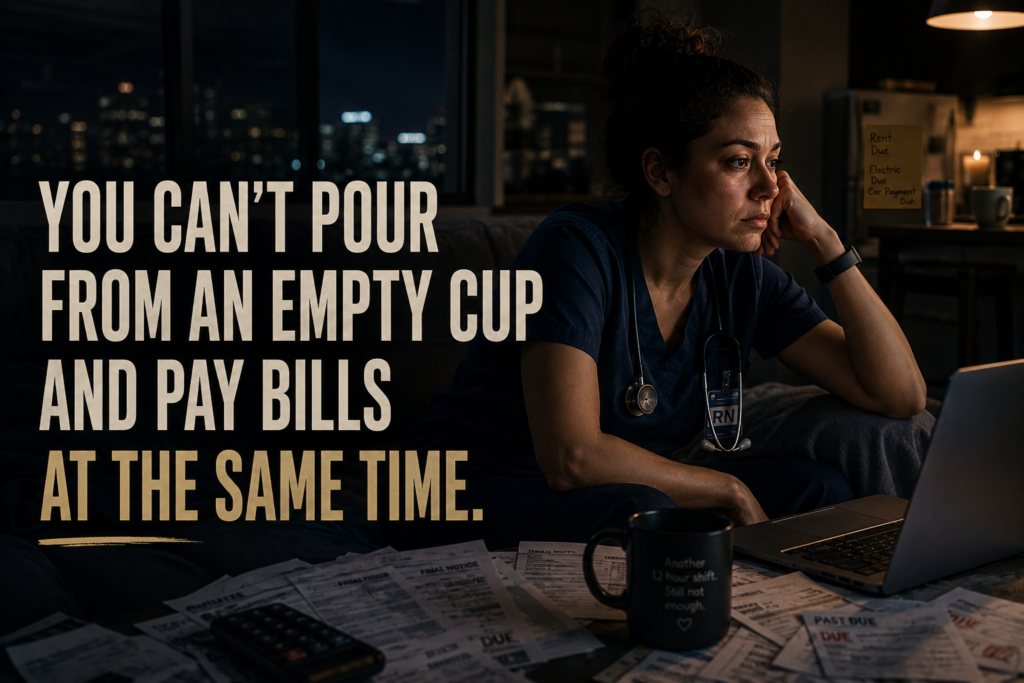
Nursing is one of the most emotionally demanding professions in the world. Every day, nurses care for patients during moments of fear, pain, uncertainty, and loss while remaining calm, compassionate, and professional. They spend long hours on their feet, make critical clinical decisions, and often put the needs of others before their own. From the outside, many people assume that nurses are financially secure because of their stable careers and earning potential. Yet behind the scrubs, a very different reality often exists.
For many healthcare professionals, financial stress becomes a constant companion. Bills continue to rise, inflation stretches household budgets, student loans linger for years, childcare costs increase, and unexpected emergencies seem to appear at the worst possible times. Even nurses who work full-time—or regularly pick up overtime—may still struggle to build lasting financial stability. Over time, that ongoing pressure can affect much more than a bank account. It can influence emotional well-being, sleep, relationships, confidence, and overall quality of life.
Some nurses feel emotionally numb from constant financial stress because chronic money worries never truly allow them to relax. Instead of recovering after difficult shifts, they go home only to face another source of pressure—figuring out how to stretch each paycheck, cover upcoming bills, or prepare for the next unexpected expense. The emotional weight of financial insecurity can become so familiar that many nurses stop recognizing how much it is affecting them. Feeling emotionally disconnected, mentally exhausted, or simply “going through the motions” can become an everyday survival strategy rather than an occasional response to stress.
Unlike burnout caused solely by demanding work environments, financial stress often follows nurses everywhere. It doesn’t end when the shift is over or when they leave the hospital parking lot. It continues during family dinners, while trying to fall asleep at night, during weekends that should be restful, and even while planning for the future. The constant mental calculations—checking account balances, worrying about debt, deciding whether to work another overtime shift, or postponing personal goals—can quietly consume emotional energy day after day.
Research has consistently shown that prolonged financial stress can contribute to anxiety, emotional exhaustion, sleep disturbances, and reduced overall well-being. While everyone’s experience is different, living under continuous financial pressure may make it harder to recover emotionally from the already demanding nature of nursing. Over time, some nurses begin to feel detached—not because they no longer care, but because their minds and bodies have been carrying too much stress for too long.
If this experience sounds familiar, you are far from alone. Thousands of nurses quietly struggle with financial anxiety while continuing to provide exceptional care for their patients. They smile during their shifts, support families through difficult moments, and remain dependable teammates, even while privately wondering how they will manage the next bill or financial emergency. These invisible struggles rarely appear on social media or come up during conversations at work, but they are more common than many people realize.
The encouraging news is that emotional recovery and financial recovery can happen together. Improving financial health is not simply about earning more money—it is also about creating greater stability, reducing chronic stress, and giving the mind and body permission to feel safe again. Building an emergency fund, reducing debt, improving financial literacy, and developing healthier money habits can gradually lessen the emotional burden that financial insecurity creates.
In this article, we’ll explore why some nurses feel emotionally numb from constant financial stress, how chronic financial pressure can affect emotional well-being, the connection between financial insecurity and burnout, and practical steps nurses can take to begin rebuilding both their financial confidence and emotional resilience. No one deserves to spend their career caring for others while silently carrying the weight of constant financial anxiety. With knowledge, intentional planning, and small consistent changes, it is possible to create a future that feels more financially secure, emotionally balanced, and filled with greater peace of mind.
Chronic Stress Can Quietly Numb Emotional Recovery
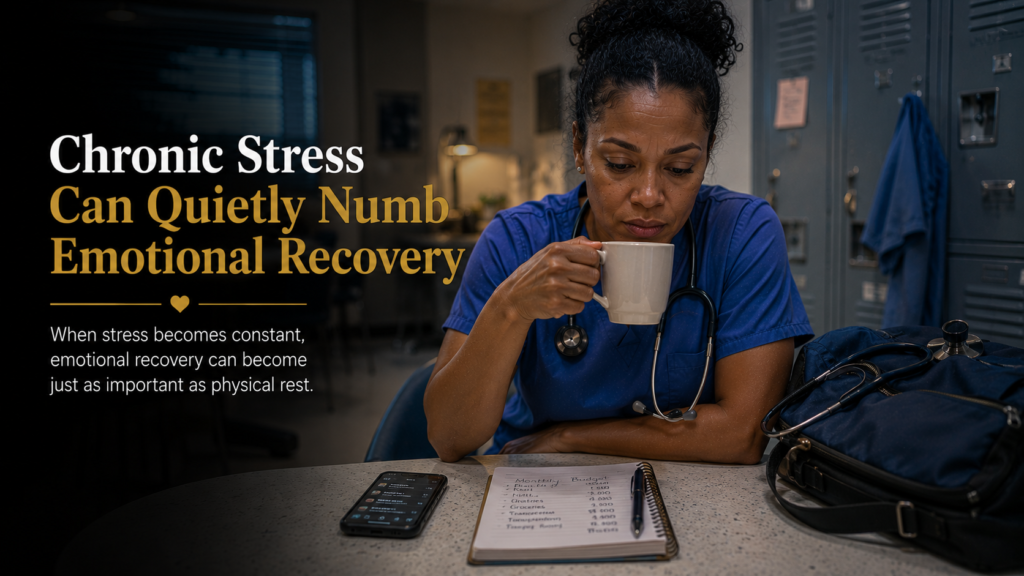
For many nurses, stress is simply considered part of the job. Long shifts, critically ill patients, staffing shortages, and emotionally difficult situations often require healthcare professionals to remain calm under pressure. However, when those workplace challenges are combined with ongoing financial worries and personal responsibilities, the body’s stress response may remain activated for extended periods. Over time, some nurses feel emotionally numb from constant financial stress because the mind and body become exhausted from carrying so many burdens without enough time to recover.
The nervous system is designed to handle short periods of stress, allowing the body to respond quickly during emergencies before returning to a calmer state. But when stress becomes chronic, recovery becomes much more difficult. Many nurses spend years balancing demanding workloads while also worrying about bills, debt, rising living expenses, or the need to work overtime to make ends meet. Instead of fully relaxing after a shift, they continue carrying emotional pressure long after they leave the hospital.
For many healthcare professionals, this constant exposure to stress can gradually affect emotional well-being. Factors that often contribute include:
- Burnout from physically and emotionally demanding work.
- Frequent overtime and long work hours.
- Ongoing financial anxiety.
- Emotional pressure from caring for patients and families.
- Understaffed units and increased workloads.
- A persistent feeling of being in survival mode.
As this stress continues, some nurses begin noticing subtle emotional changes. They may feel detached from situations that once brought them joy, mentally drained even after a day off, or emotionally flat during moments that would normally make them happy. Others describe feeling disconnected from family activities, hobbies, or personal relationships because they simply do not have the emotional energy left to fully engage. Rather than processing their emotions, they focus on getting through the next shift, paying the next bill, and making it to the next paycheck.
One reason emotional numbness can go unnoticed is because nurses are trained to keep moving forward. They often continue providing excellent patient care, supporting coworkers, and fulfilling family responsibilities despite feeling emotionally depleted inside. This ability to push through adversity is a remarkable strength, but it can also make it difficult to recognize when chronic stress has begun affecting emotional recovery. Recognizing these signs is not a sign of weakness—it is an important step toward rebuilding both emotional well-being and long-term financial stability.

Many Nurses Stay Functional While Emotionally Exhausted
One of the most difficult aspects of emotional exhaustion is that it often goes completely unnoticed by the people around us. Many some nurses feel emotionally numb from constant financial stress continue to perform their jobs exceptionally well despite feeling emotionally depleted inside. They arrive for every shift, care for critically ill patients, comfort grieving families, administer medications safely, and make life-saving decisions under pressure. To coworkers, managers, friends, and even family members, they appear dependable, capable, and resilient. Yet beneath that professional exterior, many nurses are quietly carrying an emotional weight that few people ever see.
Nursing is a profession built on responsibility. Patients rely on nurses during some of the most vulnerable moments of their lives, and that responsibility doesn’t disappear simply because a nurse is having a difficult day. Many nurses learn early in their careers to compartmentalize their emotions so they can continue providing safe, compassionate care. While this ability is often necessary in high-pressure clinical environments, it can become problematic when emotional suppression extends beyond work and becomes a daily way of living.
For many healthcare professionals, financial stress adds another invisible layer to an already demanding career. After completing a physically exhausting twelve-hour shift, the work doesn’t always end. Many nurses return home to unpaid bills, rising living expenses, student loan payments, childcare responsibilities, or concerns about whether they will need to pick up additional overtime just to stay financially stable. When these pressures continue week after week, some nurses feel emotionally numb from constant financial stress because their minds and bodies rarely have an opportunity to fully recover.
Despite these challenges, many nurses continue functioning at a remarkably high level every single day. They continue:
- Working long and demanding shifts.
- Caring for patients with professionalism and compassion.
- Supporting coworkers during busy or understaffed shifts.
- Managing household responsibilities after work.
- Paying bills and juggling financial obligations.
- Showing up for family members who depend on them.
- Smiling during conversations, even when they feel emotionally drained inside.
Because they continue meeting expectations, many people assume they are doing well. Unfortunately, outward productivity is not always a reliable indicator of emotional well-being. A nurse can be highly competent at work while privately feeling disconnected, exhausted, or emotionally empty. In many cases, emotional numbness develops so gradually that the individual doesn’t immediately recognize it. Instead, they simply become accustomed to functioning without feeling fully present.
Healthcare culture can unintentionally reinforce this pattern. Nurses are often praised for pushing through fatigue, volunteering for extra shifts, staying late to help the team, and putting patients before themselves. While these qualities reflect dedication and compassion, they can also create an environment where ignoring personal needs becomes normalized. Over time, some nurses begin believing that constantly feeling tired, emotionally detached, or mentally overwhelmed is simply part of the profession. They stop expecting to feel rested because exhaustion has become their baseline.
Financial pressure can make this cycle even more difficult to escape. Nurses who depend on overtime to cover monthly expenses may feel unable to reduce their workload, even when they recognize they are approaching burnout. Days off become opportunities to recover just enough to return to work rather than genuine periods of emotional restoration. Instead of enjoying hobbies, spending quality time with loved ones, or investing in self-care, many find themselves worrying about bank balances, upcoming bills, or whether another unexpected expense will disrupt their budget. The nervous system remains in a near-constant state of alert, making emotional recovery increasingly difficult.
The encouraging news is that functioning while emotionally exhausted does not have to become a permanent way of life. Recognizing emotional numbness is often the first step toward healing. As financial stability gradually improves, healthy boundaries are established, and emotional recovery becomes a priority alongside physical health, many nurses begin reconnecting with parts of themselves that chronic stress had quietly buried. Healing may not happen overnight, but every small step toward reducing financial stress and creating space for rest can help restore emotional resilience. Nurses deserve more than simply surviving each day—they deserve to feel fully present, emotionally connected, and able to enjoy the lives they work so hard to support.
Real Nurse Scenario: Feeling Emotionally “Checked Out”
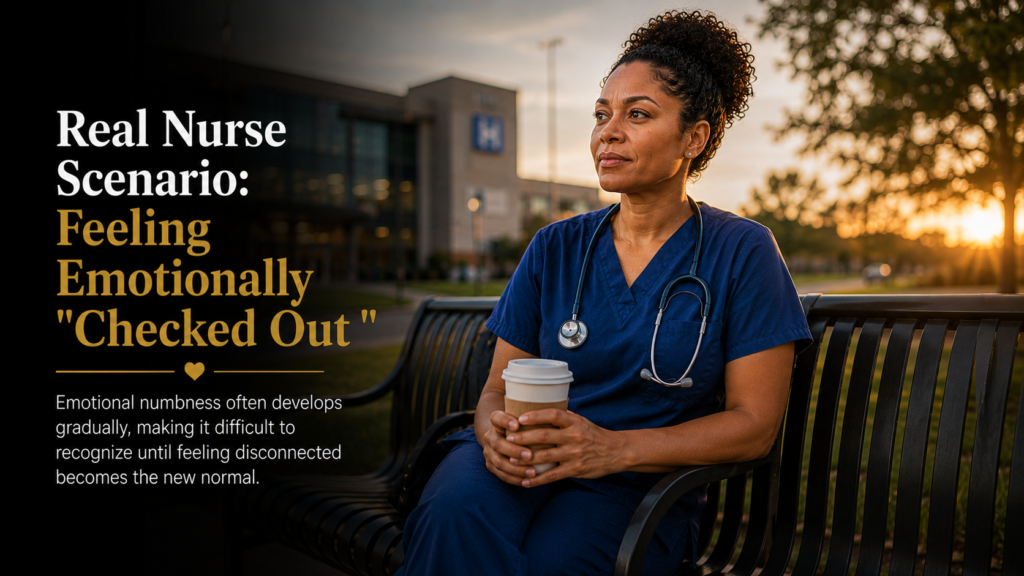
Brianna has been a registered nurse for several years, and by nearly every outward measure, she appears to be doing well. She consistently arrives for her shifts on time, provides compassionate care to her patients, supports new nurses when they need guidance, and rarely complains about the demands of her job. Her coworkers see someone who is dependable, hardworking, and capable of handling almost any challenge that comes her way. Friends and family often tell her they admire how well she balances work and life. But behind that professional image, Brianna has been quietly carrying an emotional weight that very few people recognize.
Like many healthcare professionals, Brianna has spent years trying to keep everything together. She regularly worked overtime to supplement her income, hoping extra shifts would provide enough financial breathing room to stay ahead of rising expenses. At the same time, she was managing increasing living costs, household bills, family responsibilities, and the emotional demands that naturally come with caring for patients through illness, trauma, and loss. Although she rarely talked about these pressures, they slowly became part of her everyday life. Over time, some nurses feel emotionally numb from constant financial stress, and Brianna gradually realized she was becoming one of them.
The change didn’t happen overnight. It developed so slowly that she almost didn’t notice it. She wasn’t crying more often or having emotional outbursts. Instead, she simply stopped feeling much of anything. Activities that once helped her relax—reading a good book, spending time with friends, watching movies with her family, or taking weekend trips—no longer brought the same sense of happiness. Even when good things happened, she struggled to fully enjoy them because her mind was constantly occupied with responsibilities waiting for her at home or another shift waiting at the hospital.
Years of balancing multiple stressors had quietly taken a toll, including:
- Frequent overtime to supplement her income.
- Ongoing financial stress and rising living expenses.
- Burnout from physically and emotionally demanding work.
- The emotional pressure of caring for seriously ill patients.
- Constant survival mode without enough time to recover.
- Feeling responsible for everyone else’s needs before her own.
Although Brianna continued functioning professionally, she noticed subtle changes in her emotional well-being. She found herself going through daily routines almost on autopilot. Conversations required more effort than they used to. She laughed less often, felt less excited about future plans, and sometimes struggled to remember the last time she truly felt rested or emotionally present. Instead of looking forward to her days off, she often spent them trying to recover just enough energy to make it through another workweek.
The most confusing part was that nothing appeared “wrong” from the outside. She was still paying her bills, showing up to work, and meeting her responsibilities. Because she continued functioning, she assumed she simply needed to work harder or be more grateful. She didn’t realize that emotional numbness can develop as a response to prolonged stress rather than personal weakness. Like many some nurses feel emotionally numb from constant financial stress, Brianna had spent so much time surviving that her mind and body no longer knew how to fully relax.
Eventually, Brianna began recognizing that what she was experiencing wasn’t laziness, failure, or a lack of appreciation for her career. It was emotional exhaustion that had quietly accumulated over years of chronic stress. Understanding that realization became the first step toward healing. By gradually reducing financial pressure, setting healthier boundaries around overtime, prioritizing rest, and creating small moments of recovery outside of work, she slowly began reconnecting with herself. The journey wasn’t immediate, but it reminded her that emotional recovery is possible. Nurses spend their careers helping others heal, and they deserve the same opportunity to heal themselves.

Emotional Numbness Is Often a Sign the Nervous System Is Overloaded
MOne of the biggest misconceptions about emotional numbness is that it means someone has stopped caring. Many nurses worry that feeling emotionally disconnected somehow reflects a lack of compassion or a decline in their ability to care for patients and loved ones. In reality, emotional numbness is often not a character flaw at all. For many healthcare professionals, it can be the nervous system’s way of responding to prolonged periods of overwhelming stress. When some nurses feel emotionally numb from constant financial stress, it may be because their minds and bodies have been operating in survival mode for far too long.
The human nervous system is remarkably designed to help us survive difficult situations. During moments of danger or intense pressure, it activates a stress response that increases alertness and prepares the body to respond quickly. This response is incredibly valuable during emergencies, especially in nursing, where quick thinking and rapid decision-making can save lives. However, the nervous system was never intended to remain in this heightened state indefinitely.
For many nurses, chronic stress extends far beyond the hospital walls. After emotionally demanding shifts, many return home to financial concerns, family responsibilities, mounting bills, and the pressure to continue working overtime just to stay financially stable. Day after day, the body receives the message that another challenge is waiting around the corner. Over time, some nurses feel emotionally numb from constant financial stress because their nervous systems rarely receive enough opportunities to fully recover.
When someone experiences prolonged periods of:
- Chronic workplace stress.
- Burnout from physically and emotionally demanding shifts.
- Ongoing financial pressure.
- Emotional exhaustion from caring for others.
- Constant survival anxiety about the future.
the brain may gradually begin reducing emotional responsiveness as a protective mechanism. Instead of feeling every emotion with the same intensity, the nervous system attempts to conserve energy by limiting emotional reactions. This response can make someone feel detached, emotionally flat, or disconnected from experiences that once brought happiness. It is not that they no longer care—it is that their emotional reserves have been stretched beyond healthy limits.
Many nurses describe this experience as simply “going through the motions.” They continue showing up for work, providing excellent patient care, and fulfilling family responsibilities, but internally they may feel as though they are watching life from a distance. Celebrations may not feel as joyful. Time with loved ones may require more emotional effort. Even personal accomplishments can feel muted because the nervous system is focused more on survival than enjoyment. This emotional shutdown is often gradual, making it difficult to recognize until it has become part of daily life.
The encouraging reality is that emotional numbness does not have to be permanent. The nervous system is capable of healing when it is consistently given opportunities to experience safety, stability, and recovery. Financial healing, healthier work-life boundaries, adequate sleep, supportive relationships, regular physical activity, and intentional periods of rest all contribute to helping the body gradually move out of chronic survival mode. As ongoing stress begins to decrease, many nurses notice that their emotional resilience slowly returns.
Recovery rarely happens overnight, and there is no single solution that immediately reverses years of chronic stress. Healing is usually gradual, built through many small changes that allow the nervous system to feel less threatened over time. Every step toward reducing financial chaos, improving emotional well-being, and creating healthier recovery habits helps rebuild the emotional capacity that prolonged stress may have temporarily suppressed.
Most importantly, emotional numbness should never be mistaken for weakness. It is often a signal that the mind and body have been carrying an extraordinary amount of responsibility without enough opportunity to recover. Nurses spend their careers protecting the health of others. They deserve the same patience, compassion, and care as they work toward restoring their own emotional well-being. Recognizing the signs of an overloaded nervous system is not the end of the journey—it is often the beginning of meaningful healing.
Emotional Numbness Does Not Mean You Are Broken
One of the most damaging beliefs many nurses carry is the idea that feeling emotionally numb means something is wrong with them. After months or even years of feeling disconnected, mentally exhausted, or emotionally flat, it is easy to wonder whether they have somehow lost the compassion that first inspired them to become nurses. Many begin questioning themselves, asking, “Why don’t I feel like myself anymore?” or “Why can’t I enjoy the things I used to love?” The truth is that some nurses feel emotionally numb from constant financial stress and prolonged emotional pressure not because they are broken, but because they have been carrying more than the mind and body were ever designed to handle alone.
Nurses spend their careers responding to emergencies, comforting grieving families, advocating for vulnerable patients, and making critical decisions under pressure. At the same time, many are quietly managing financial responsibilities, working overtime, raising children, caring for aging parents, paying off debt, and worrying about the rising cost of everyday life. While each challenge may seem manageable on its own, years of carrying multiple stressors without enough recovery can gradually overwhelm even the most resilient person.
When emotional pressure continues without relief, the nervous system naturally begins looking for ways to conserve energy. For some people, that may look like increased anxiety or irritability. For others, it may appear as emotional numbness. Feeling emotionally disconnected does not necessarily mean someone has stopped caring—it often means the brain and body have been protecting themselves from prolonged stress. In many cases, some nurses feel emotionally numb from constant financial stress because their emotional reserves have been depleted after spending so much time operating in survival mode.
Many nurses have been conditioned to believe that pushing through exhaustion is simply part of the profession. They continue showing up for work, caring for patients, and meeting responsibilities even when they feel emotionally drained. Over time, emotional suppression can become so familiar that it feels normal. Instead of recognizing their need for rest, many blame themselves for not being stronger, more grateful, or more resilient. In reality, emotional numbness is often a signal that recovery has been postponed for far too long.
The encouraging news is that emotional healing is possible. Recovery rarely happens overnight, and there is no single solution that immediately reverses years of chronic stress. Instead, healing often begins through small, consistent changes that help both the mind and body experience greater safety and stability. Many nurses gradually reconnect with themselves as they begin creating healthier routines such as:
- Building healthier recovery habits after work.
- Reducing sources of chronic stress whenever possible.
- Seeking meaningful emotional support from trusted people.
- Improving financial stability one step at a time.
- Establishing healthier boundaries around overtime and work commitments.
- Making space for genuine rest, hobbies, relationships, and activities that restore emotional energy.
These changes may seem small individually, but together they help create an environment where the nervous system no longer feels as though it must remain on constant alert. As financial pressure slowly decreases and opportunities for recovery increase, many nurses begin noticing that joy, motivation, and emotional connection gradually return. Healing is often less about making dramatic changes and more about consistently giving yourself permission to recover.
Nurses dedicate their careers to helping other people heal during some of life’s most difficult moments. They deserve the same compassion they so freely offer their patients every day. Feeling emotionally numb does not mean you are weak, uncaring, or beyond recovery. It often means you have been strong for far too long without enough time to care for yourself. With patience, healthier boundaries, emotional support, and gradual financial stability, it is possible to move beyond survival mode and reconnect with the person you have always been. Emotional recovery is not only possible—it is something every nurse deserves.onally recover too.

Conclusion
Nursing has always been a profession built on compassion, resilience, and service. Every day, nurses care for people during some of the most difficult moments of their lives while continuing to meet extraordinary expectations both inside and outside the workplace. Yet behind that strength, many nurses are quietly carrying a different kind of burden—one that is rarely visible to patients or coworkers. For some, years of burnout, financial pressure, emotional exhaustion, and constant responsibility gradually lead to feeling emotionally disconnected from the life they once enjoyed.
The reality is that some nurses feel emotionally numb from constant financial stress not because they have stopped caring, but because their minds and bodies have been carrying chronic stress for far too long. Working overtime to cover bills, worrying about unexpected expenses, balancing family responsibilities, and recovering from emotionally demanding shifts can leave very little room for genuine rest. Over time, constantly operating in survival mode can make emotional numbness feel like the new normal, even though it is often the nervous system’s attempt to cope with prolonged overload.
The encouraging news is that emotional numbness does not have to be permanent. Recovery is possible, although it rarely happens overnight. Healing often begins with recognizing that emotional exhaustion is not a personal failure or a sign of weakness. It is a signal that your mind and body need care, recovery, and support just as much as the patients you serve every day. Small, consistent changes—such as improving financial stability, setting healthier work boundaries, creating opportunities for rest, seeking emotional support, and building healthier recovery habits—can gradually help restore both emotional resilience and peace of mind.
Financial healing also plays an important role in emotional recovery. Reducing debt, building an emergency fund, learning healthier money habits, and decreasing dependence on overtime can slowly reduce the constant sense of financial vulnerability that keeps many nurses living in a heightened state of stress. Every small financial victory creates more than security—it creates breathing room. As financial confidence grows, many nurses discover that they also begin sleeping better, feeling calmer, and reconnecting with the people and activities they love.
Most importantly, remember that your value has never been measured by your productivity or your ability to keep pushing through exhaustion. You deserve the same compassion, patience, and care that you generously give to others. If some nurses feel emotionally numb from constant financial stress, they should also know that healing is possible with time, support, and intentional change. You are not broken, you are not alone, and you are certainly not beyond recovery.
You have spent your career helping others through pain, uncertainty, and healing. Now it is your turn to believe that you deserve healing too. Step by step, with healthier habits, greater financial stability, and moments of genuine rest, it is possible to move beyond survival mode and rediscover joy, emotional connection, and a life that feels balanced again.
Frequently Asked Questions
Why do some nurses feel emotionally numb from constant financial stress?
Many some nurses feel emotionally numb from constant financial stress because prolonged financial pressure can affect both emotional and physical well-being. Worrying about bills, debt, overtime, and unexpected expenses while working in a demanding healthcare environment can keep the body in a prolonged state of stress. Over time, the nervous system may reduce emotional responsiveness as a way of coping with continuous overload.
Can financial stress really affect emotional health?
Yes. Chronic financial stress can contribute to anxiety, emotional exhaustion, sleep disturbances, difficulty concentrating, and increased feelings of burnout. While financial stress affects everyone differently, long-term money worries can make it harder to recover emotionally after demanding workdays and may reduce overall well-being.
Is emotional numbness the same as burnout?
Not exactly. Burnout is a condition characterized by emotional exhaustion, depersonalization, and a reduced sense of accomplishment. Emotional numbness can be one possible response to prolonged burnout or chronic stress, where someone feels emotionally detached or disconnected from experiences that once brought enjoyment. The two often overlap but are not identical.
Does emotional numbness mean I no longer care about my patients?
No. Emotional numbness does not mean you have lost your compassion or become uncaring. Many nurses continue providing exceptional patient care while privately struggling with emotional exhaustion. Feeling emotionally disconnected is often a sign that the nervous system has been under prolonged stress rather than evidence that someone has stopped caring.
How can nurses begin recovering from emotional exhaustion?
Recovery usually happens gradually rather than all at once. Many nurses benefit from improving sleep habits, creating healthier work-life boundaries, reducing chronic financial stress, building an emergency fund, seeking emotional support, exercising regularly, and making time for activities that promote genuine relaxation. Small, consistent improvements often lead to meaningful emotional recovery over time.
Can improving financial stability help emotional well-being?
Yes. While money cannot solve every source of stress, improving financial stability often reduces one of the most persistent causes of anxiety. Building emergency savings, paying down debt, creating a realistic budget, and improving financial literacy can help reduce financial uncertainty and allow the nervous system to experience greater emotional safety.
How do I know if I’m emotionally exhausted or just tired?
Physical fatigue usually improves after rest or a good night’s sleep. Emotional exhaustion often feels different. You may continue feeling mentally drained, emotionally detached, unmotivated, or unable to enjoy activities that once brought happiness even after taking time off. If these feelings persist or begin interfering with daily life, consider speaking with a healthcare professional or mental health provider for additional support.
Is it normal for nurses to hide emotional stress?
Yes. Many nurses become skilled at continuing to function professionally even when they are struggling internally. Healthcare culture often encourages resilience and pushing through difficult situations, which can make emotional struggles less visible. Remember that seeking support is not a sign of weakness—it is an important part of protecting your long-term well-being.
Can emotional numbness improve over time?
Yes. Many nurses gradually reconnect with their emotions as chronic stress decreases and healthier recovery habits become part of everyday life. Emotional healing often takes time, but improving financial stability, reducing overtime when possible, strengthening personal relationships, prioritizing self-care, and allowing space for genuine rest can all support long-term recovery.
What is the first step toward emotional and financial healing?
The first step is recognizing that you do not have to stay in survival mode forever. Acknowledging the impact that chronic stress has had on your emotional well-being allows you to begin making small, manageable changes. Whether that means creating a budget, building an emergency fund, setting healthier work boundaries, seeking emotional support, or simply allowing yourself time to rest, every positive step moves you closer to a healthier and more balanced life.
Trusted Resources
American Nurses Association (ANA)
Professional resources on nurse well-being, burnout prevention, workplace resilience, and career development.
National Institute of Mental Health (NIMH)
Evidence-based information about chronic stress, anxiety, emotional exhaustion, and mental health.