
Introduction
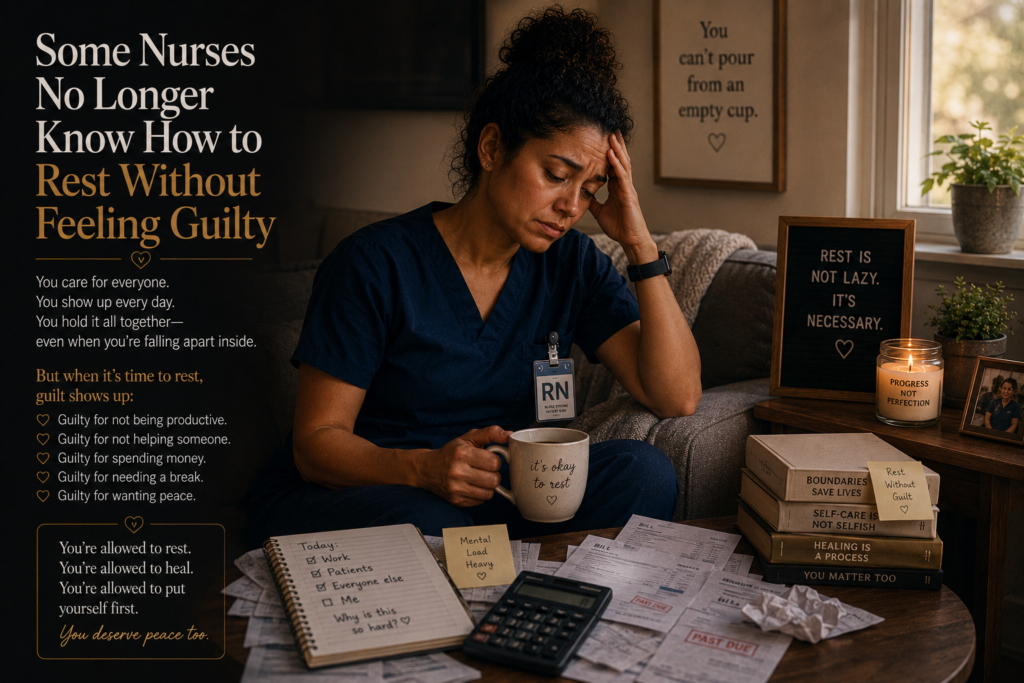
Nurses feel guilty resting even after working long shifts, picking up overtime, and spending countless hours caring for patients. What should feel like a well-earned break often feels surprisingly uncomfortable. Instead of relaxing, many nurses find themselves thinking about unfinished responsibilities, extra shifts they could be working, bills that still need to be paid, or everything waiting for them tomorrow. For many healthcare professionals, nurses feel guilty resting because years of constant caregiving have conditioned them to believe that slowing down means falling behind.
For many nurses, this guilt does not develop overnight. It grows gradually after years of living in survival mode, where productivity becomes the standard and rest begins to feel unfamiliar. Between demanding schedules, chronic staffing shortages, financial responsibilities, family obligations, and the emotional weight of caring for others, many healthcare professionals become so accustomed to pushing through exhaustion that genuine recovery starts to feel undeserved. As a result, nurses feel guilty resting even when their minds and bodies are desperately asking for a break.
Some nurses quietly tell themselves:
- “I should be doing something productive.”
- “I could be making more money right now.”
- “I’ll rest after I finish everything.”
- “I don’t have time to slow down.”
Unfortunately, that “later” often never comes.
Over time, many nurses begin associating rest with guilt instead of recovery. A day off can feel like lost income. An afternoon nap may feel unproductive. Even vacations can become filled with thoughts about work, finances, unfinished tasks, or responsibilities waiting at home. Rather than restoring energy, time away from work sometimes becomes another source of emotional stress. This is one of the primary reasons nurses feel guilty resting, even when they know they are physically and emotionally exhausted.
This cycle can quietly affect every area of life. Chronic stress, burnout, compassion fatigue, and financial pressure often reinforce one another, making it increasingly difficult to disconnect, recover, and prioritize long-term health. While hard work is an essential part of nursing, constantly operating in survival mode can leave even the most dedicated professionals emotionally drained and mentally overwhelmed. Understanding why nurses feel guilty resting is an important step toward breaking this unhealthy pattern.
The encouraging news is that this cycle can be broken.
Learning to rest without guilt is not about becoming less productive or caring less about your patients, coworkers, or family. It is about recognizing that recovery is an essential part of living a healthy, sustainable life and building a long, fulfilling nursing career. Genuine rest protects mental health, improves decision-making, reduces burnout, strengthens relationships, and creates the emotional space needed to make wiser financial and personal decisions.
In this article, you’ll learn why nurses feel guilty resting, how chronic stress and survival mode reshape the brain’s response to downtime, and practical strategies to rebuild healthier habits that support emotional well-being, financial stability, and long-term career satisfaction. Every nurse deserves more than simply surviving each shift—they deserve the opportunity to recover, recharge, and truly thrive.
Chronic Stress Can Make Rest Feel Emotionally Unsafe
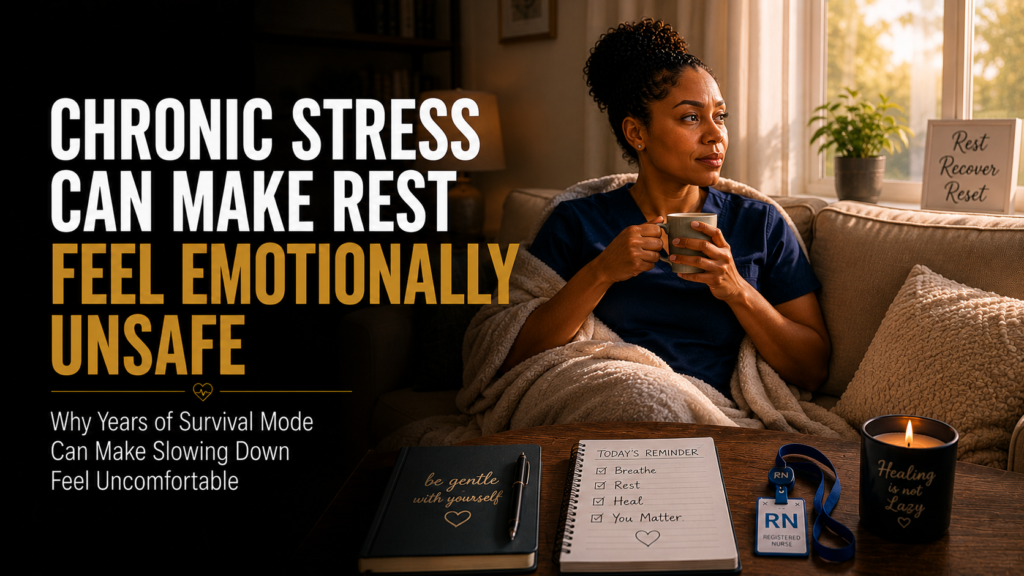
WWhen nurses spend long periods operating in survival mode, the nervous system often becomes conditioned to constant urgency. Over time, the body and mind adapt to functioning under pressure, making stress feel familiar and slowing down feel unfamiliar.
Nursing is a demanding profession that often requires quick decisions, long shifts, emotional resilience, and the ability to keep moving even when physically or mentally exhausted. While these skills are essential at work, remaining in that heightened state for months or years can make it difficult to truly relax once the shift is over.
Many nurses become accustomed to functioning through:
- Overtime
- Physical exhaustion
- Chronic stress
- Emotional overload
- Financial pressure
- Staffing shortages
- Family responsibilities
- Constant multitasking
- Limited time for self-care
Eventually, the body begins to expect this constant level of activity.
Instead of viewing rest as a normal and healthy part of recovery, the nervous system may continue operating as though there is always another problem to solve or another responsibility waiting. Even in a quiet home or on a scheduled day off, the mind can remain alert, scanning for what needs attention next.
As a result, slowing down can begin feeling emotionally uncomfortable.
Some nurses feel anxious when they finally have time to rest.
Others experience guilt for sitting still, watching a movie, sleeping in, or spending an afternoon doing nothing at all. Some even find themselves creating new tasks simply because being unproductive feels unsettling.
Many quietly think:
- “I should be cleaning the house.”
- “I could be working another shift.”
- “I’m wasting time.”
- “I should be doing something useful.”
These thoughts are common among nurses who have spent years placing other people’s needs before their own.
Over time, the nervous system becomes so accustomed to survival mode that rest no longer feels natural—it feels unfamiliar.
That does not mean anything is “wrong” with you.
It often means your mind and body have adapted to years of living under continuous pressure.
The encouraging news is that this pattern can change. Just as the nervous system learns to operate in survival mode, it can also gradually learn to feel safe during periods of rest. Giving yourself permission to slow down, creating healthy boundaries, reducing chronic stress where possible, and making recovery a regular priority can help restore a healthier balance over time.
True recovery is more than taking a day off. It is allowing both your body and your mind to believe that it is safe to pause, recharge, and prepare for the life you want—not just the next shift.
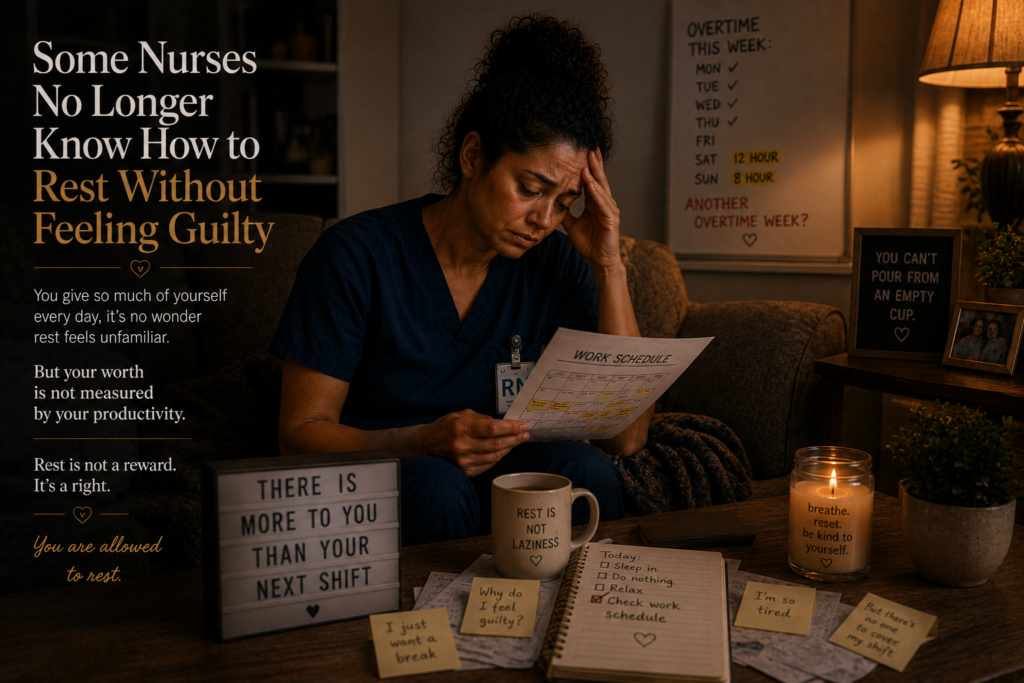
For many nurses, the relationship with rest changes gradually over time.
When they first enter the profession, a day off may feel like a chance to sleep, spend time with family, or simply recharge before returning to work. Rest feels deserved after long shifts and emotionally demanding days.
But as the years pass, financial pressures, staffing shortages, overtime opportunities, and growing responsibilities can slowly change the way many nurses think about their time away from work.
Without even realizing it, many begin measuring the value of their day not by how rested they feel, but by how much they accomplished.
A quiet afternoon starts feeling unproductive.
Sleeping in feels wasteful.
Watching a movie creates guilt.
Reading a book feels like time that could have been spent working another shift.
For some nurses, rest slowly becomes emotionally connected to:
- Missed overtime opportunities
- Lost income
- Unfinished household responsibilities
- Falling behind financially
- Mounting bills
- Student loan payments
- Family obligations
- Productivity guilt
- Feeling “lazy”
- The belief that every free hour should be used wisely
At first, these thoughts may only appear occasionally.
A nurse might decline an overtime shift and spend the rest of the evening wondering how much money they could have earned.
Another nurse may finally schedule a vacation, only to spend several days thinking about work, worrying about finances, or calculating how much income they are missing while away.
Over time, these thoughts become more automatic.
Many nurses begin experiencing rest through the lens of productivity instead of recovery.
Instead of asking themselves,
“Do I need rest?”
they begin asking,
“Shouldn’t I be doing something?”
That subtle shift can have a profound effect on emotional well-being.
Rather than bringing peace, quiet moments begin carrying emotional tension.
Some nurses sit on the couch intending to relax, only to feel restless after a few minutes.
Others constantly check their work schedule while off duty.
Some feel guilty sleeping an extra hour because they believe they should already be cleaning, studying, meal-prepping, or earning additional income.
Even enjoyable activities can become difficult to appreciate because the mind remains focused on everything left undone.
This pattern becomes especially common for nurses who have depended on overtime for months or years.
When extra shifts become part of the household budget instead of extra income, taking a day off can feel like making a financial mistake.
A day of recovery no longer feels like an investment in health.
Instead, it feels like money left on the table.
Many nurses quietly begin associating rest with:
- Lower paychecks
- Delayed financial goals
- Slower debt repayment
- Missed retirement contributions
- Falling behind on monthly expenses
- Letting family members down
- Lost opportunities to “get ahead”
Eventually, true recovery becomes much more difficult.
The body may be home, but the mind never fully leaves work.
Even during vacations, weekends, or scheduled days off, some nurses continue mentally reviewing patient situations, worrying about upcoming shifts, thinking about unpaid bills, or calculating how many overtime hours they may need next month.
This ongoing mental activity prevents many nurses from experiencing the full benefits of rest.
Instead of feeling refreshed after time off, they often return to work still emotionally tired because their minds never truly had the opportunity to recover.
Over months and years, this cycle can quietly contribute to chronic stress, emotional exhaustion, compassion fatigue, sleep disturbances, and burnout.
The encouraging news is that this pattern is not permanent.
Rest does not have to remain tied to guilt or lost productivity.
Many nurses find that by creating healthier financial habits, reducing dependence on overtime, establishing stronger personal boundaries, and intentionally making time for recovery, they can slowly begin changing the way they experience rest.
Recovery is not wasted time.
It is one of the most valuable investments nurses can make in their physical health, emotional resilience, financial decision-making, and long-term career sustainability.
Learning to view rest as productive in its own way is often an important step toward breaking free from survival mode and creating a healthier, more balanced future.
Real Nurse Scenario: Feeling Anxious on Days Off
After working four consecutive 12-hour hospital shifts, Erica finally has a day off.
She has been looking forward to this break all week.
Her body feels exhausted from long hours on her feet. Her shoulders ache, her feet are sore, and she knows she has been running on very little sleep. Emotionally, she feels drained after caring for critically ill patients, supporting anxious families, and managing the constant demands of a busy hospital unit.
She tells herself that today is going to be different.
Today, she is going to rest.
She sleeps a little longer, makes herself a cup of coffee, and settles onto the couch with a book she has been meaning to read for months.
But instead of feeling peaceful, her mind refuses to slow down.
Within minutes, anxious thoughts begin filling the silence.
Part of her mind keeps thinking about:
- Overtime opportunities she declined
- Bills that still need to be paid
- Unfinished household responsibilities
- Lost income from taking the day off
- Upcoming expenses
- Financial pressure
- Her retirement savings
- The grocery bill she needs to cover next week
- Whether she should pick up another shift before the weekend
The longer she sits still, the more uncomfortable she becomes.
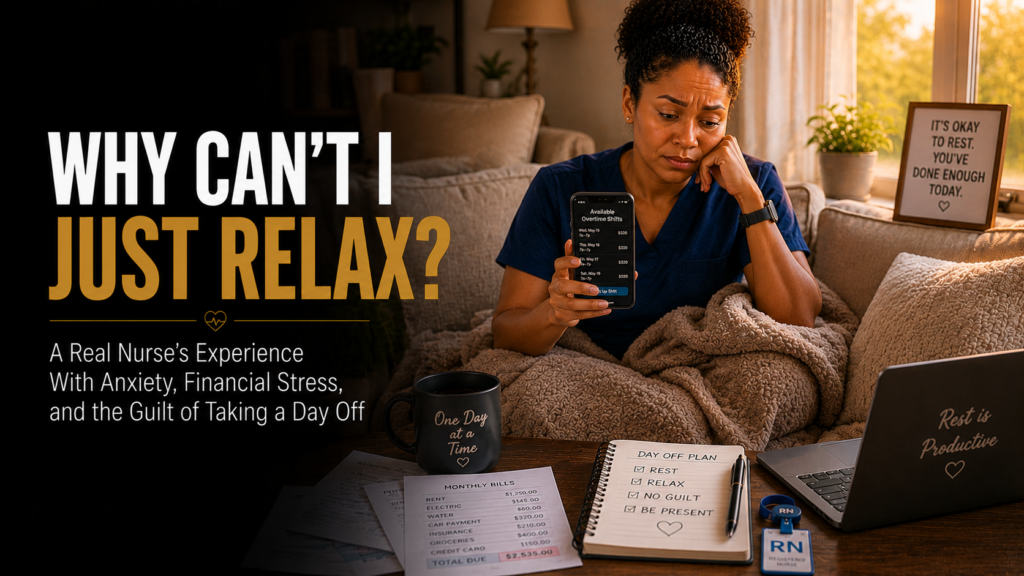
She checks the staffing app on her phone to see if any extra shifts are available.
She starts making mental lists of chores she could be completing instead of relaxing.
She opens her laptop to review her budget.
Before she realizes it, what was supposed to be a day of recovery has quietly turned into another day of worrying, planning, and feeling guilty for not being productive.
Even though her body desperately needs rest, her mind continues operating as if she is still at work.
By the afternoon, Erica feels just as mentally exhausted as she did when she clocked out the day before.
She begins to wonder why relaxing feels so difficult.
Then a thought crosses her mind that surprises her:
“I don’t remember the last time I truly rested without feeling guilty.”
For many nurses, Erica’s experience feels painfully familiar.
Years of working overtime, juggling financial responsibilities, caring for others, and constantly responding to urgent situations can train the mind to stay alert even when there is no immediate crisis. Instead of viewing rest as a necessary part of recovery, many nurses begin associating downtime with lost productivity, missed income, or falling behind.
Over time, genuine relaxation can start feeling unfamiliar.
This does not mean something is wrong with you.
It often means your mind and body have spent years adapting to a lifestyle where survival always came first.
The encouraging news is that this pattern can change.
With healthier financial habits, stronger boundaries, intentional recovery, and a growing sense of financial stability, many nurses gradually learn to enjoy their days off without feeling guilty. Rest begins to feel restorative again rather than something that has to be earned through exhaustion.
Recognizing this pattern is often the first step toward reclaiming both emotional well-being and a healthier relationship with work, money, and recovery.
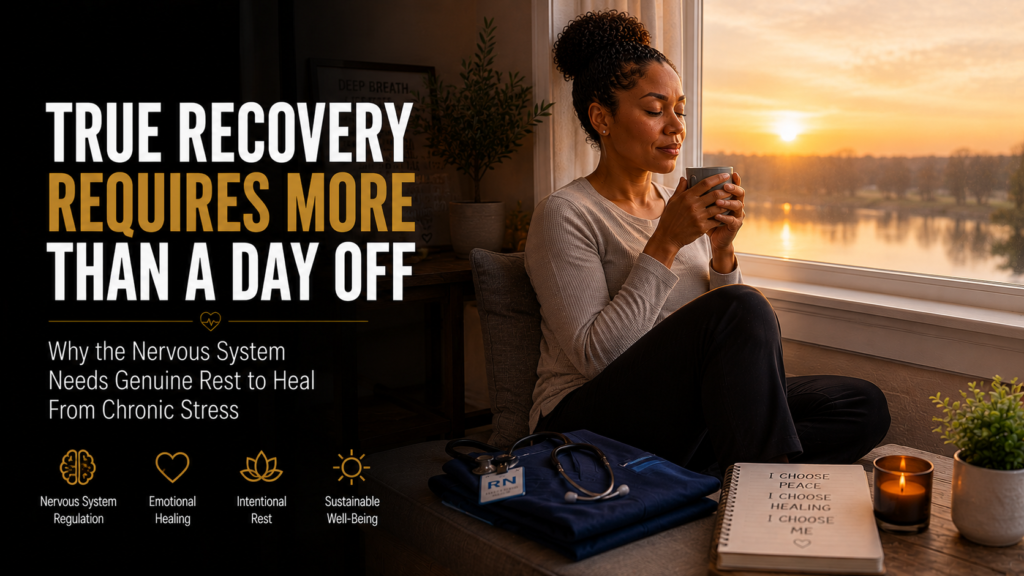
The Nervous System Cannot Fully Recover Without Genuine Rest
Many nurses become so emotionally conditioned to constant stress that slowing down begins feeling emotionally uncomfortable.
After years of responding to emergencies, managing heavy patient loads, working long shifts, and carrying significant emotional and financial responsibilities, the body can become accustomed to functioning in a constant state of alertness. What once served as a way to adapt to the demands of nursing can eventually make genuine relaxation feel unfamiliar.
For many nurses, leaving the hospital does not necessarily mean leaving stress behind.
The shift may end.
The scrubs may come off.
The drive home may be over.
But the mind often continues replaying patient interactions, thinking about tomorrow’s workload, worrying about bills, or planning how to pick up enough overtime to meet financial goals.
Physically, they may be home.
Emotionally, they are still operating as though they are on the clock.
Long-term nervous system recovery requires more than simply leaving work physically.
It also requires moments where the mind feels:
- Calmer
- Safer
- Less pressured
- Emotionally supported
- Free from constant urgency
- Able to slow down without guilt
- Allowed to recover
These moments give the brain and body an opportunity to move away from the constant “go, go, go” mindset that many nurses experience every day.
Without them, the nervous system may remain in a heightened state of activation long after a shift has ended.
This is one reason why some nurses wake up feeling exhausted despite getting several hours of sleep.
Others find themselves unable to fully enjoy vacations because their minds continue racing.
Some struggle to sit quietly without immediately reaching for their phone, checking work schedules, reviewing finances, or thinking about everything that still needs to be accomplished.
When the nervous system spends months or years responding to chronic stress, true recovery often requires more than simply taking a day off.
It requires intentionally creating space where both the body and mind can experience safety, stillness, and restoration.
Without genuine recovery, chronic stress often continues building silently over time.
The effects may not be obvious at first.
Many nurses continue showing up for work, caring for patients, and handling responsibilities exactly as they always have.
But underneath that resilience, emotional fatigue can continue accumulating.
Eventually, prolonged stress may begin affecting many areas of life, including:
- Mental and emotional well-being
- Sleep quality
- Personal relationships
- Patience and emotional resilience
- Decision-making
- Burnout recovery
- Physical health
- Financial decision-making
- Overall quality of life
When people remain emotionally exhausted, it often becomes more difficult to plan for the future, build consistent financial habits, or make thoughtful long-term decisions. Constant stress narrows focus to immediate survival, leaving little energy for retirement planning, investing, or creating healthier financial systems.
The encouraging news is that recovery is possible.
The nervous system is remarkably adaptable.
Just as it learned to function under chronic pressure, it can gradually learn to recognize calm, safety, and rest again.
This process rarely happens overnight.
It begins with giving yourself permission to recover without guilt, setting healthier boundaries, reducing unnecessary stress where possible, and recognizing that rest is not a reward for working harder—it is an essential part of protecting your health, your career, and your future.
Nurses spend their careers helping others heal.
They deserve the same opportunity to heal themselves.
Because genuine rest is not wasted time.
It is one of the most important investments nurses can make in their emotional well-being, long-term resilience, and financial future.
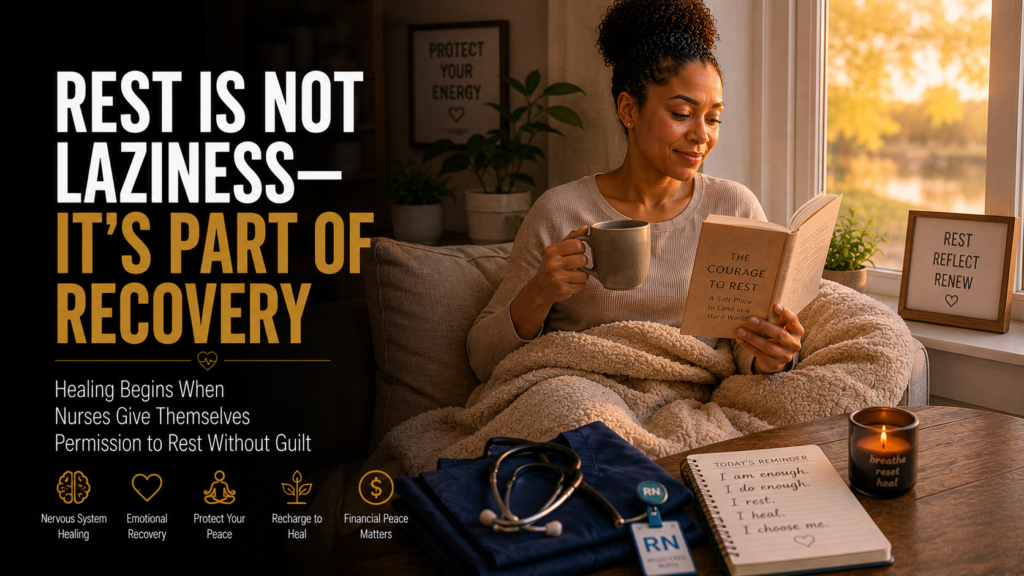
Rest Is Not Laziness — It Is Part of Recovery
Many nurses have spent so many years functioning under pressure that the nervous system no longer fully recognizes rest as something safe.
Instead, constant activity begins to feel normal.
Being busy feels productive.
Working overtime feels responsible.
Taking care of everyone else feels expected.
But slowing down—even for a well-deserved day off—can trigger feelings of guilt, anxiety, or the uncomfortable sense that something important is being neglected.
This is one of the hidden effects of living in survival mode for an extended period.
When nurses spend months or years operating under relentless demands, the mind and body adapt to that pace. The nervous system becomes accustomed to constant urgency, making it difficult to switch into a true state of recovery.
Constantly living with:
- Urgency
- Overtime
- Emotional exhaustion
- Financial pressure
- Survival mode
- Staffing shortages
- Family responsibilities
- Sleep deprivation
- Compassion fatigue
- Chronic stress
can quietly keep both the body and mind emotionally overloaded for long periods of time.
Over time, this chronic overload affects far more than energy levels.
It can influence emotional resilience, concentration, patience, sleep quality, relationships, financial decision-making, and overall well-being.
Many nurses continue showing up for work every day, believing they are simply tired.
In reality, they may be carrying years of accumulated emotional stress that their nervous system has never been given the opportunity to fully process.
That is why rest can sometimes feel uncomfortable.
The body is physically still, but the mind remains emotionally active.
Some nurses find themselves checking work emails while on vacation.
Others begin cleaning the house simply because sitting quietly feels unfamiliar.
Some scroll through overtime opportunities even after promising themselves they would take the weekend off.
These behaviors are not signs of laziness or weakness.
They are often signs of a nervous system that has learned to equate constant productivity with safety.
The goal is not becoming unproductive.
And it is not ignoring responsibilities.
The goal is recognizing that recovery is a responsibility, too.
Just as the body needs sleep after a demanding shift, the mind also needs moments of calm to recover from the emotional weight of caring for patients, making critical decisions, and carrying the financial pressures that many nurses face every day.
For many nurses, healing begins when they slowly start allowing themselves:
- Genuine rest
- Emotional recovery
- Healthier personal boundaries
- Reduced chronic stress
- Moments of stillness without guilt
- Recovery outside constant survival mode
- Time with family and loved ones
- Hobbies and activities that bring joy
- Financial planning that reduces dependence on overtime
- Self-compassion during seasons of recovery
Learning to rest does not happen overnight.
It is often a gradual process of teaching yourself that your worth is not measured by how many hours you work or how productive you are every minute of the day.
Your value has never depended on constant exhaustion.
Many nurses have spent their careers helping patients recover from illness, injury, surgery, and emotional trauma.
They understand that healing requires time, patience, and consistent care.
The same principle applies to their own lives.
Recovery is not something nurses should feel guilty for pursuing.
It is something they deserve.
When nurses begin prioritizing both emotional well-being and financial stability, they create the foundation for a healthier future—one where success is measured not only by career achievements but also by peace of mind, meaningful relationships, and the ability to enjoy life outside of work.
Because nurses deserve more than surviving from one shift to the next.
They deserve lives where rest no longer feels emotionally unsafe, financial stability reduces the pressure to constantly say yes to overtime, and recovery becomes a normal, healthy part of living well.

Frequently Asked Questions
1. Why do some nurses feel guilty resting even when they are exhausted?
Many nurses feel guilty resting because years of working in high-pressure healthcare environments can gradually change the way they think about recovery. Nursing often requires long shifts, emotional resilience, quick decision-making, and a willingness to put patients’ needs ahead of personal comfort. Over time, this constant responsibility can create the belief that being productive is always more valuable than taking a break.
Financial pressure can make these feelings even stronger. Nurses who depend on overtime to pay bills, support family members, or achieve financial goals may begin associating days off with lost income instead of necessary recovery. As a result, relaxing can trigger feelings of anxiety, guilt, or the sense that they should always be accomplishing something.
Feeling guilty about resting does not mean someone lacks motivation. In many cases, it reflects years of adapting to survival mode. Learning to rest without guilt is an important part of protecting long-term physical health, emotional well-being, and career longevity.
2. Can burnout make it difficult for nurses to truly relax?
Yes. Burnout affects much more than physical energy. It can also make emotional recovery significantly more difficult.
Many nurses discover that even after leaving work, their minds continue thinking about patients, unfinished tasks, financial responsibilities, staffing shortages, or upcoming shifts. Instead of feeling refreshed during time off, they remain mentally engaged with work-related stress.
Burnout can also affect sleep quality, concentration, patience, emotional resilience, and overall quality of life. Some nurses notice they feel restless during vacations or become uncomfortable sitting quietly because their nervous system has adapted to functioning under constant pressure.
Recovering from burnout usually requires more than taking a few days off. It often involves healthier work boundaries, stress management, financial planning to reduce overtime dependence, regular self-care, supportive relationships, and intentionally making recovery a priority rather than something postponed indefinitely.
3. Why does rest sometimes feel emotionally uncomfortable?
Rest can feel emotionally uncomfortable because the brain adapts to repeated patterns of stress.
When nurses spend months or years responding to emergencies, working overtime, and constantly solving problems, the nervous system becomes accustomed to remaining alert. Even after work ends, the brain may continue scanning for the next responsibility or potential source of stress.
This is why some nurses struggle to enjoy a quiet evening, feel guilty sleeping in, or become anxious during vacations. Their bodies may be resting, but their minds remain emotionally activated.
With consistent recovery habits, healthier financial boundaries, and reduced chronic stress, many nurses gradually retrain their nervous systems to recognize that slowing down is safe rather than uncomfortable.
4. How does financial stress affect a nurse’s ability to rest?
Financial stress is one of the most common reasons many nurses struggle to fully relax.
When someone worries about paying bills, supporting family members, saving for retirement, or covering unexpected expenses, it becomes difficult to disconnect mentally. Even on scheduled days off, thoughts about overtime opportunities, monthly budgets, debt, and future financial obligations may continue running through the mind.
This constant financial pressure often causes nurses to associate rest with lost productivity or missed income instead of recovery. Over time, it becomes increasingly difficult to enjoy free time without feeling guilty.
Building healthier financial habits, reducing unnecessary debt, creating an emergency fund, and planning for long-term financial stability can help reduce this mental burden and make genuine recovery feel more attainable.
5. Can living in survival mode affect mental and emotional health?
Yes. Living in survival mode for long periods can affect nearly every area of emotional well-being.
When the body is constantly responding to stress, it has fewer opportunities to recover emotionally. Over time, this can contribute to anxiety, emotional exhaustion, irritability, sleep disturbances, compassion fatigue, and burnout.
Many nurses continue functioning at a high level professionally while quietly struggling emotionally. Because these changes often happen gradually, they may not recognize how much chronic stress has affected them until rest begins feeling uncomfortable or emotional exhaustion becomes overwhelming.
Recognizing survival mode is often the first step toward creating healthier routines, stronger boundaries, and a more sustainable lifestyle.
6. Is it normal for nurses to feel anxious on their days off?
Yes. Many nurses experience some level of anxiety on days off, particularly if they have spent years working in demanding healthcare environments.
Some feel guilty for not being productive.
Others worry about finances, patient care, or upcoming shifts.
Some simply find it difficult to slow down because their minds remain accustomed to operating at a fast pace.
Although these feelings are common, they should not become accepted as permanent. Developing healthier recovery habits, practicing self-compassion, improving financial stability, and intentionally making time for rest can help nurses gradually enjoy their time away from work again.
7. How can nurses begin feeling less guilty about resting?
Reducing guilt around rest usually begins by changing the way recovery is viewed.
Rest is not a reward that must be earned after reaching complete exhaustion. It is an essential part of maintaining physical health, emotional resilience, clinical performance, and long-term career sustainability.
Many nurses benefit from setting healthier work boundaries, reducing dependence on overtime when possible, creating financial goals that support greater flexibility, and scheduling personal recovery with the same importance as work obligations.
Small changes practiced consistently often lead to healthier relationships with both work and rest.
8. Why is genuine recovery important for long-term nursing careers?
Nursing is physically, mentally, and emotionally demanding. Without consistent recovery, chronic stress can gradually affect concentration, decision-making, relationships, compassion, and overall job satisfaction.
Genuine recovery allows the nervous system to reset, supports better sleep, improves emotional regulation, and helps nurses continue providing safe, compassionate care throughout their careers.
Protecting personal well-being is not selfish—it is an investment in career longevity and overall quality of life.