
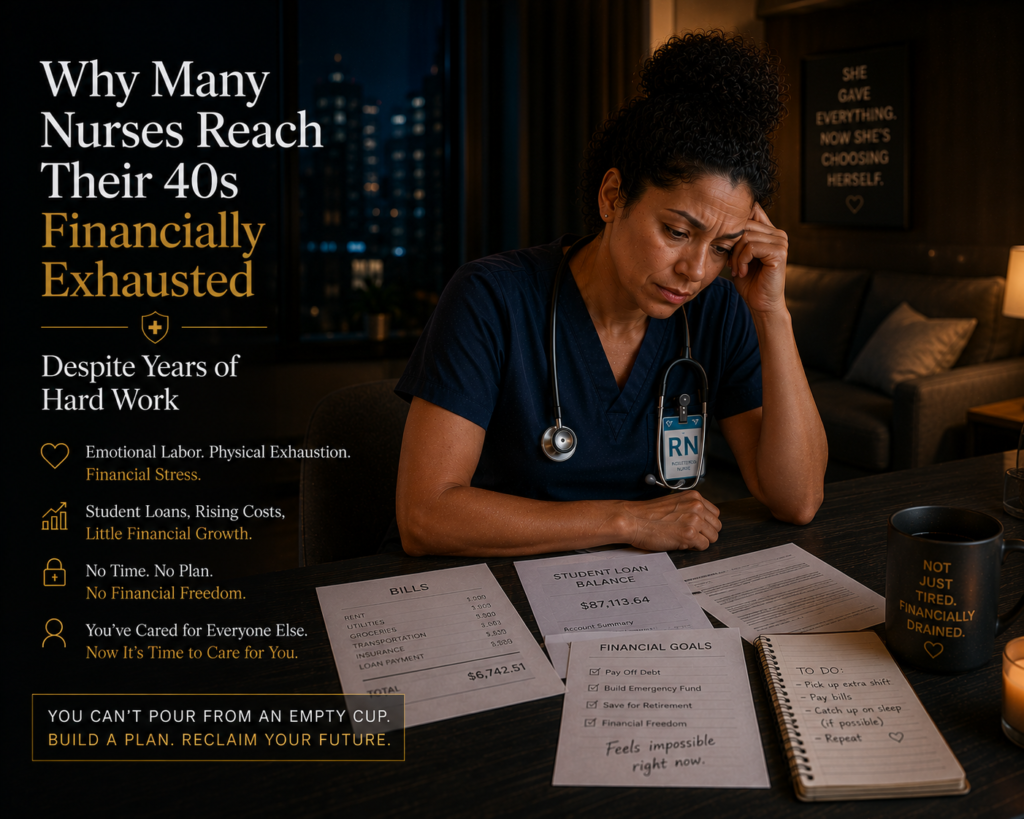
Many nurses spend decades working incredibly hard believing financial stability will eventually feel easier.
More shifts.
More overtime.
More sacrifice.
More emotional exhaustion.
And for a while, pushing harder may appear to work financially.
But over time, many nurses quietly reach their late 30s or 40s feeling:
- emotionally burned out
- financially overwhelmed
- behind on retirement
- exhausted from constant responsibility
- anxious about the future
- unsure how long they can continue living this way
Some nurses spent years surviving financially without ever having enough time, energy, or financial education to build long-term wealth intentionally.
And eventually, many begin realizing that working hard alone does not automatically create financial peace.
Years of Survival Mode Quietly Change Financial and Emotional Health
Many nurses spend years operating in nonstop survival mode financially.
During certain seasons of life, survival mode may feel necessary.
There are bills to pay.
Children to support.
Debt to manage.
Emergencies to survive.
Patients to care for.
And because nursing often requires enormous emotional and physical energy, many nurses spend years simply trying to make it through one exhausting season at a time.
But over decades, chronic stress can quietly affect:
- financial decisions
- emotional recovery
- long-term planning
- savings consistency
- retirement preparation
- mental health
- nervous system regulation
And eventually, many nurses realize they spent so much time surviving that they never fully had the chance to build financial stability intentionally.
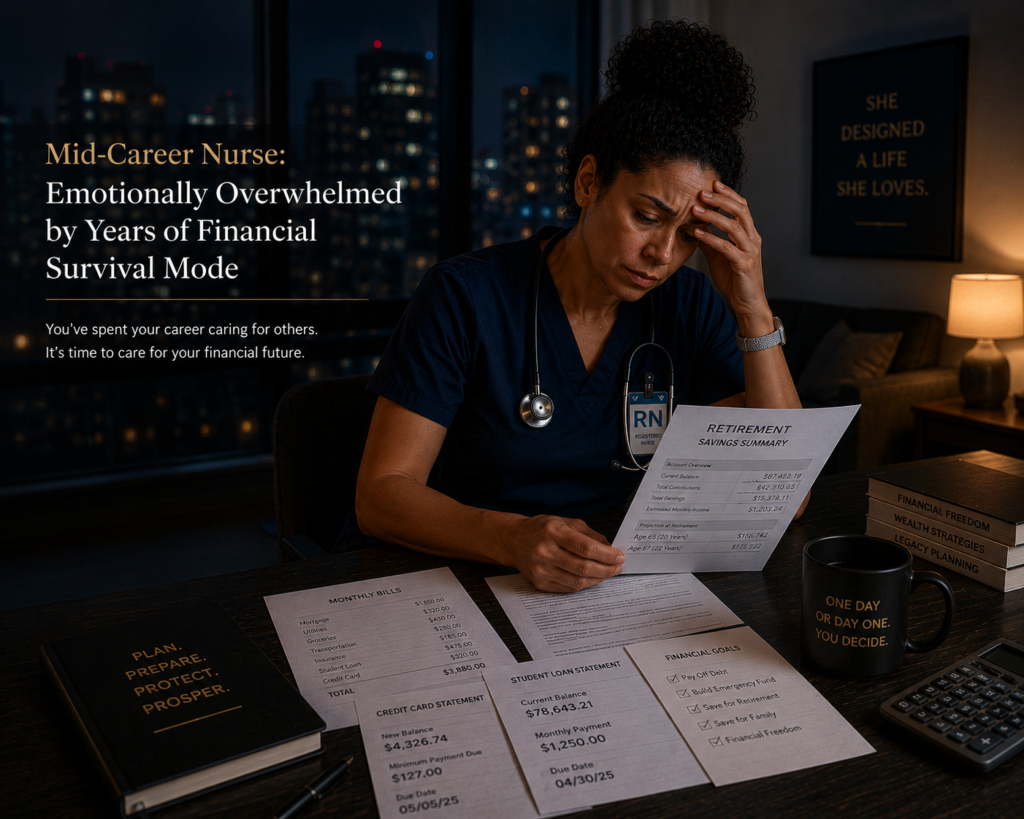
Many Nurses Quietly Reach Midlife Emotionally Exhausted
For many nurses, emotional exhaustion builds slowly over years.
Some spend decades:
- working overtime
- helping family financially
- sacrificing rest
- delaying recovery
- carrying debt
- postponing financial planning
- prioritizing everyone else first
And over time, many nurses quietly begin feeling emotionally depleted despite years of hard work and sacrifice.
Some nurses eventually realize they are:
- burned out emotionally
- financially anxious
- overwhelmed by responsibility
- worried about retirement
- unsure how long they can continue working at this pace
That realization can feel emotionally heavy for many mid-career healthcare workers.
Retirement Anxiety Quietly Affects Many Mid-Career Nurses
Many nurses spend so many years focused on immediate survival that retirement planning quietly gets pushed further and further away.
At first, it may feel temporary.
Some nurses assume:
- “I’ll focus on investing later.”
- “I’ll save more once things calm down.”
- “I just need to get through this season first.”
But for many mid-career nurses, years pass quickly.
And eventually, some begin realizing:
- retirement accounts feel behind
- burnout feels heavier
- physical exhaustion feels harder to recover from
- overtime feels less sustainable
- financial anxiety still has not disappeared
That realization can create a deep emotional fear that many nurses rarely talk about openly:
“What if I work this hard for decades and still never feel financially secure?”
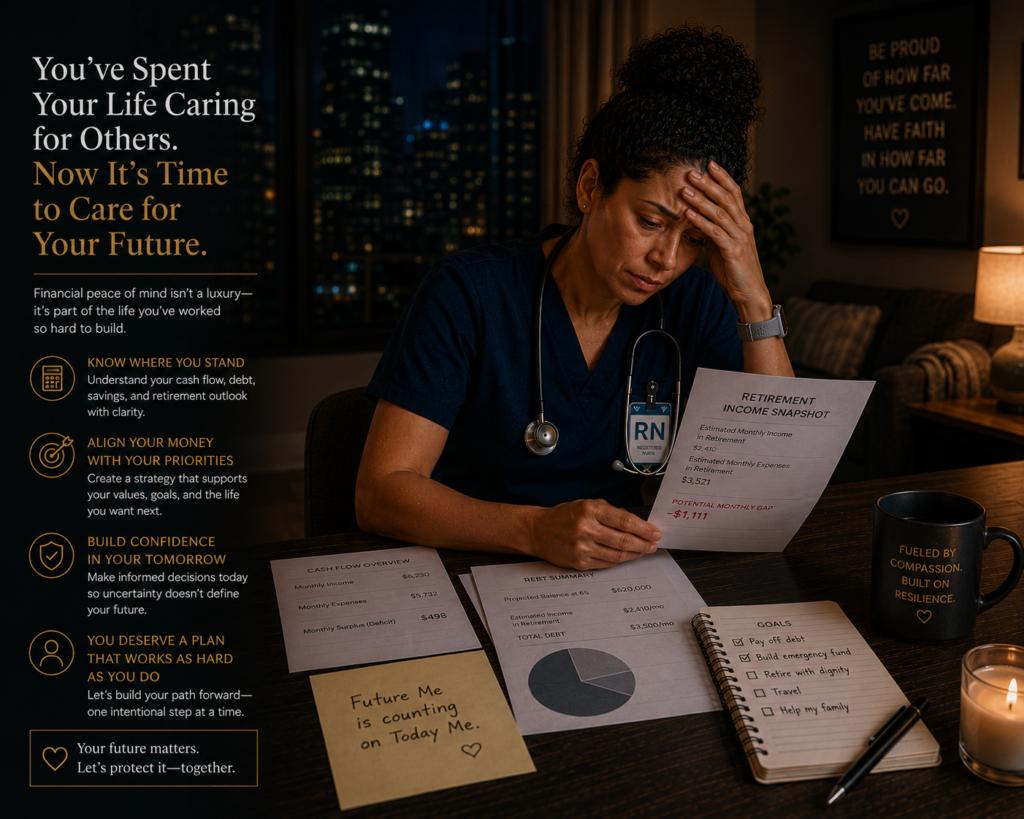
Financial Recovery Can Still Begin in Midlife
One of the most important things many nurses need to hear is this:
Financial rebuilding does not become impossible simply because someone feels behind.
Many people begin improving their financial lives later than expected.
And while regret, stress, or burnout may feel emotionally heavy, long-term financial change can still happen gradually through:
- intentional planning
- investing consistency
- reduced financial chaos
- healthier financial habits
- emotional recovery
- stronger financial systems
- reduced overtime dependency over time
Because financial peace is rarely built overnight.
Many Nurses Do Not Need More Shame — They Need a New Financial Direction
Many nurses carry quiet financial shame because they expected years of hard work to eventually create more peace.
But chronic survival mode can affect far more than income alone.
Over time, constant stress may quietly affect:
- financial habits
- emotional recovery
- retirement preparation
- investing consistency
- nervous system health
- long-term planning
- burnout recovery
And for many nurses, financial exhaustion is not caused by laziness or lack of ambition.
It is often the result of spending years carrying enormous emotional, physical, and financial pressure simultaneously.
The goal now is not perfection.
And it is not pretending the past never happened.
The goal is slowly creating:
- healthier financial systems
- reduced financial chaos
- intentional long-term planning
- emotional recovery
- stronger financial boundaries
- more peace over time
Because financial rebuilding can still happen — even after years of survival mode.

Start Rebuilding Financial Stability More Intentionally
At Nurse Money Lab, the mission is not simply helping nurses earn more money.
It is helping nurses:
- recover from financial survival mode
- reduce burnout-driven financial stress
- build healthier financial systems
- create long-term wealth
- improve retirement readiness
- reduce overtime dependency
- build financial peace more intentionally
Because nurses deserve more than decades of exhaustion without long-term stability.
Frequently Asked Questions
Why do many nurses feel financially exhausted in their 40s?
Years of overtime, burnout, debt, survival mode, rising expenses, and delayed long-term financial planning can quietly create emotional and financial exhaustion over time.
Can financial recovery still happen later in life?
Yes. Many people begin improving investing habits, retirement planning, savings systems, and financial stability later than expected.
Why does survival mode make long-term planning harder?
Chronic stress often keeps people focused on immediate financial pressure, which can make investing, retirement planning, and wealth building feel emotionally difficult.
Can nurses still build long-term wealth after burnout?
Yes. Many nurses gradually rebuild financial stability through intentional planning, reduced financial chaos, investing consistency, and healthier financial habits over time.