


Financial Empowerment Starts With Financial Awareness
Financial empowerment for nurses begins with understanding how money works and creating a plan for long-term success.
They work long shifts, manage complex patient needs, navigate emotionally demanding situations, and often put the needs of others before their own.
Yet despite earning respectable incomes, many nurses still struggle with financial stress.
Some feel trapped by debt.
Others live paycheck to paycheck despite working overtime.
Many are overwhelmed by student loans, rising living costs, childcare expenses, and the pressure to continuously work more just to stay ahead.
The truth is that earning a good income and building wealth are not the same thing.
Financial empowerment begins when nurses understand how money works and develop systems that allow them to keep more of what they earn.
It is not about becoming rich overnight.
It is about creating financial security, reducing stress, and building a future that provides more freedom, more options, and greater peace of mind.

The Biggest Financial Challenges Nurses Face Today
Many people assume nurses automatically achieve financial security because healthcare is considered a stable profession.
While nursing can provide strong earning potential, it also comes with unique financial challenges that often go unnoticed.
Many nurses are simultaneously balancing:
- student loan debt
- rising housing costs
- childcare expenses
- healthcare expenses
- retirement planning
- burnout-related spending
- credit card debt
- family financial responsibilities
For newer nurses, the transition from nursing school to professional practice can be financially overwhelming.
Many graduate with significant student loan balances and immediately face the reality of managing adult financial responsibilities.

For experienced nurses, different challenges often emerge.
Some find themselves supporting children, aging parents, or extended family members while attempting to save for retirement and future financial goals.
Travel nurses and overtime-dependent nurses often face another challenge.
Higher income can sometimes create higher spending without creating long-term wealth.
As income increases, many people gradually increase their lifestyle expenses at the same pace.
This phenomenon, known as lifestyle inflation, is one of the most common obstacles to wealth building.
Financial empowerment begins by recognizing these challenges honestly.
The goal is not perfection.
The goal is understanding where financial pressure exists so it can be addressed strategically.

The Four Pillars of Financial Empowerment for Nurses
Financial empowerment is not built through a single financial decision.
It is created through a combination of habits, systems, and strategies that work together over time.
For nurses, four core pillars form the foundation of long-term financial success.
These pillars help create stability, reduce financial stress, and provide a roadmap for building wealth regardless of income level.
Pillar 1: Income Growth
Many nurses focus exclusively on saving money when trying to improve their finances.
While saving is important, increasing income can often create the fastest path toward financial progress.
Nurses have unique opportunities to increase their earning potential through career advancement, specialty certifications, overtime, travel nursing, leadership positions, education, and side income opportunities.
Financial empowerment does not mean working endlessly.
Instead, it means creating opportunities to earn more strategically while maintaining a healthy quality of life.
The goal is not simply making more money.
The goal is using increased income to build long-term financial security.
Pillar 2: Saving and Cash Flow Management
Many people earn good incomes but still struggle financially because they do not control their cash flow.
Cash flow simply refers to the money coming in versus the money going out.
Financially empowered nurses understand where their money is being spent and make intentional decisions about how they use it.
This does not require an extreme budget.
Instead, it involves creating simple systems for tracking expenses, building savings, reducing unnecessary spending, and planning for future goals.
Even small improvements in cash flow management can create significant long-term results.
Pillar 3: Investing for thhttps://www.investor.gove Future
Investing is one of the most powerful tools available for building long-term wealth.
While saving money is important, investing allows your money to grow over time through compound growth.
Many nurses delay investing because they believe they need a large amount of money to get started.
The reality is that consistency is often more important than the amount you begin with.
Retirement accounts, employer-sponsored plans, index funds, and other investment vehicles can help nurses build financial security over the long term.
The earlier investing begins, the more time compound growth has to work.
Financial empowerment means allowing your money to work for you instead of relying entirely on earned income.
Pillar 4: Financial Protection
Building wealth is important, but protecting wealth is equally important.
Unexpected events such as illness, injury, job loss, or family emergencies can create significant financial setbacks without proper planning.
Financially empowered nurses understand the importance of protecting both their income and their assets.
This may include maintaining emergency savings, carrying appropriate insurance coverage, creating a retirement strategy, and preparing for unexpected life events.
A strong financial foundation is built not only on growth, but also on protection and preparedness.
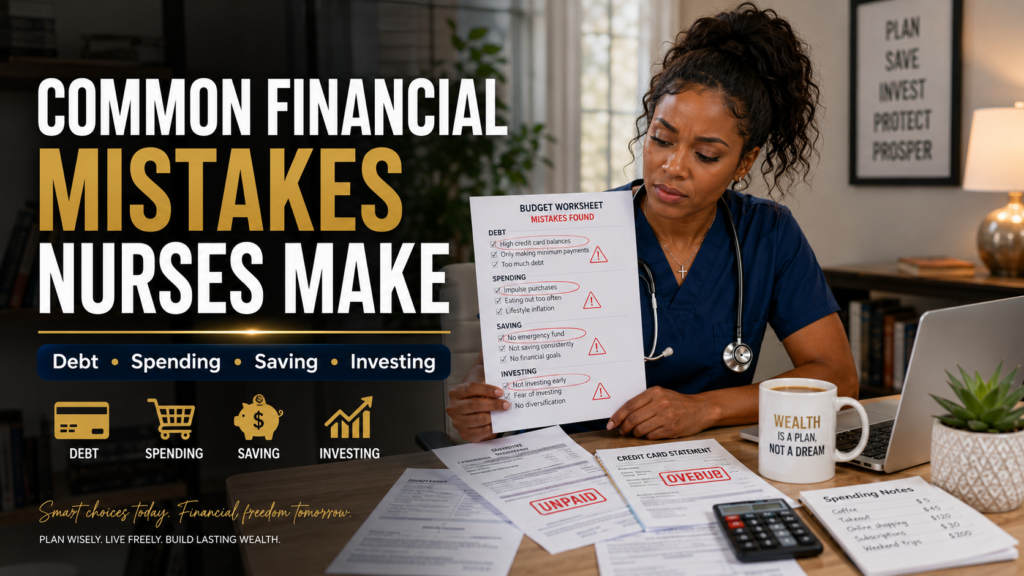
Common Financial Mistakes That Keep Nurses Stuck
Many nurses work incredibly hard and earn respectable incomes, yet still struggle to build long-term wealth.
Often, the problem is not a lack of income.
Instead, it is a series of financial habits and mistakes that quietly prevent progress.
Mistake 1: Relying Entirely on Overtime
Overtime can be a useful tool for achieving short-term goals.
However, many nurses become dependent on overtime simply to maintain their current lifestyle.
When income depends entirely on working extra shifts, financial security can quickly disappear during illness, burnout, or unexpected life events.
Mistake 2: Delaying Investing
Many nurses spend years waiting for the “perfect time” to start investing.
Unfortunately, time is one of the most valuable assets investors have.
Starting small today is often more effective than waiting years to begin.
Mistake 3: Living Without a Financial Plan
Without a plan, money tends to disappear without a clear purpose.
A simple financial plan can help nurses prioritize spending, savings, debt reduction, investing, and long-term goals.
Mistake 4: Ignoring Emergency Savings
Unexpected expenses happen to everyone.
Without emergency savings, many people are forced to rely on credit cards, loans, or debt when emergencies occur.
Mistake 5: Lifestyle Inflation
As income increases, spending often increases as well.
Many nurses earn more throughout their careers but never experience meaningful financial progress because their expenses rise at the same pace as their income.
Financial empowerment begins when these common mistakes are recognized and corrected.

Practical Steps Nurses Can Take Today
Financial empowerment does not happen overnight.
Most financially successful nurses achieve their goals through small, consistent actions repeated over time.
The key is to focus on progress rather than perfection.
Step 1: Track Your Spending
You cannot improve what you do not measure.
Spend one month tracking where your money goes.
Many nurses are surprised to discover how much they spend on convenience purchases, subscriptions, takeout meals, and impulse spending.
Awareness creates control.
Step 2: Build an Emergency Fund
An emergency fund provides protection against unexpected expenses.
Even small contributions made consistently can help create financial security over time.
The goal is not perfection.
The goal is preparation.
Step 3: Pay Down High-Interest Debt
High-interest debt can significantly slow financial progress.
Creating a plan to reduce credit card balances and other high-interest obligations can free up money for savings and investing.
Step 4: Begin Investing Early
Many nurses delay investing because they believe they need a large amount of money to get started.
The reality is that consistency matters more than perfection.
Starting early allows compound growth more time to work.
Step 5: Continue Learning
Financial education is one of the most valuable investments a nurse can make.
The more you learn about budgeting, investing, insurance, retirement planning, and wealth building, the more confident your financial decisions become.
Small actions repeated consistently often create the greatest long-term results.

Financial Freedom Is a Journey, Not a Destination
Financial freedom does not happen through a single paycheck, promotion, investment, or financial decision.
It is built over time through consistent actions, intentional planning, and a commitment to long-term goals.
Many nurses spend years believing they simply need to earn more money.
While income certainly matters, true financial empowerment comes from learning how to manage, grow, and protect that income effectively.
The journey may include setbacks.
There may be unexpected expenses, periods of financial stress, or goals that take longer than expected.
That is normal.
Progress is rarely a straight line.
The important thing is continuing to move forward.
Every dollar saved, every debt reduced, every investment contribution, and every financial lesson learned brings you one step closer to greater freedom and security.
Financial empowerment is not about perfection.
It is about building a life where money becomes a tool that supports your goals instead of a source of constant stress.
Nurses spend their careers helping others build healthier lives.
You deserve the same level of care, planning, and attention when it comes to your financial future.
The best time to start building financial freedom is today.
Financial empowerment for nurses is a lifelong journey. Financial empowerment for nurses requires consistent learning, intentional financial decisions, and a commitment to long-term goals. As more healthcare professionals embrace financial empowerment for nurses, they gain greater confidence, security, and control over their future.
Financial empowerment for nurses is not about becoming wealthy overnight. Financial empowerment for nurses is built through consistent habits, smart financial decisions, and long-term planning. As more nurses learn about budgeting, investing, debt reduction, and wealth building, financial empowerment for nurses becomes achievable regardless of income level.

Frequently Asked Questions
How much should nurses save each month?
There is no single amount that works for everyone. A good starting goal is to save at least 10% to 20% of your income whenever possible. Even small, consistent contributions can build significant financial security over time.
Why do some nurses earn good money but still struggle financially?
Income alone does not create wealth. Hidden expenses, debt, lifestyle inflation, lack of investing, and poor cash flow management can prevent financial progress even among higher-income earners.
What is the first step toward financial empowerment?
The first step is awareness. Understanding where your money is going and creating a simple financial plan can help you make more intentional financial decisions.
Should nurses invest even if they still have debt?
Every situation is different. Many financial professionals recommend balancing debt reduction with long-term investing, especially when employer retirement matching programs are available.
How much should nurses keep in an emergency fund?
A common recommendation is three to six months of essential living expenses. However, starting small and building consistently is often more important than reaching a specific number immediately.
Can financial freedom be achieved on a nurse’s salary?
Yes. Financial freedom is not determined solely by income. It is influenced by saving habits, investing, debt management, financial planning, and long-term consistency.